
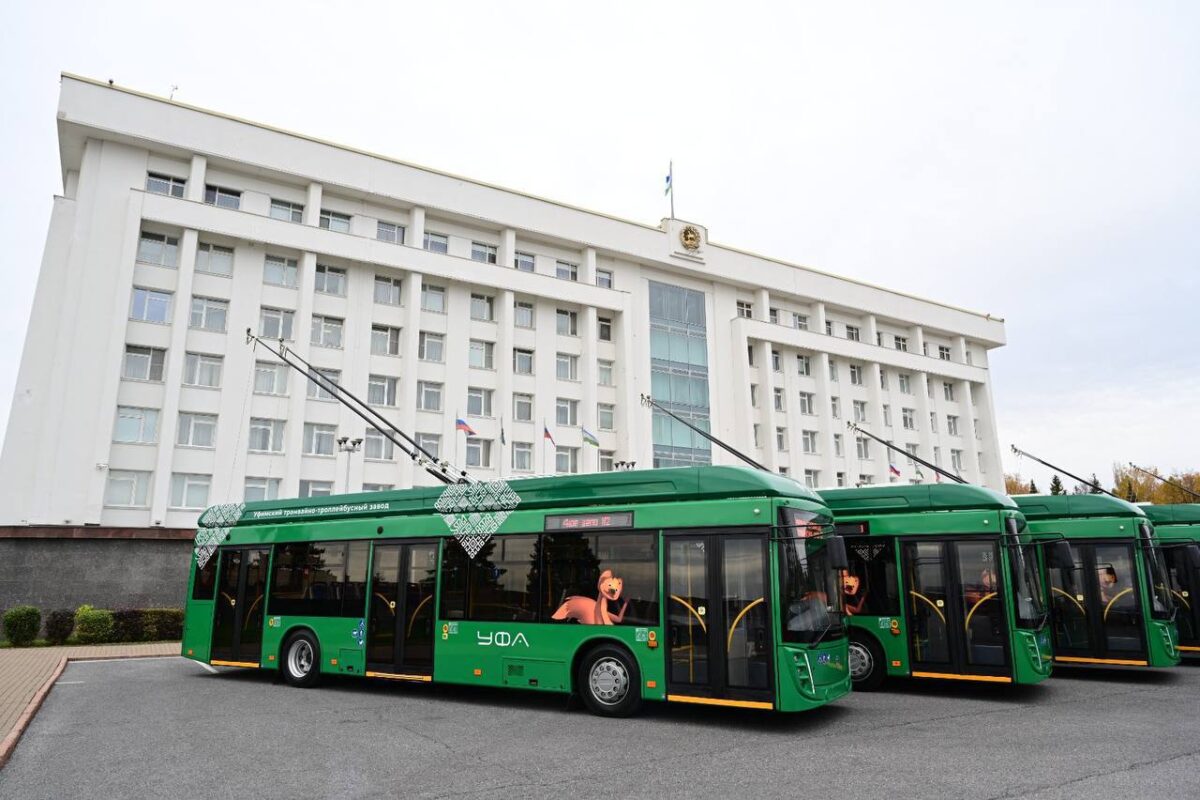
Belarusian manufacturers have failed to win tenders for trolleybus purchases in a Russian region, which will now be investigated. The head of the administration of Alyaksandr Lukashenka, Dzmitry Krutoi, said this in an interview with Belarusian state television. According to him, 2025 is generally a difficult year for Belarusian machine-building on the Russian market.
“Indeed, everyone agrees that this year is very difficult in terms of selling all types of equipment and machine-building products. This is not because Belarusians have fallen behind, but because such is the state of the market today. And it is caused by many factors: from grain prices to interest rates on banking, financial, and leasing products. When farmers — the key consumers — are in such a financial situation today, they think primarily about current operations, not about investment renewal or buying tractors and harvesters. In fact, both in the Rostov Region and here in the Stavropol Territory, we see that while supplies of tractor equipment have declined, supplies of harvesters, MAZ trucks, products of our lift machinery plant, and Amkodor municipal and road equipment have increased,” he said.
Krutoi noted that Belarusian manufacturers have “absolutely fair prices”, and the localization of equipment ranges from 60% to 90%, which in his view benefits both Belarus and Russia.
“We simply need to be more flexible in those tenders, those purchases, and those financial schemes that are being offered today at the level of Russian regions. They are all different. The governor quite fairly noted that we lost several tenders for the supply of trolleybuses with autonomous operation. We will conduct an internal investigation. This is absolutely unacceptable, given the presence of dealers and sizeable marketing departments at the plants. And why we are missing such contracts, despite fully meeting the price and financial requirements, is unclear. You heard the president: today in Belarus we have the ability — at the level of banks, the Finance Ministry, and our leasing companies — to provide even additional resources, more competitive than what is now on the market, for long-term export contracts. There are areas where we must provide assistance, including financial, but there are areas where we must simply demand more active marketing and export work,” Krutoi added.
In the aviation sector, not everything is smooth either, but Belarus expects to begin producing a civil aircraft by the end of the decade.
“If you look at the raw statistics, they look extremely impressive. Growth from 30% to threefold. Our 558th plant in Baranavichy, the Minsk Civil Aviation Plant, and the Orsha Aircraft Repair Plant have established good working contacts with all key Russian aviation plants. This is our so-called big three in aviation. The president quite rightly noted — including when signing my trip to the Rostov Region — that we have not met the target programmes for loading our production capacities.
Yes, we are building several production facilities, from painting to manufacturing complex long-dimension parts for aircraft — parts that Russia is now producing as import substitution — but these are still mostly one-off orders. There is no systemic work yet, unfortunately. And that is why the task of shifting from regional orders to full-scale production cooperation is truly key. Because in Baranavichy, if we build this new facility and end up with three or four production buildings without knowing how to load them, such investments, frankly, are of no use to anyone.
Our task is to create a new school, new competencies within the republic, and the pinnacle, the final point of our aviation plan, will be the creation of a fully fledged Belarusian civil aircraft around 2029–30. These are the timelines for now,” he said.