
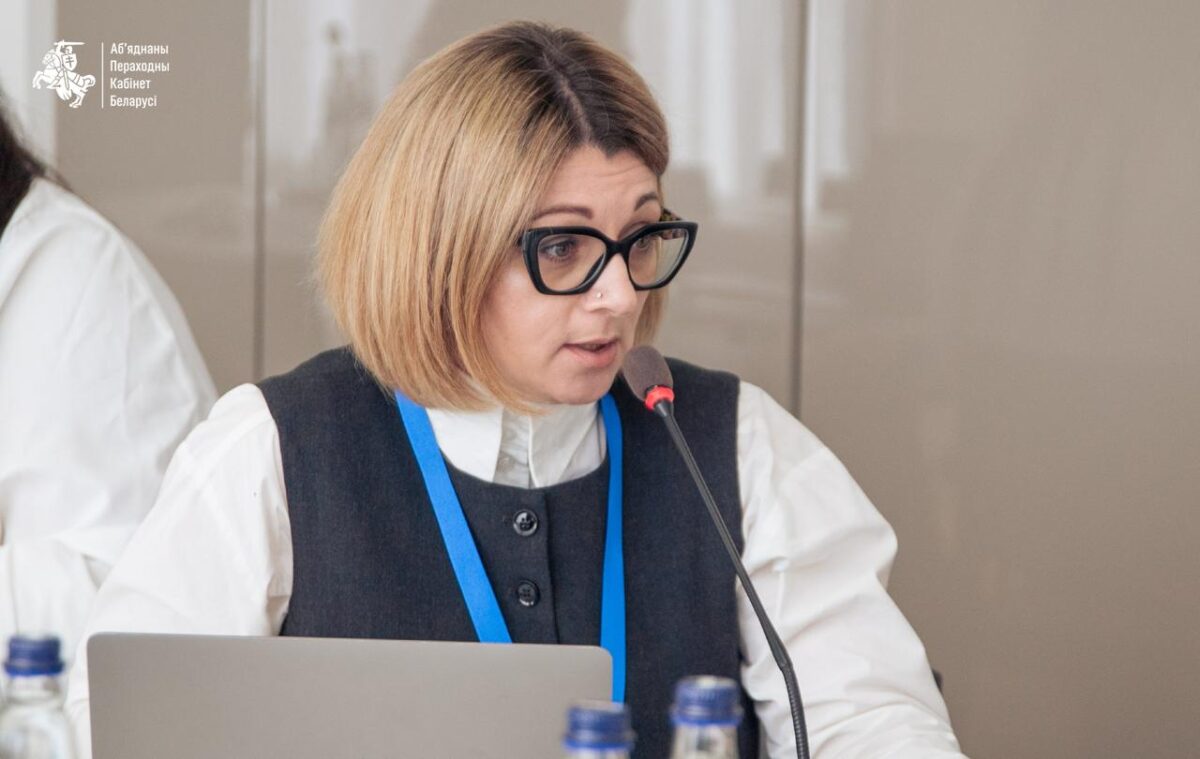
The release of political prisoners followed by their forced deportation from Belarus constitutes a new form of repression. Those released also face persecution by the Belarusian regime even outside the country, said the Representative for Social Policy of the United Transitional Cabinet of Belarus Volha Zazulinskaya at a meeting of the EU–Belarus Consultative Group in Brussels on March 6.
Zazulinskaya delivered a detailed report on the situation with political repression and the humanitarian conditions of released political prisoners, the United Transitional Cabinet said.
The representative noted that the Belarusian regime has begun using a new form of pressure — “pardons” accompanied by forced removal from Belarus. Authorities reported pardoning 293 people in 2025, but human rights defenders have confirmed only about 200 names. Of them, 175 were forcibly expelled from Belarus. Another 387 political prisoners fully served their sentences.
According to various estimates, up to 500,000 people have been forced to leave Belarus since 2020 to escape repression, threats of prosecution or pressure from security forces.
Former political prisoners deported abroad face continued repression: attempts are made to recruit them, they are intimidated through pressure on their relatives and placed on “extremist” and “terrorist” lists, Zazulinskaya said.
“This is transnational political persecution — repression from Belarus is being transferred to the territory of other countries,” the representative said.
By expelling political prisoners from Belarus without documents, Alyaksandr Lukashenka is creating local humanitarian crises in neighboring countries and shifting responsibility for the fate of these people onto them.
According to preliminary research results, 72% of former political prisoners show symptoms of depression, with 21% experiencing severe forms, while 38% suffer from physical health problems.
The International Humanitarian Fund has been forced to assume functions that would normally be carried out by the state, Zazulinskaya said.
In the first month after the deportations on December 13, more than €200,000 was allocated to support those released. In the fourth quarter of 2025, the fund supported ten organizations with about €850,000 — shelters in Warsaw, Wroclaw, Vilnius and Italy, as well as initiatives Volnyya, Dissidentby, INeedHelpBY, the Country for Life Foundation and BYSOL.
Coordination of assistance for those released is carried out within the United Transitional Cabinet’s social policy framework with the support of the Office of Sviatlana Tsikhanouskaya and brings together organizations including the Belarusian Solidarity Centre, the National Anti-Crisis Management, the Lithuanian Freedom House, the Red Cross, Viasna, the Belarusian Human Rights House, Belarusian PEN, the Belarusian Association of Journalists and several other organizations.
Zazulinskaya called on European states to support the International Humanitarian Fund.
“Release accompanied by expulsion is not an act of humanity but a continuation of repression by other means. If the international response is limited to gratitude for such ‘releases,’ this practice will become entrenched and normalized. The ‘prison plus deportation’ scheme is unacceptable and must be stopped,” she said.