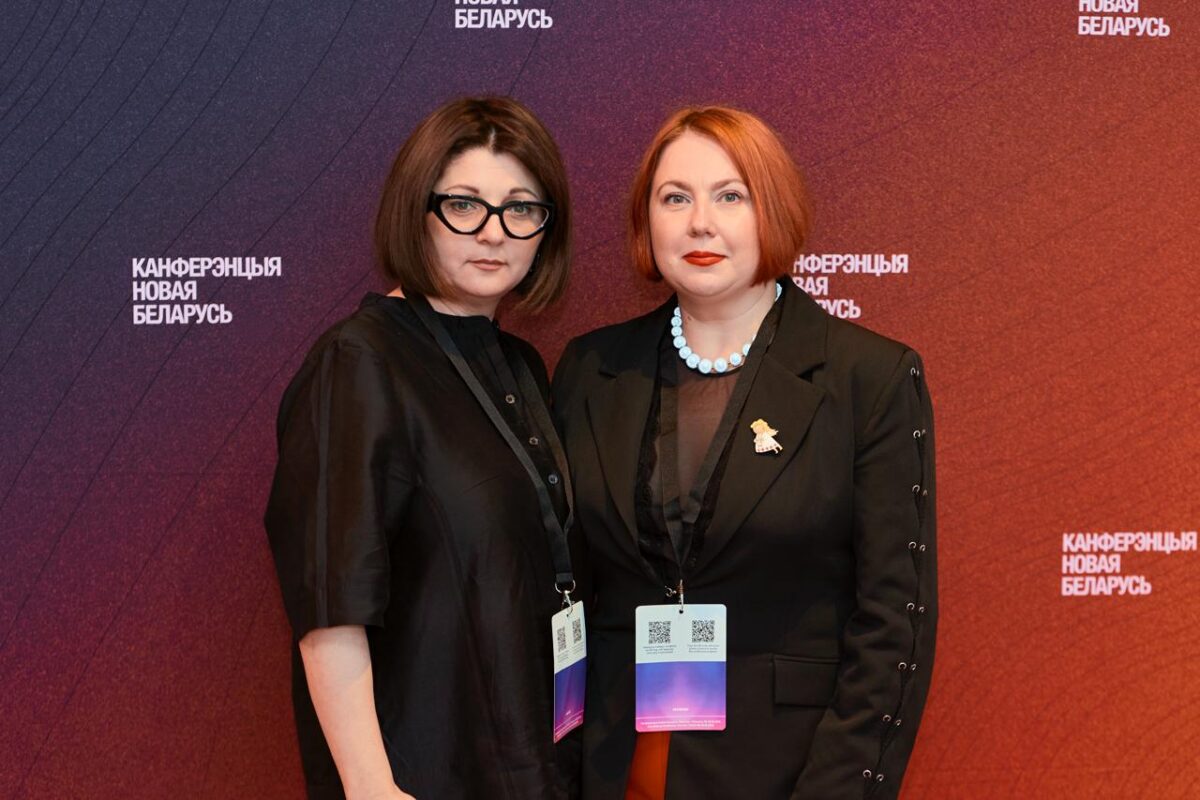
Former OCP representative for social policy Volha Zazulinskaya has been appointed head of the Democratic Mission of Belarus in Ukraine. The appointment was announced today at the “New Belarus” conference. She agreed to answer several questions from Reform.news after her appointment.

– What was unsatisfactory about the previous head of the mission, Sviatlana Shatsilina?
– I cannot speak for the office about what was or was not satisfactory. I was offered the position. I am interested in this offer. I am interested in the Ukrainian direction in principle. I believe we have not done enough in this area. We have an opportunity to try to strengthen it, because Ukraine is a strategic direction for Belarus today. On top of that, from what I saw while working as the representative for social policy, there are enormous problems facing Belarusians that did not emerge today. Unfortunately, they have been accumulating and accumulating. And we have what we have. I like challenges, so to speak.
– Do you already have an action plan?
– The first thing I will do after my appointment is travel to Ukraine. Second, I want to speak with all Belarusians, initiatives and organizations that are currently working in Ukraine and represent the Belarusian public. These are, without a doubt, legalization issues: Resolution No. 141, which limits Belarusians’ legalization options because of expired passports. And, in principle, we will expand political representation in Ukraine.
– Do you personally have contacts with the Ukrainian authorities now? Because in any country, resolving issues affecting Belarusians living there depends on such contacts…
– There are communications between Sviatlana Tsikhanouskaya’s office and the office of President Volodymyr Zelenskyy. We have agreements that several working groups will be created on different areas in an interministerial and civil society format. Some will be expert groups working on specific areas. Unfortunately, we found ourselves in a period when the Cabinet of Ministers in Ukraine changed, and another round of meetings may be necessary. So for now, that is where things stand.
– A few days ago, there was a case involving Belarusian activist Aliaksei Frantskevich, who lives in Ukraine and was denied entry to Poland. Will you help address such problems in any way?
– First of all, I am very concerned about this situation because this is already the second case (in June, Coordination Council delegate Tatsiana Martynava was denied entry to Poland — Reform.news note) specifically involving Belarusian citizens who are denied entry to the European Union. Those Belarusian citizens who permanently reside in Ukraine but have Belarusian passports travel on visas. And this is the second 10-year entry ban. It is difficult for me to say what the reasons are. It seems to me that we are following the standard procedure here. These are requests for the Polish side to explain the reasons. I think the wording will most likely be related to security. Aliaksei, and in particular Tatsiana, have not yet received responses from the Polish side.
– This question concerns you personally. You are moving from Lithuania to Ukraine. How is your documentation issue being resolved, and will you have some official status with the support of the Ukrainian state in this matter?
– For now, I will enter on a visa. I have no possibility of obtaining permanent legal status in Ukraine because my Belarusian passport has expired, and I only have a Geneva travel document. I have no instruments for legalizing my status in Ukraine. But this is a matter of time — if there is a request and there is a problem, I will address it.