The joint Russian-Belarusian exercise held in May, officially presented as training for non-strategic nuclear deterrence forces, appears to have been largely demonstrative in the case of the Belarusian Su-25 attack aircraft. That is the conclusion reached by analysts at the American Foreign Policy Research Institute (FPRI), who examined satellite imagery, photographs and video footage of the exercise.

According to the study’s authors, Belarusian Su-25s did indeed participate in the exercise, but they found no evidence that the aircraft rehearsed the actual employment of tactical nuclear weapons.
The Exercise Was Not Held in Lida
The study notes that a similar exercise in 2024 took place at Lida Air Base, home to the 116th Guards Assault Aviation Base, where Belarus’ Su-25 fleet is stationed.
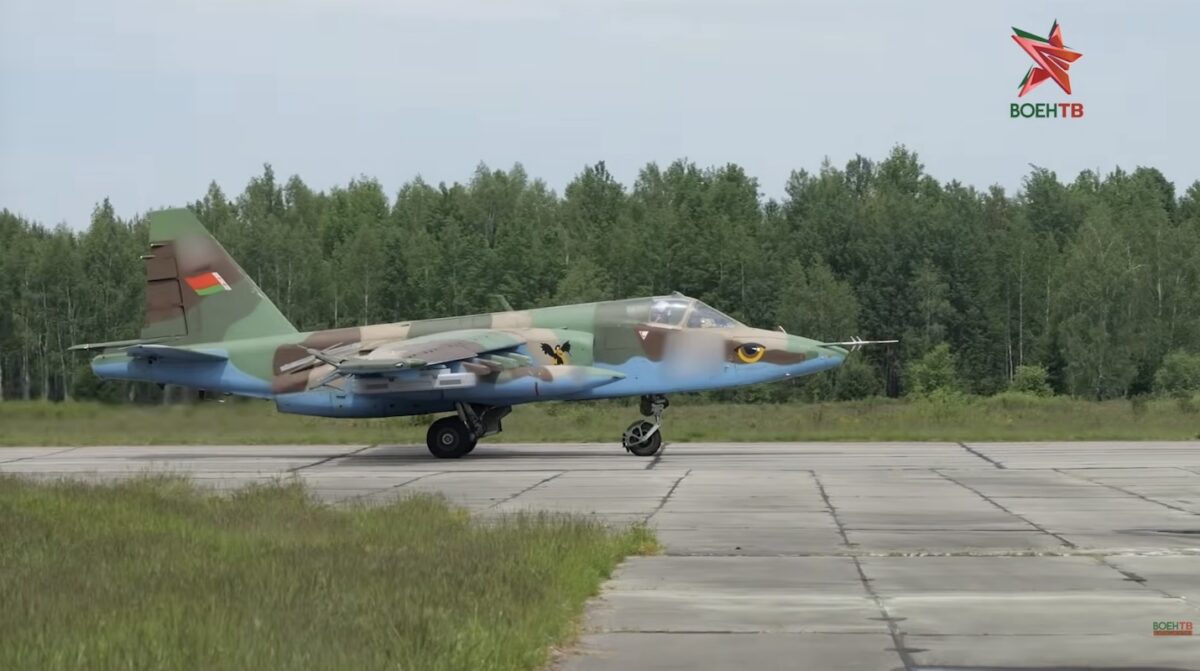
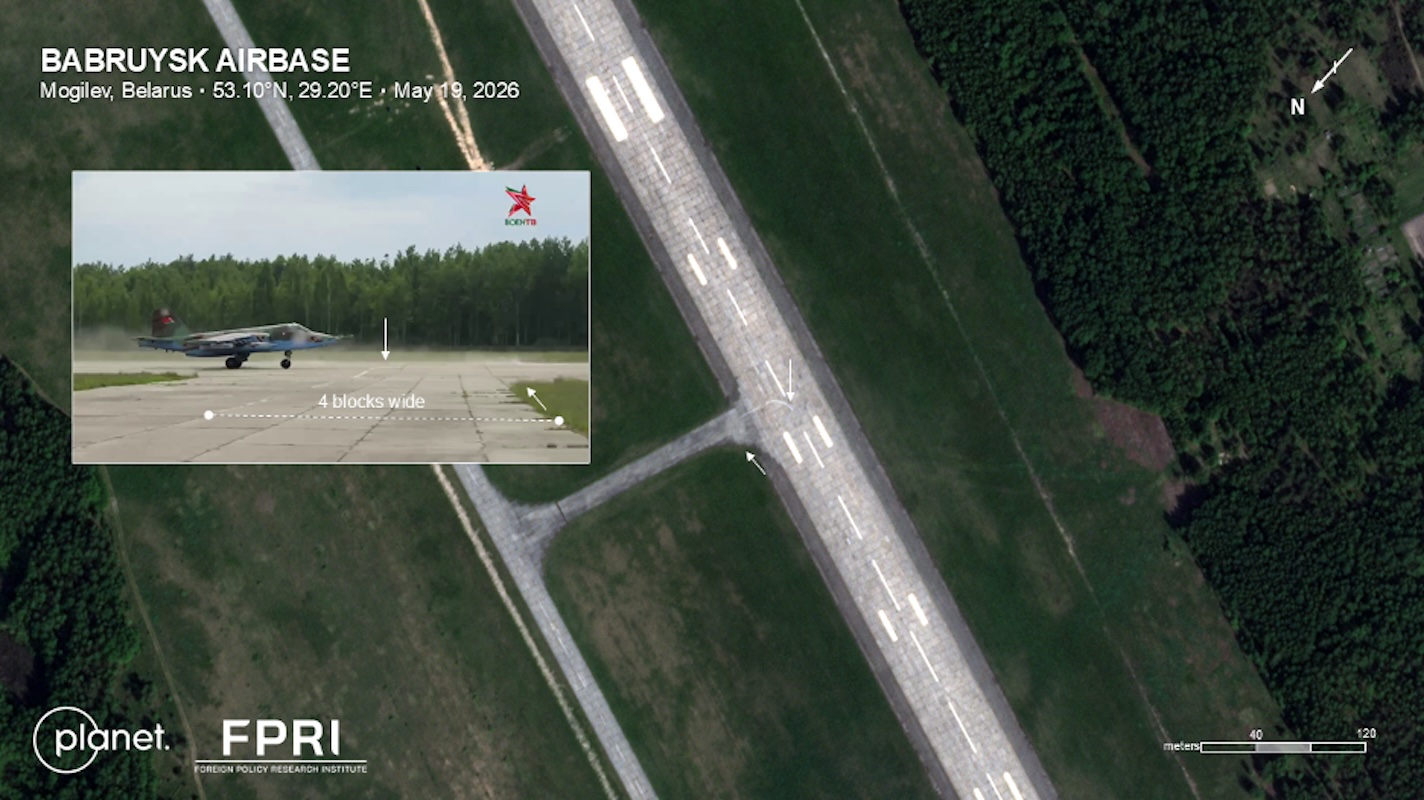
However, analysis of video footage from this year’s exercise showed that it was conducted elsewhere. By comparing taxiway layouts, the surrounding landscape and satellite imagery of Belarusian airfields, the analysts concluded that the aircraft were operating from the reserve airfield at Babruysk.
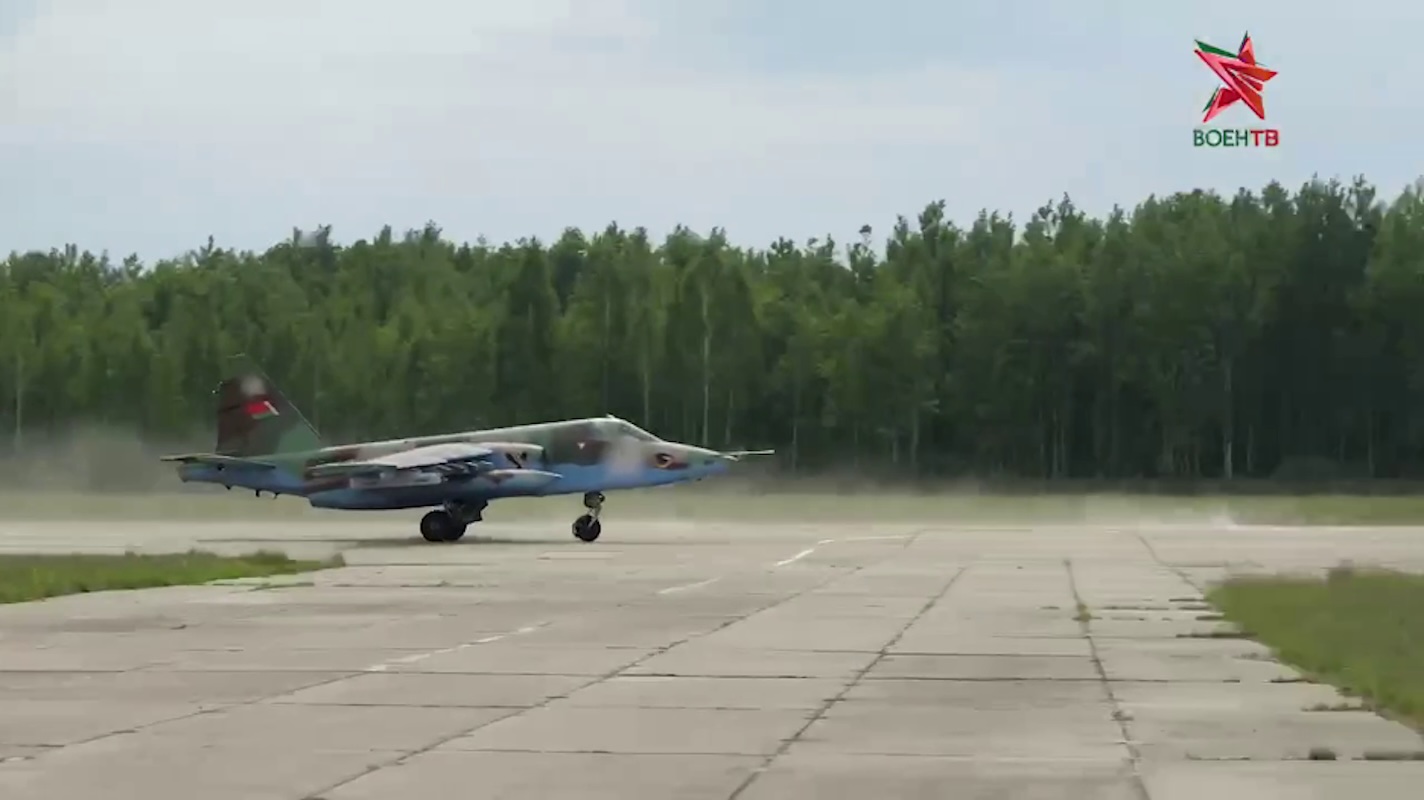
According to the authors, satellite imagery indicates that three Su-25s arrived there between May 16 and 19 and departed between May 21 and 23, matching the estimated timeframe of the exercise.

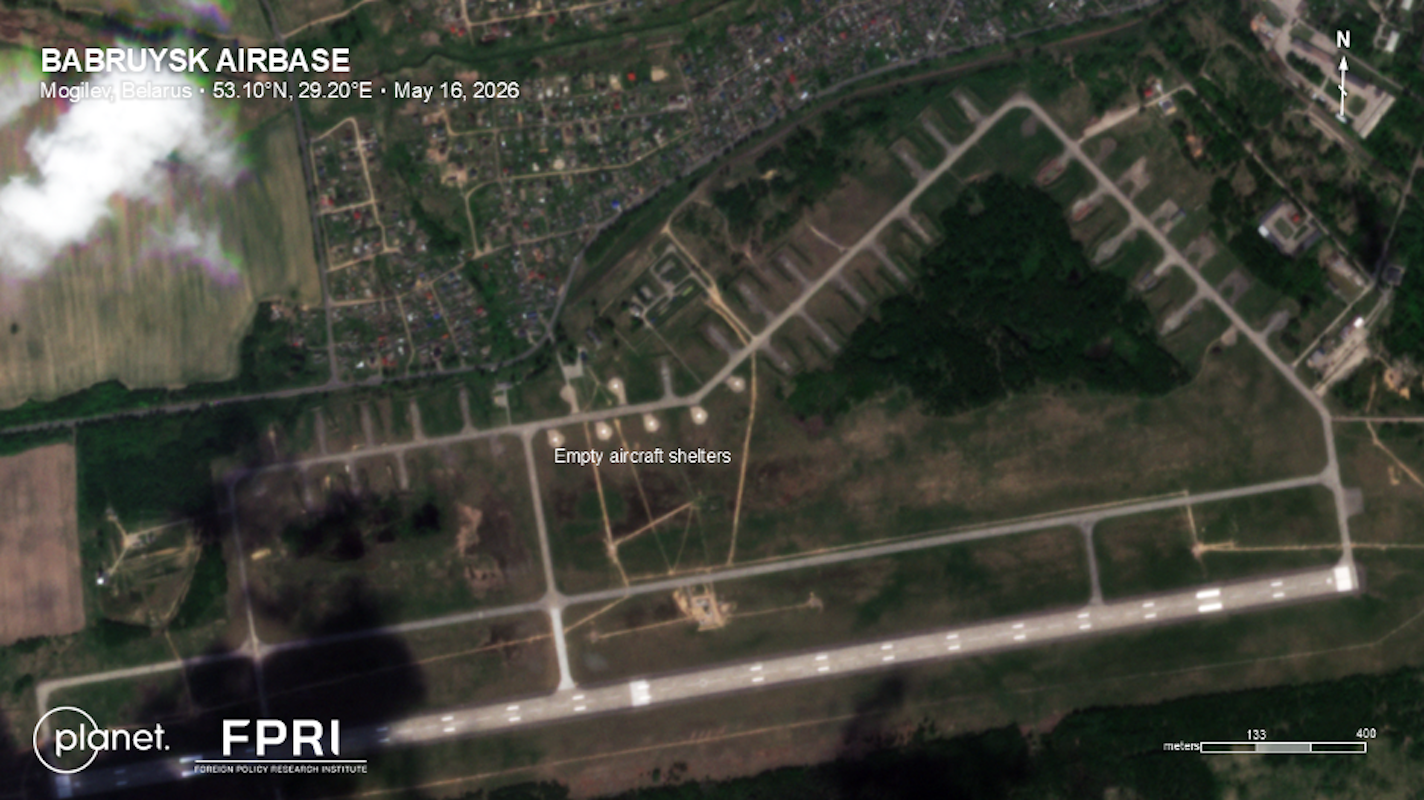
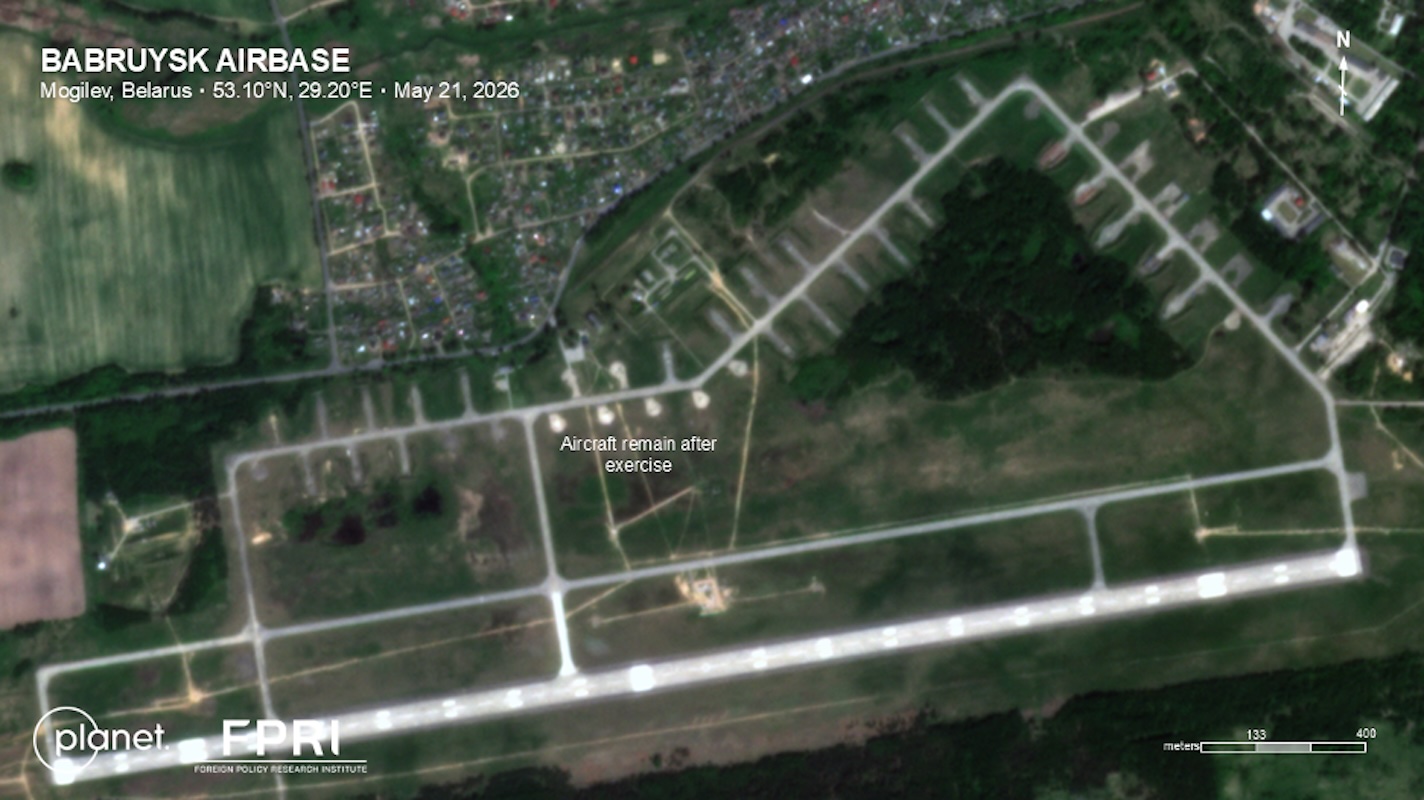
In addition to the aircraft, extra equipment, including a helicopter and support vehicles, was deployed to the airfield. The researchers say this indicates the temporary deployment of a unit to a reserve operating location.
Decoy Aircraft and a Reserve Airfield
The analysts also identified the use of decoys as another notable feature of the exercise.
Satellite imagery revealed several objects inside hardened aircraft shelters that the researchers assess to be Su-25 mock-ups. They based this conclusion on differences in colour, the absence of characteristic shadows and less distinct outlines compared with actual aircraft.
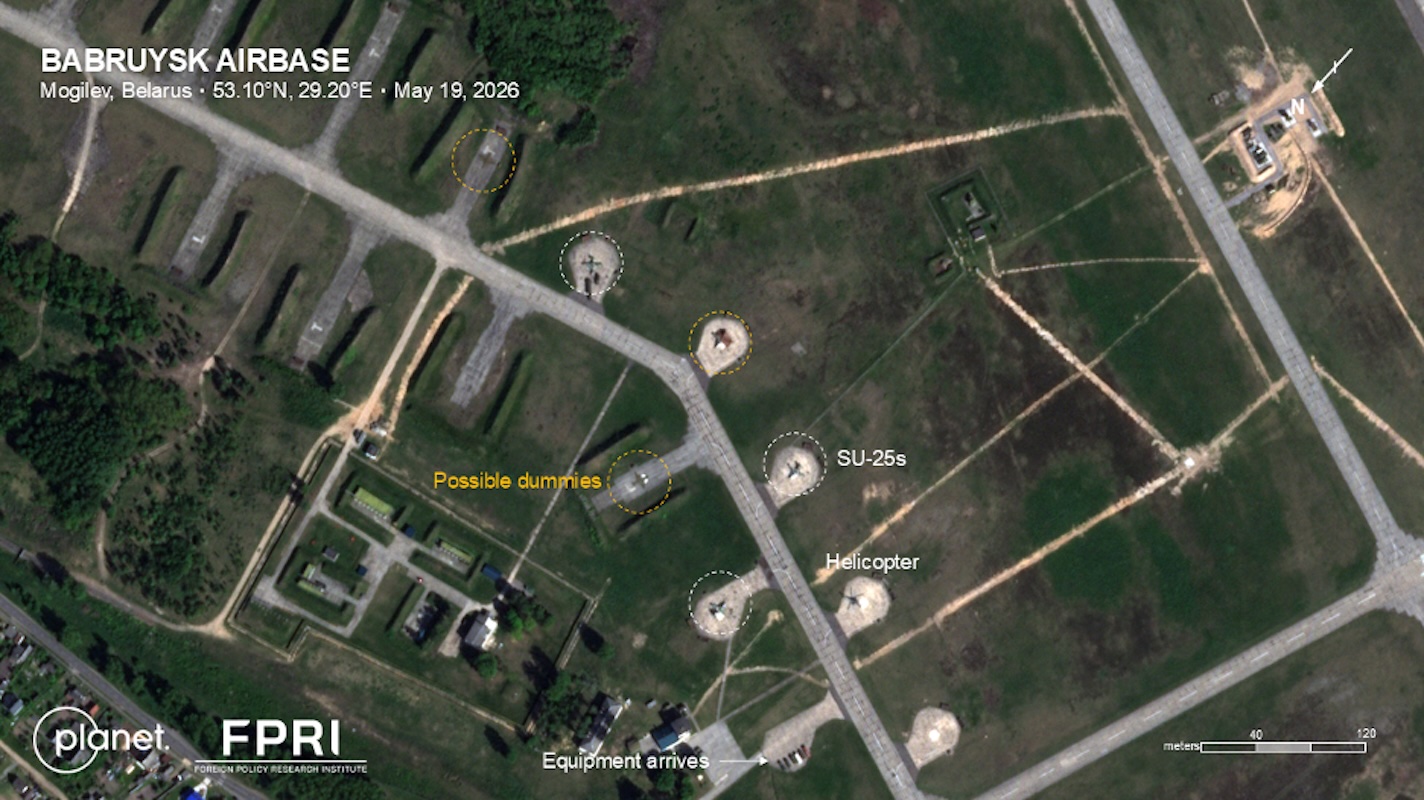
The authors believe these decoys were intended to mislead satellite reconnaissance and precision-guided weapons.
In their view, the relocation of aircraft to a reserve airfield, together with the use of decoys, indicates that Belarus is placing particular emphasis on improving the survivability of its tactical aviation in the event of a conflict.
‘Nuclear’ in Name Only
The study’s main conclusion concerns the nuclear aspect of the exercise itself.
The authors compared photographs from the 2024 and 2026 exercises. While, two years ago, the Su-25s carried large training munitions under their wings that may have simulated nuclear aerial bombs—although this has never been confirmed—the aircraft in this year’s exercise carried much smaller stores.
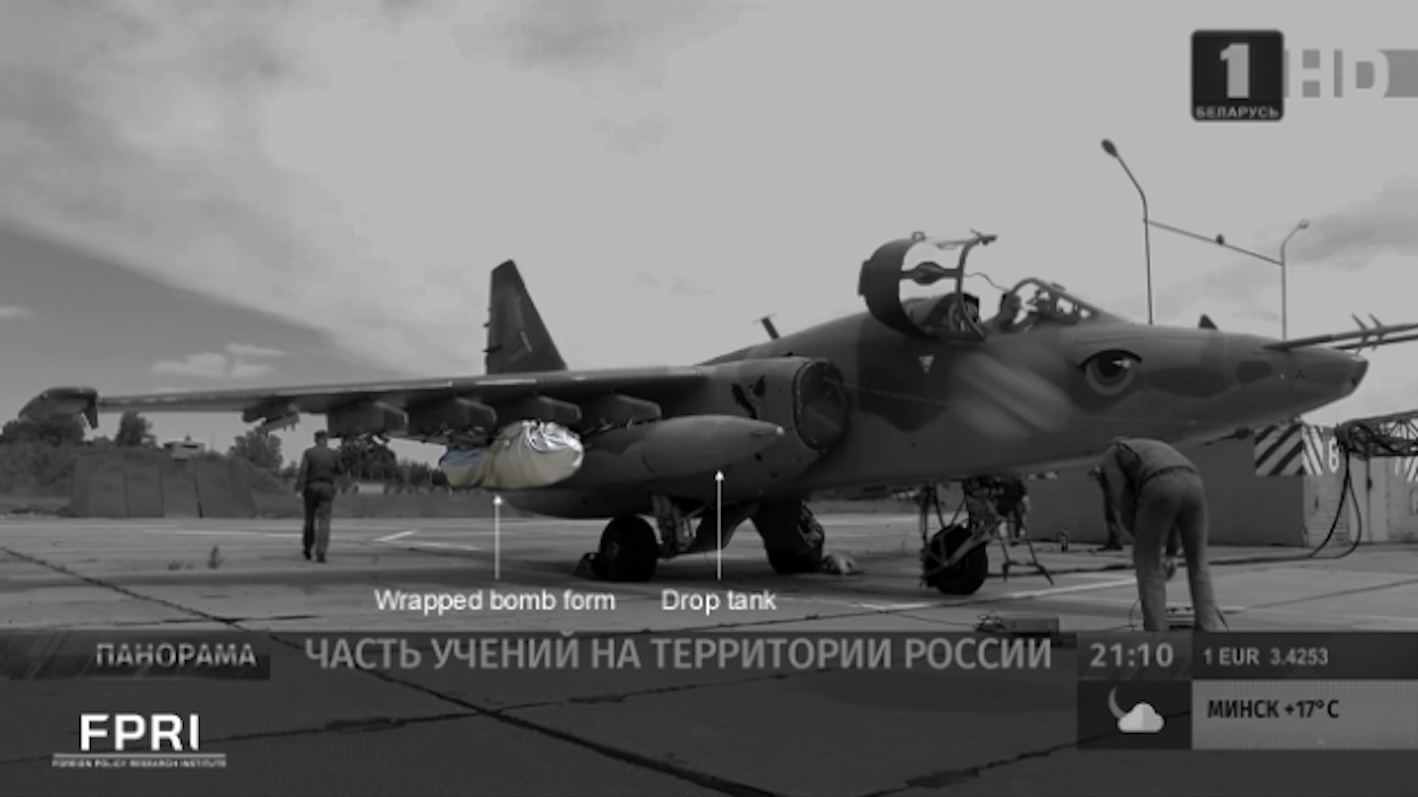
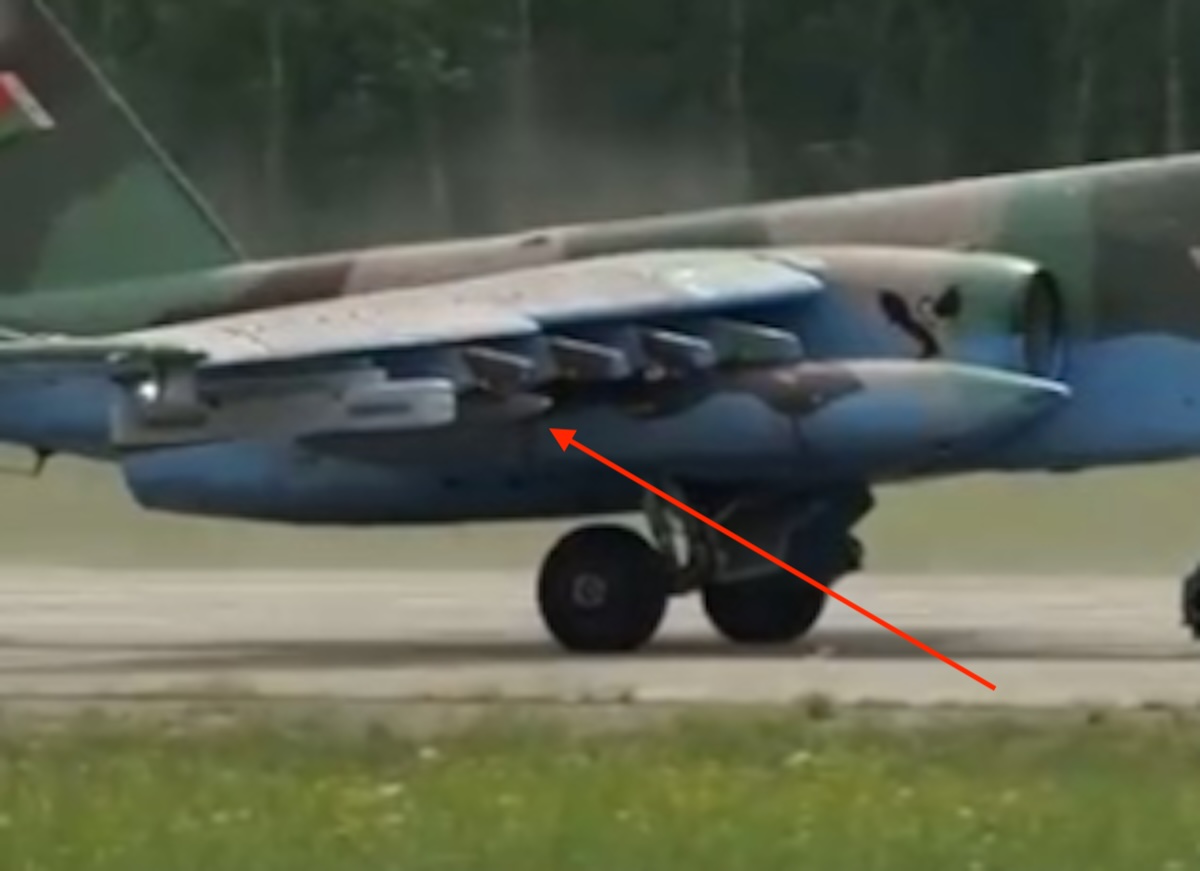
According to the analysts, the size and shape of these munitions do not match known Russian non-strategic nuclear weapons.
“It’s unclear what these smaller objects are, but we are confident they are not training forms for nuclear weapons. Much like the rest of Belarusian involvement in these exercises, the Su-25 element is nuclear in name only,” the report states.
The authors also do not rule out the possibility that the objects carried by the aircraft during the 2024 exercise were not training nuclear weapon mock-ups either, but rather conventional aerial bombs or their replicas.
Electronic Warfare Systems
Another feature of this year’s exercise was the use of electronic warfare pods on the Su-25s.
According to the analysts, these were Belarusian Talisman-family pods developed by Defense Initiatives LLC (Abaronchyja Inicyjatyvy). The systems are designed to counter air-to-air guided missiles by jamming them and creating false targets.
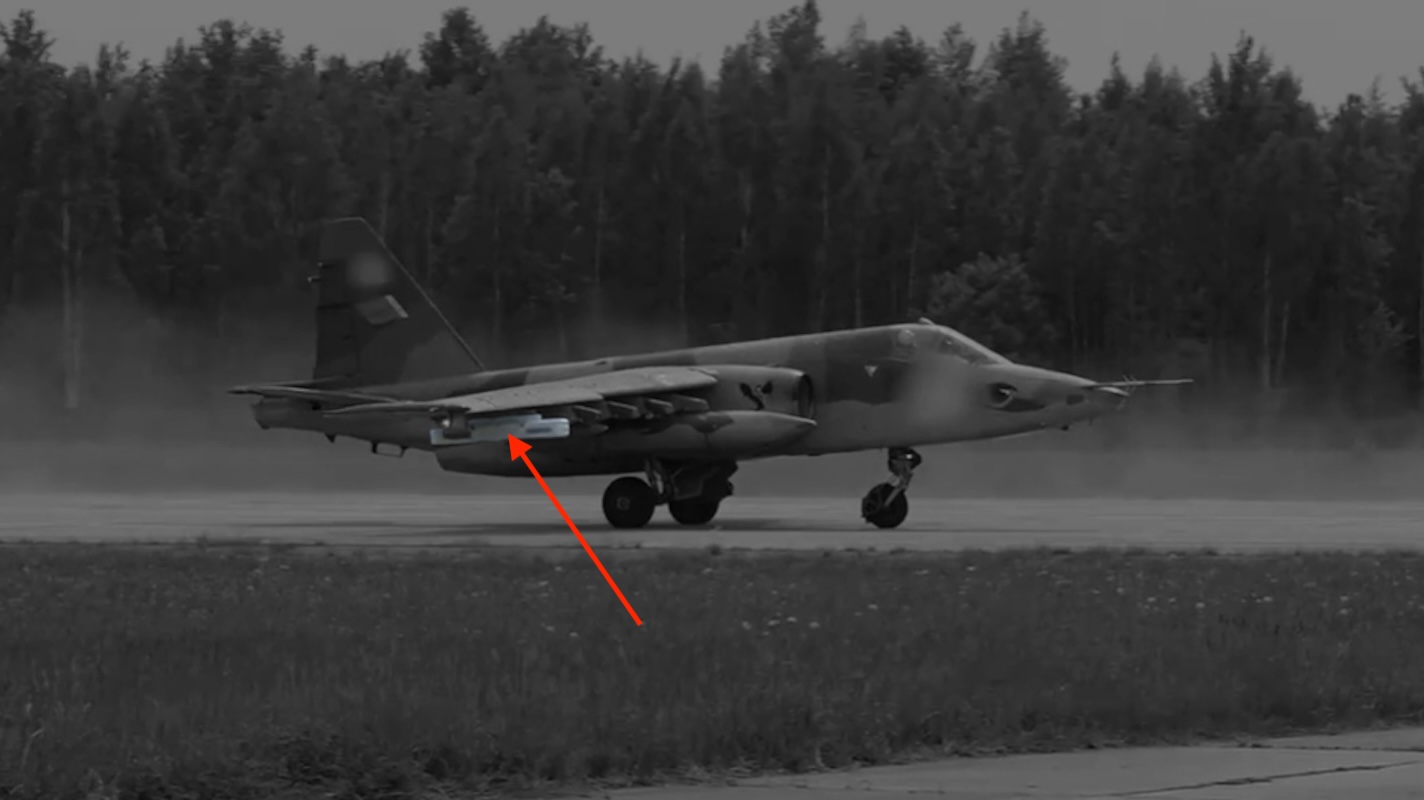
The researchers believe the use of these systems also reflects an effort to improve aircraft survivability in modern combat.
Demonstrating Readiness
The authors conclude that the primary objective of the Belarusian aviation component of the “nuclear” exercise was not practical preparation for employing non-strategic nuclear weapons, but rather demonstrating readiness to carry out such missions and rehearsing measures to preserve the combat effectiveness of the air force.
At the same time, the analysts note that even with aircraft dispersal, the use of reserve airfields, decoys and electronic warfare systems, the Su-25 remains an aircraft designed about four decades ago. As a result, its effectiveness against modern layered air defence systems remains open to question.