
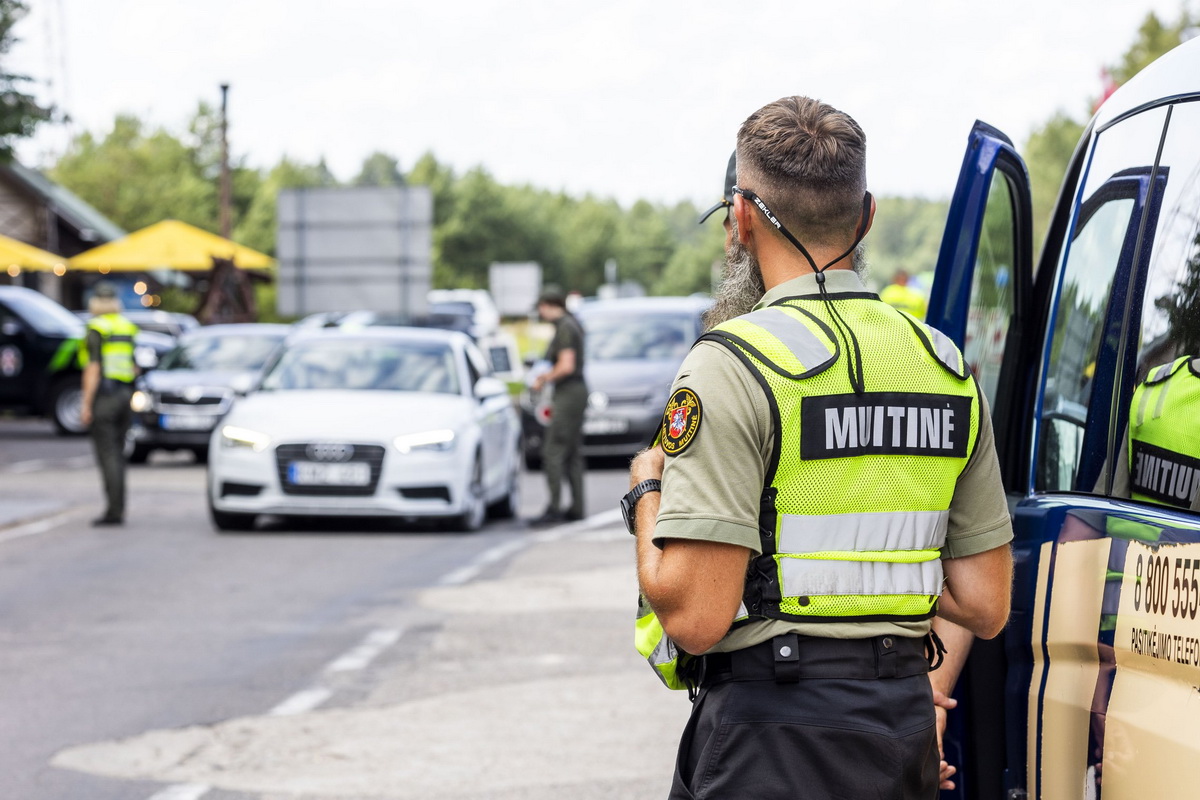
Lithuanian Interior Minister Vladislav Kondratovič has decided to strengthen measures at the country’s internal borders to improve the management of secondary migration flows from Latvia and reduce the risk of irregular migration.

Under the decision, surveillance technologies will be used more intensively and patrols stepped up at internal border sections, transport hubs, passenger transport routes, as well as airports and seaports. Checks will be carried out based on available information and assessments of potential risks. The Ministry of the Interior stressed that the measures do not amount to the reintroduction of internal border controls and will be implemented in accordance with EU legislation while preserving freedom of movement within the Schengen Area.
The State Border Guard Service has been tasked with organizing and coordinating the implementation of the measures. The Police Department, the Public Security Service and the Customs Department will also take part in the joint effort. These agencies will allocate the necessary personnel and material resources.
As the Lithuanian Ministry of the Interior states, following the tightening of security along Lithuania’s state border, migration flows instrumentalized by Belarus are increasingly being redirected to neighboring countries. In 2025, authorities detained 1,288 irregular migrants who had been transported from Latvia or had arrived independently from there. That figure was nearly 2.5 times higher than in 2024. During the same year, officers of the State Border Guard Service launched 85 pre-trial investigations into the illegal transportation of people across the state border and detained 101 smugglers.
In less than six months of this year, authorities have already detained as many migrants using the “Latvian route” as during the whole of 2025. Comparing the period from Jan. 1 to June 19 this year with the same period last year, secondary migration from Latvia increased fourfold, from 319 to 1,288 foreign nationals.
Since the start of the migration crisis in 2021, more than 25,000 attempts to cross the Lithuanian-Belarusian border illegally have been recorded. According to the ministry, the situation is currently stable, although secondary migration from Latvia is increasing. Lithuania remains in close contact with neighboring countries to coordinate efforts in addressing the situation.