
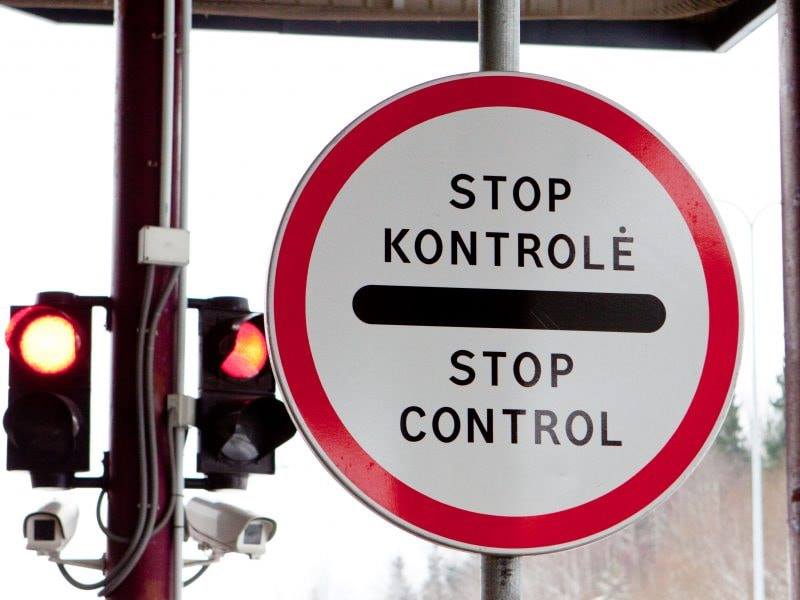
The Lithuanian government has backed a proposal by the Customs Department and approved a ban on the entry into the country of vehicles from Belarus and Russia if their fuel tanks contain more than 200 litres of fuel. The relevant decision was approved at a government meeting, the Belarusian State Customs Committee reported.

The Customs Department says excessive volumes of fuel carried in vehicle tanks are often illegally sold on Lithuanian territory. This leads to significant budget losses due to unpaid taxes.
Finance Minister Kristupas Vaitiekūnas said in October last year that cases of abuse had increased, with fuel from the tanks of trucks arriving from Belarus and Russia ending up on Lithuania’s domestic market. According to preliminary estimates, budget revenue losses could reach €26.5 million per year.
Monitoring carried out by Lithuanian customs in early 2025 showed that almost all trucks entering Lithuania from Belarus and Russia had fully filled tanks, while leaving the country with nearly empty ones. On average, about 200 such trucks entered Lithuania daily, or around 7,100 per month.
According to the department’s estimates, if an average of 500 litres of fuel is illegally drained from a single truck, around 100,000 litres of diesel could enter the domestic market each day. As a result, the state could lose up to €2.2 million in tax revenues per month and up to €26.5 million per year. Total import charges — customs duty, excise tax and VAT — on 1,000 litres of diesel fuel average €736.
As noted by the Lithuanian government, similar restrictions are in place in other EU countries bordering Belarus and Russia. In Poland, up to 600 litres of fuel may be imported in truck tanks duty-free, in Latvia up to 200 litres, and in Finland up to 400 litres.