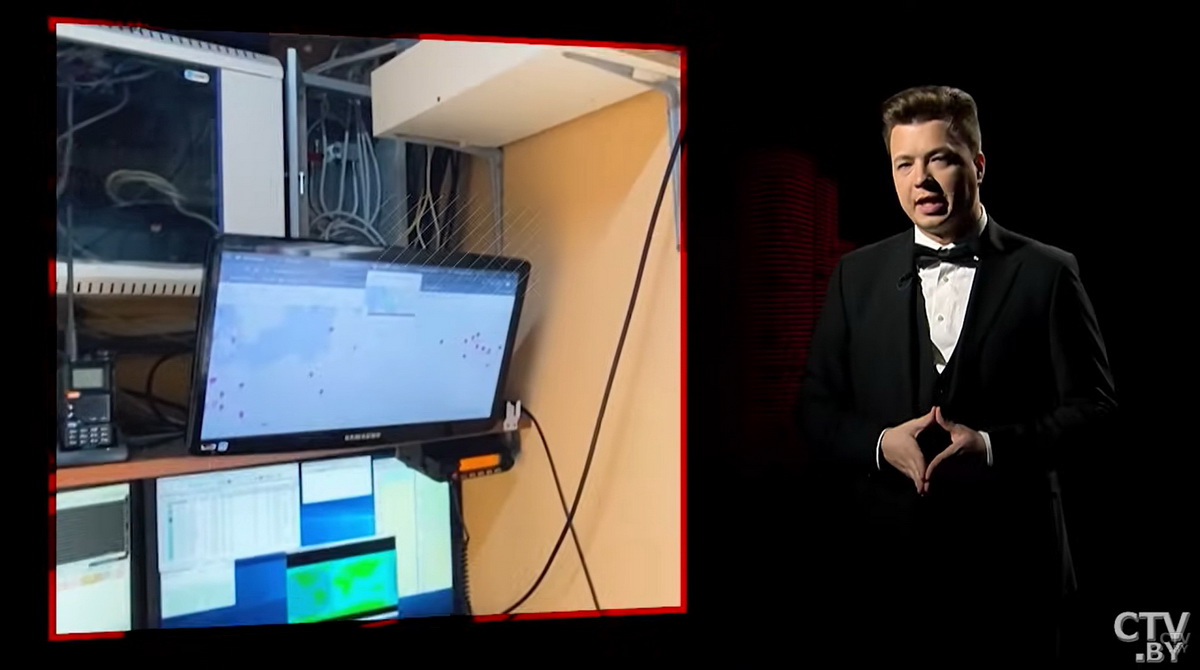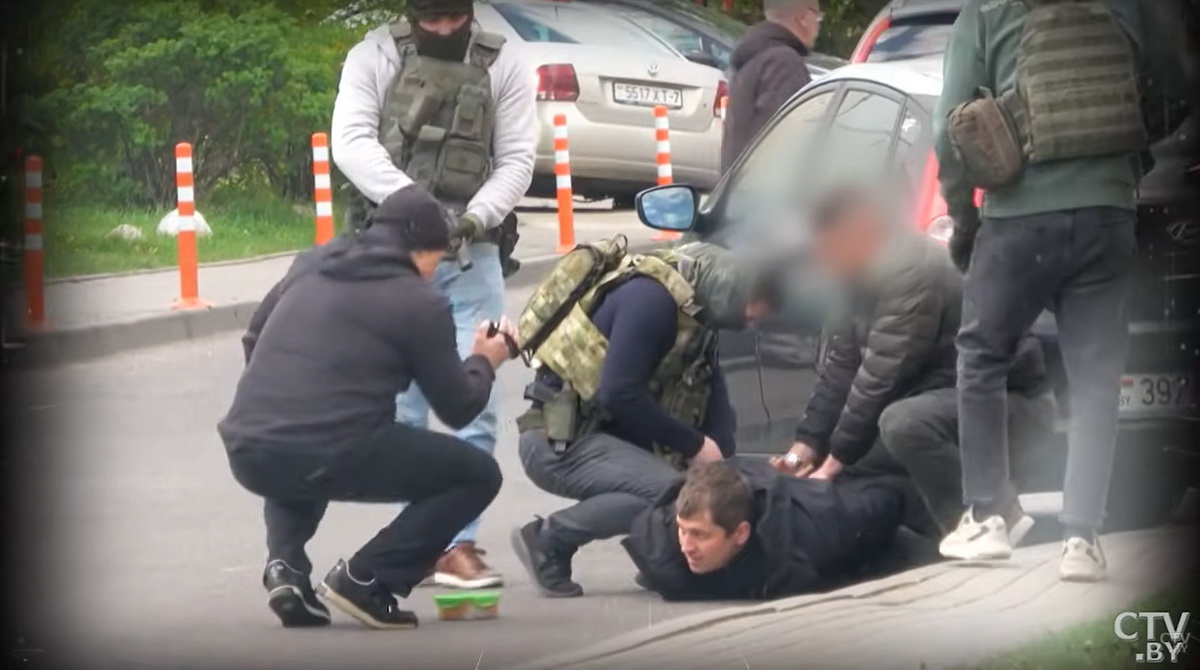
Belarusian state media have aired a report claiming the “liquidation of a large network of radio spies.” Details of the alleged KGB “operation” were presented by Raman Pratasevich, who recently began hosting a programme titled “Without Cover” on the STV television channel.
The broadcast said a network had been dismantled that allegedly “extracted state secrets from the airwaves.” According to Pratasevich, more than 50 people have been held liable, 500 pieces of radio equipment seized, and about 66,000 recordings of “intercepted communications” discovered.
Seven “key participants” have been taken into custody and charged under Article 356 of the Criminal Code on treason and Article 358 on espionage. They face life imprisonment or the death penalty.
The report included footage from a December comment by the head of Belarus’s KGB, Ivan Tertel, in which he spoke of a “serious intensification of intelligence and subversive activity” against Belarus.
“For example, almost daily satellites belonging to groupings of Western states, intelligence services and armed forces monitor the situation on our territory. They photograph and film, analysing not only railway transport, logistics and certain defence-related facilities, but also ordinary enterprises.
This year, Belarusian counterintelligence uncovered and eliminated an extensive network of foreign intelligence services which, with the assistance of certain individuals on our territory, were installing technical means that made it possible to listen in on the communications of our pilots — both civilian and military — carrying out their tasks. We are seeing new forms and methods of work. Above all, these are remote recruitments. This year alone, the Committee’s counterintelligence identified the activities of more than 70 agents of foreign intelligence services,” he said.
According to Pratasevich, the official version states that a network using radio equipment for unauthorised interception had been stopped.
“According to the KGB, a clandestine structure created with external support was identified and neutralised. Its ultimate goal went far beyond simple curiosity. It was about gaining the ability to influence critically important facilities. The focus of this network included key military sites — airfields and air defence positions; security agencies — from the Ministry of Defence and the Interior Ministry to the Presidential Security Service; and ensuring the security of the country’s top leadership, including detailed routes of movement,” he said.
The propagandist claimed the network was disguised as a “community of radio enthusiasts,” while in reality allegedly functioning as a “system of illegal interception using specialised equipment to access closed channels.”
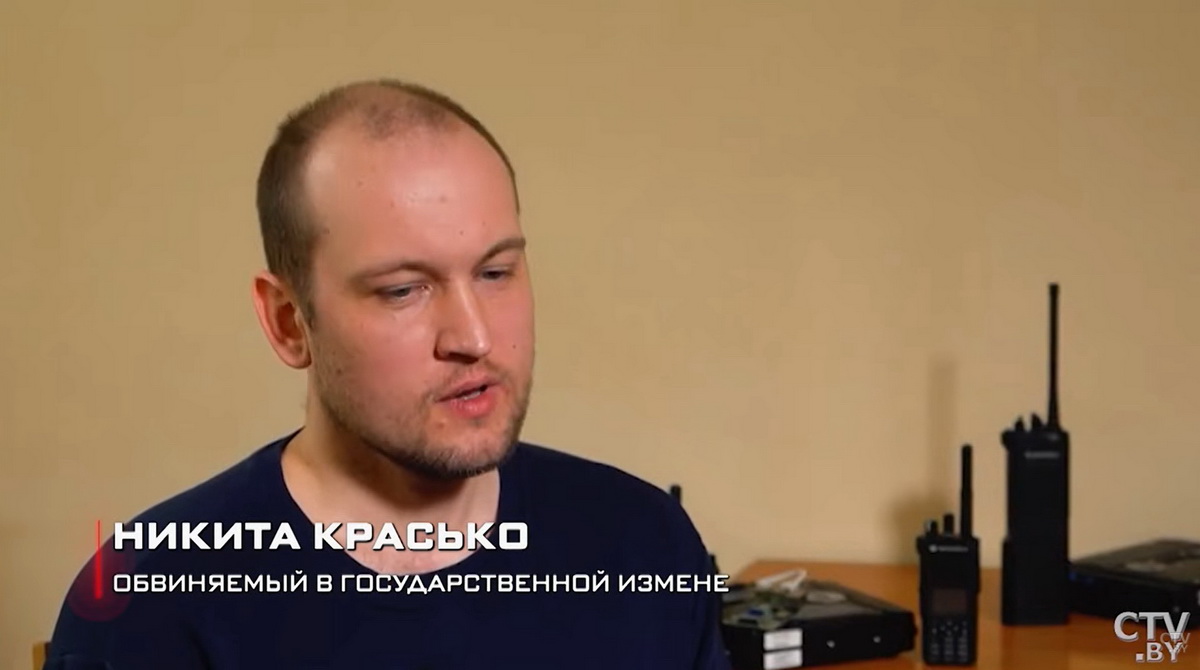
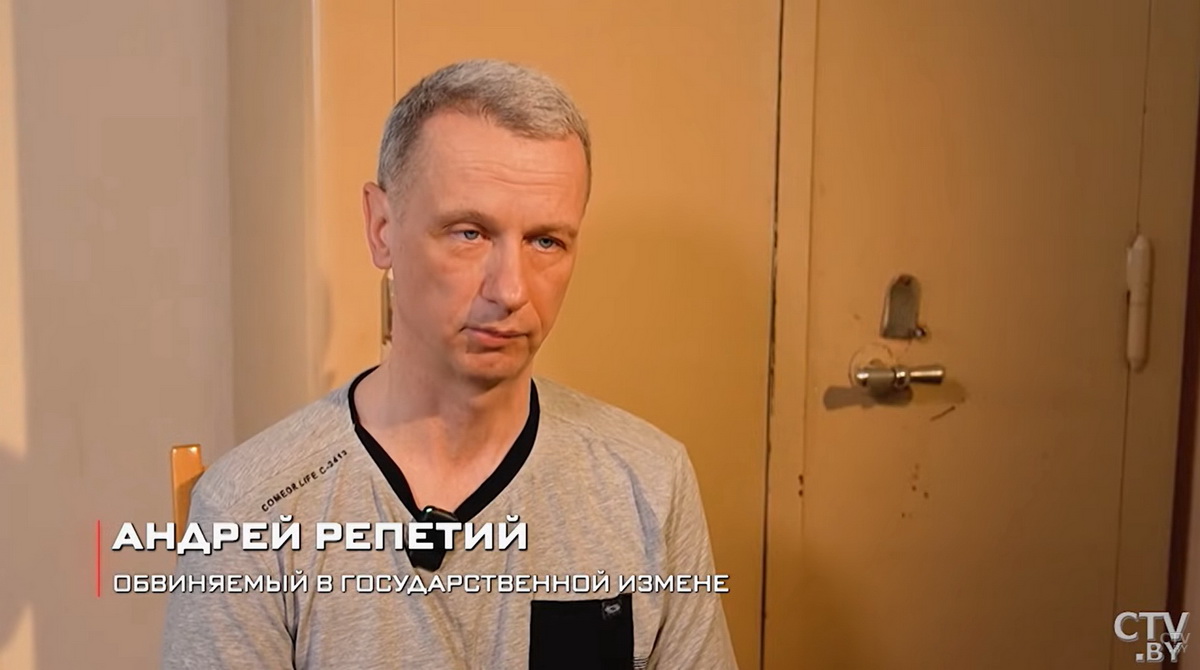
The report showed two men identified as defendants in a treason case — Andrei Repetiy and Nikita Krasko.
“I installed an antenna on the roof and could calmly hear the entire city from my home,” Krasko says on camera. “The Presidential Security Service used control points, and by them you could understand where the motorcade was going.”
He also claimed to have known the motorcade’s call signs.
According to Pratasevich, the reception range included frequencies of the Interior Ministry, the Emergencies Ministry and operational services.
“Another figure, Viacheslav Benko, уточняет, that information supporting operational-search activities was intercepted. But particular interest was focused on the protection of the country’s top officials. All this data was digitised in real time and uploaded to open internet access. This step became the point of no return. The network’s participants voluntarily lost control over what they had collected, turning local eavesdropping into a remote tool for external operators. In effect, they handed over part of the country’s information sovereignty into чужие hands. Investigative and expert analysis points to multi-level tasks characteristic of strategic intelligence,” he said.
Pratasevich claimed the hobby was merely a cover and that the radio amateurs acted not as random listeners but as “targeted collectors.”
“They searched for and recorded ciphers, call signs and technical parameters of closed departmental channels. This is no longer a hobby — it is the collection of intelligence. As one of the detainees admits, the data obtained, including military communications near the border, was passed on further — to the internet, where, in his words, it could be listened to by ‘interested structures’,” he said.
“I thought I was smarter than everyone else. Specifically, I was listening to these prohibi… closed communications for foreign intelligence services,” Krasko says in the propaganda report.
According to Pratasevich, an expert examination “unequivocally confirmed that the seized materials include information constituting state secrets protected by law.” A criminal case has been opened.