
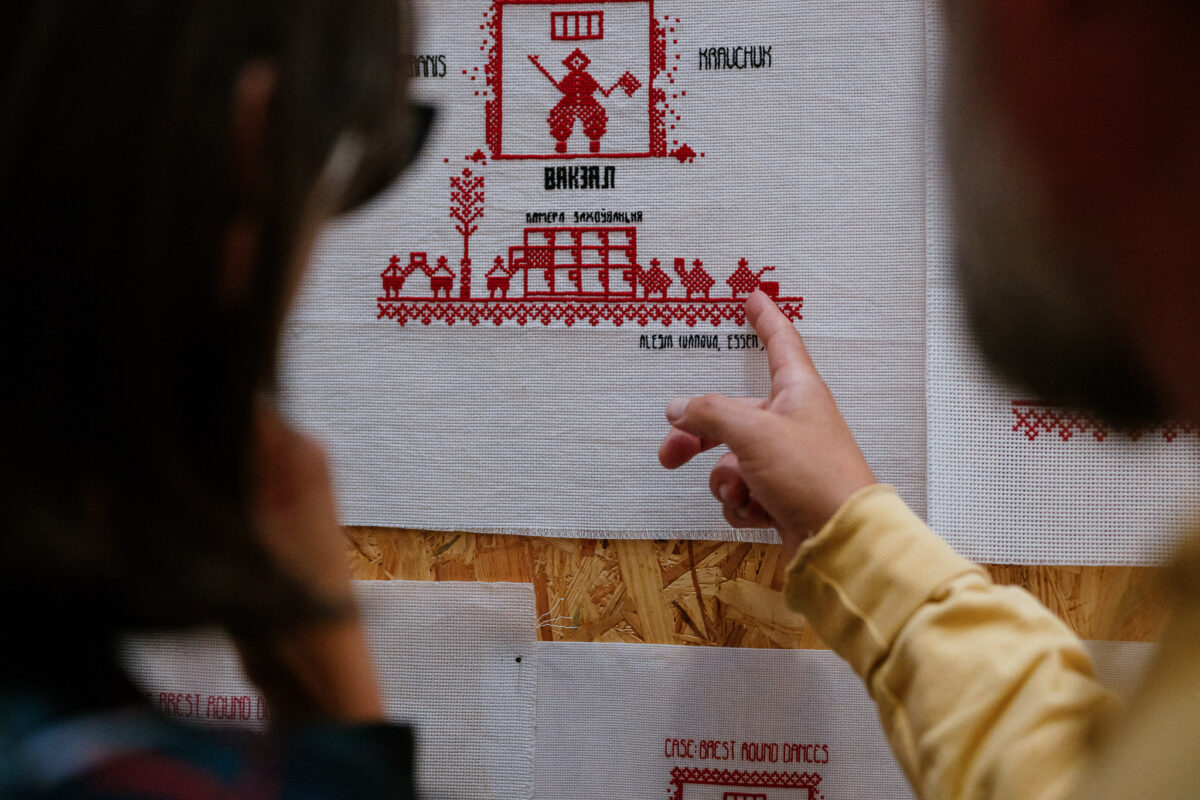
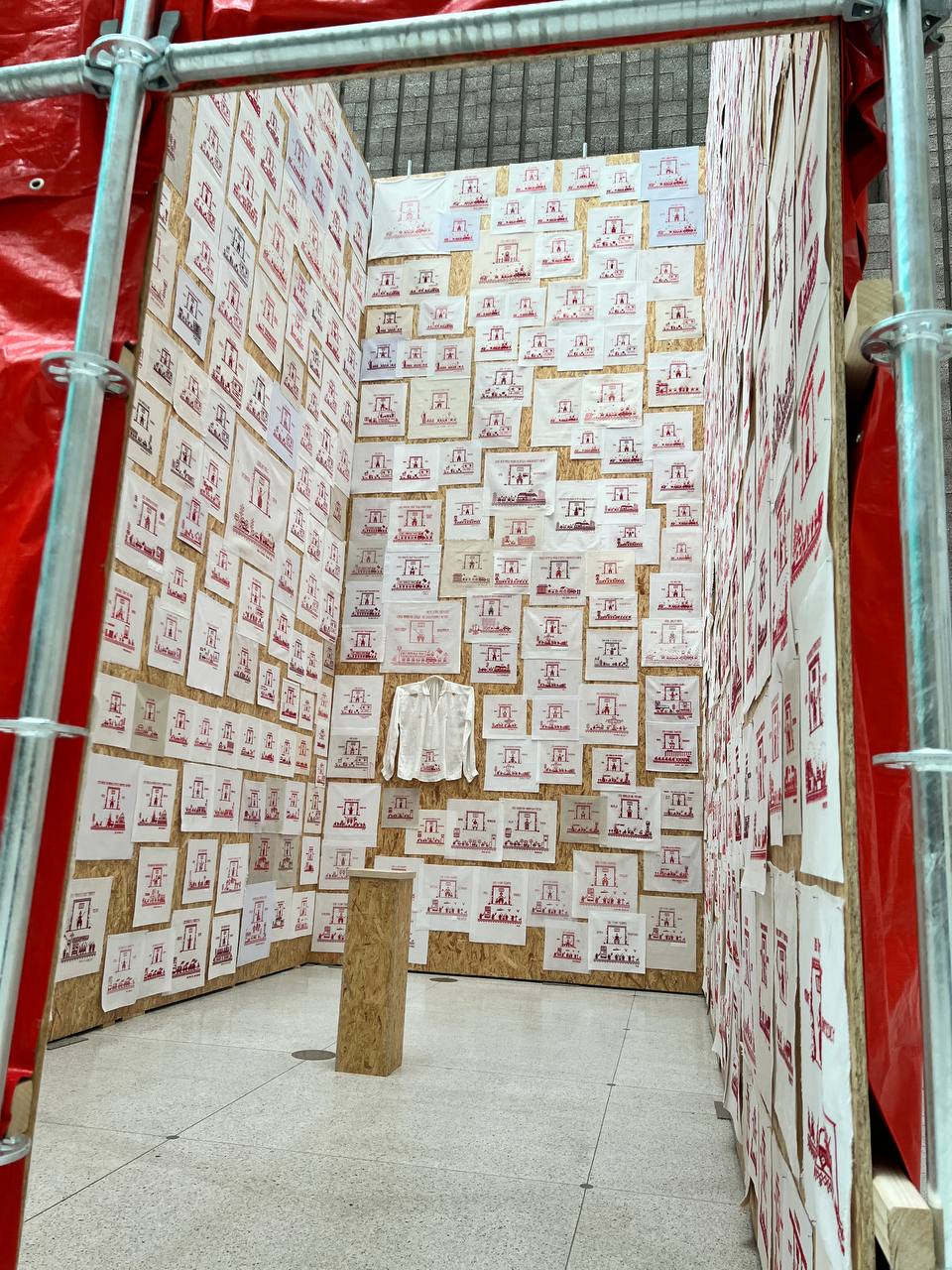
The #FramedinBelarus installation brings together 681 embroidered works — nearly the complete archive of the renowned international project initiated by Belarusian-Czech artist Rufina Bazlova. A giant structure resembling a towering room nearly seven meters high was built inside the National Gallery in Prague. Its walls are entirely covered with embroideries of various sizes.

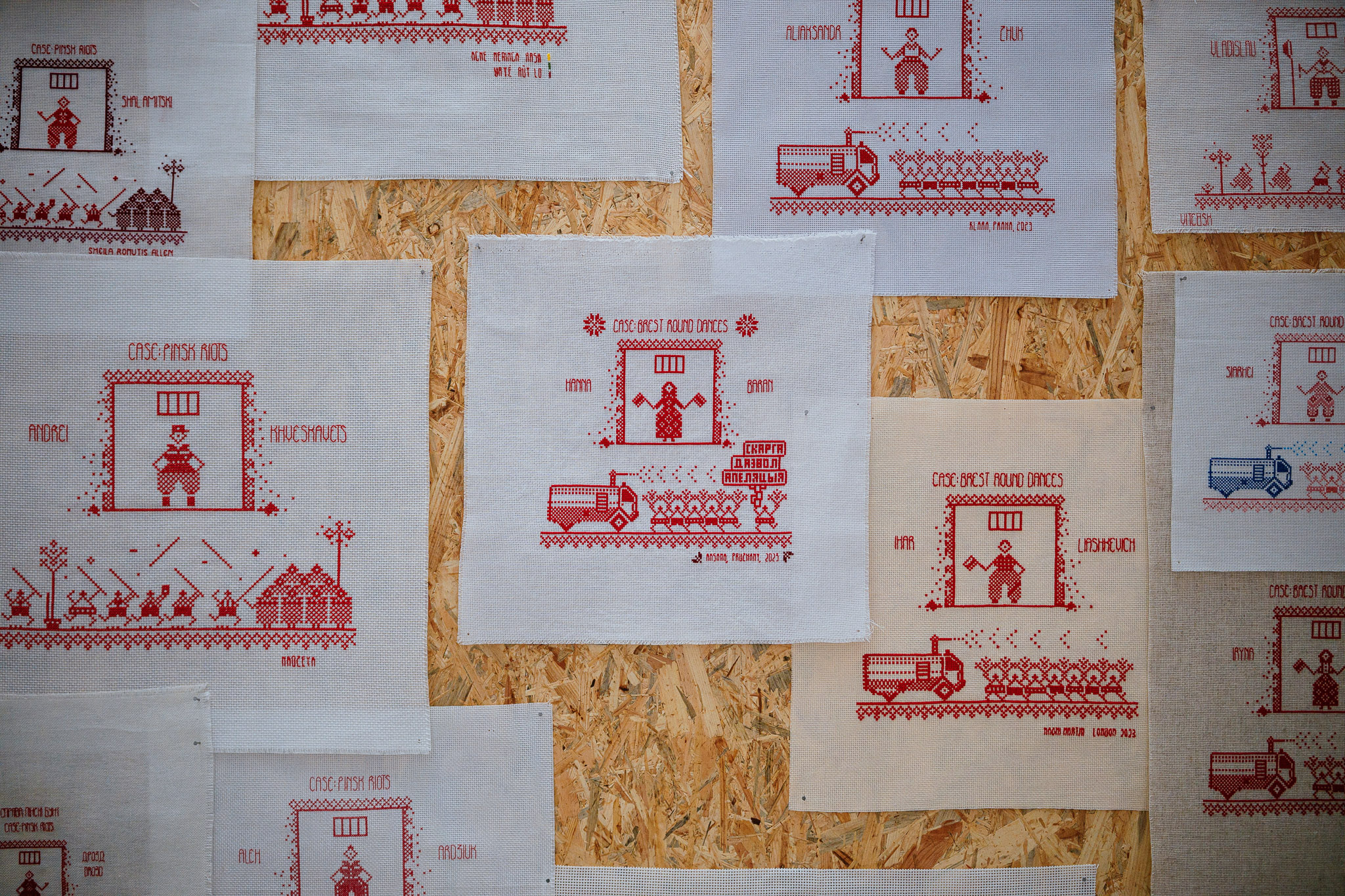
Acts of Creative Solidarity
#FramedinBelarus is a collective project in which volunteers from different countries embroidered the stories of Belarusian political prisoners based on sketches by Rufina Bazlova. The artist transformed each story into an embroidery pattern: at its center she placed the figure of a political prisoner, their name and surname, and a visual narrative explaining why the person is imprisoned.
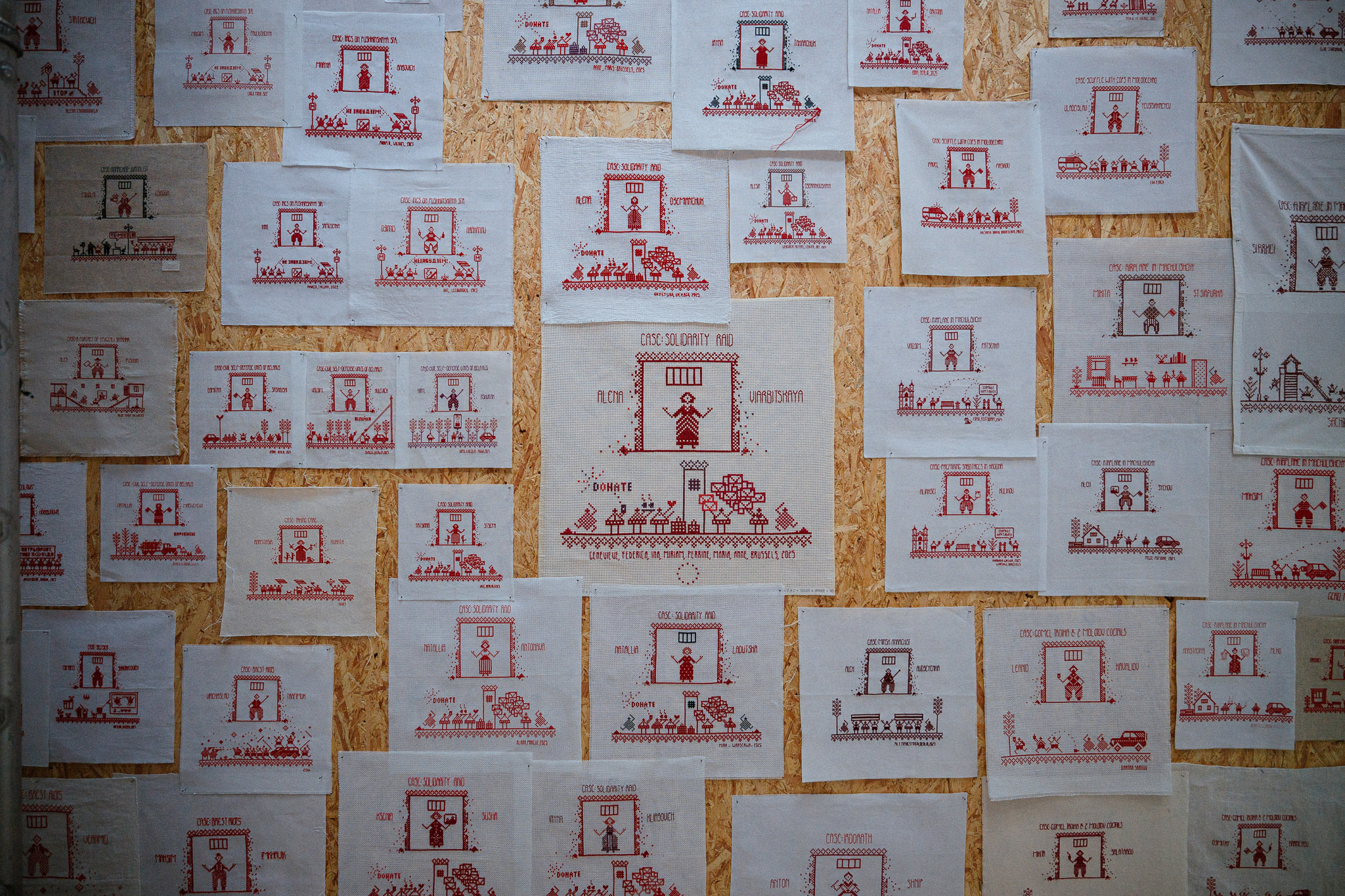
The embroidered works have now been assembled into a large mosaic.
Rufina Bazlova told our publication that the opportunity to present the project at the National Gallery in Prague came from the curators of the Matter of Art Biennale.
“They wanted to show the full scale of the project, all the embroideries. And this idea became possible thanks to ArtPower Belarus,” the artist explained.
A New Exhibition Format
“We filled all the walls of a large room with embroideries. The space itself is claustrophobic, like a prison cell, and visitors physically enter this subject matter, entering the stories of political prisoners,” Rufina said, describing the concept.
“Visitors’ reactions were powerful, even overwhelming. They said they felt very small because the space is enclosed and stretches upward.
If the embroideries at the lower levels can be examined and their stories read, then higher up the details become invisible. People were struck by how many embroideries there were, how many lives were gathered together in a single space.”
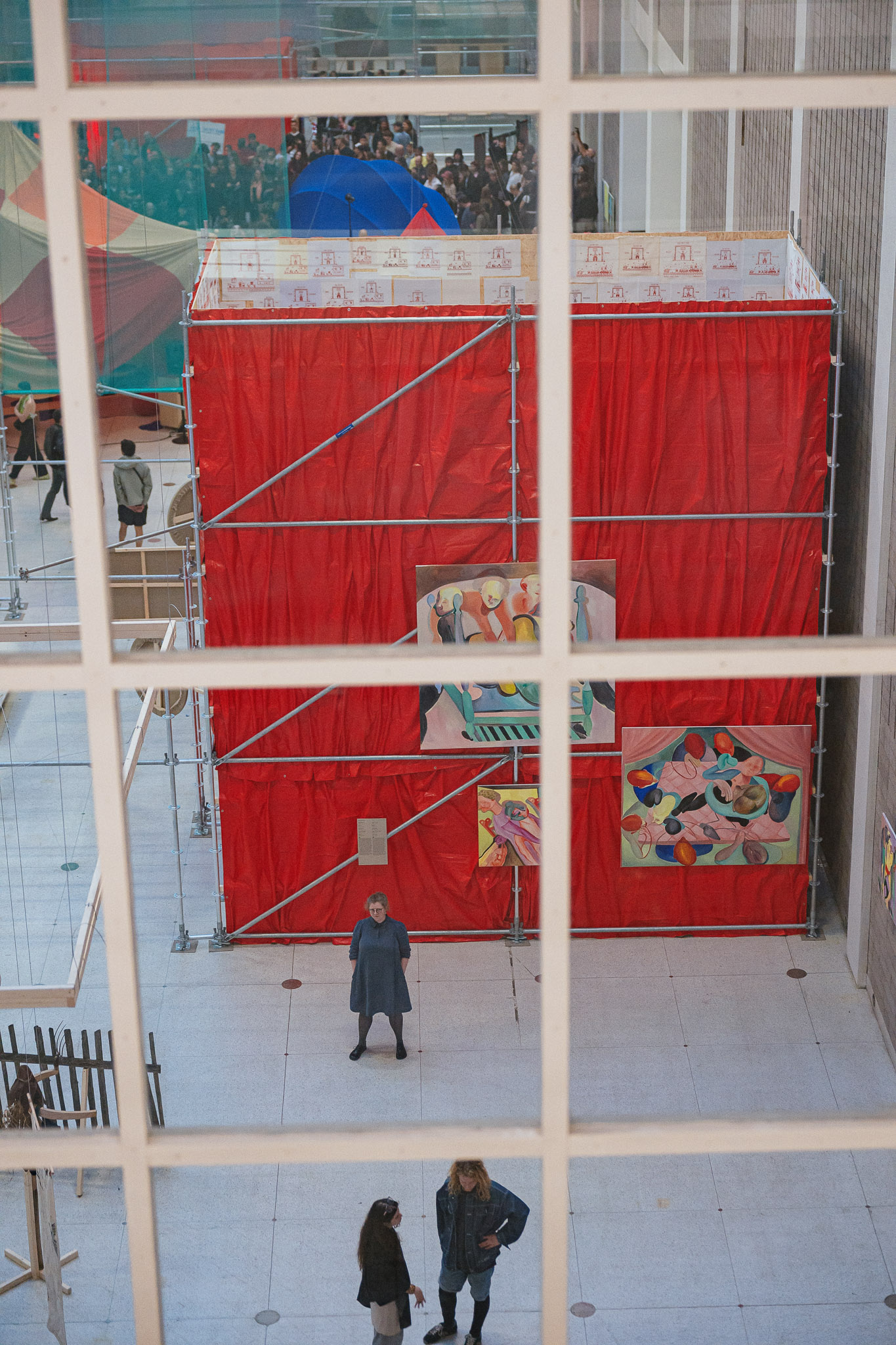
The scale of the installation allows visitors to almost physically experience the extent of the repression. At the exhibition, a QR code links directly to the project’s website and its online gallery, where more than 380 embroidered testimonies are presented alongside the stories of their creators. The gallery will gradually expand with new works and materials, creating an open archive of collective memory.
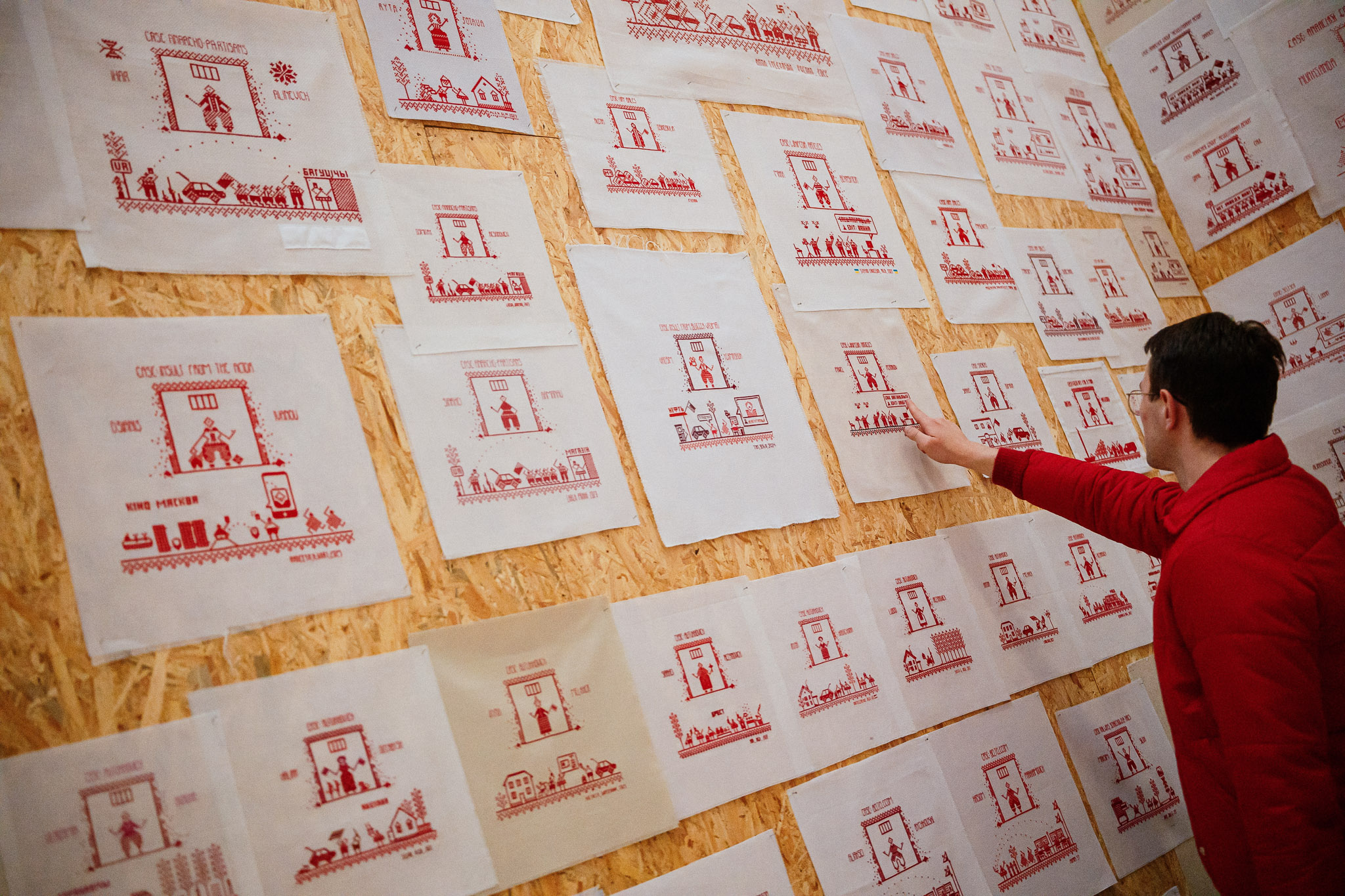
“This exhibition is very important to me because it is the first time we have managed to bring all the works together and test a new format. The artifacts have already been collected, and I plan to continue presenting them in different projects and through different formats,” Rufina Bazlova said.
“It is also important to me that these works speak to people — that they are actually shown. And it turned out that almost every embroidery, except for those that had not yet been sent, was exhibited. Every single one.”
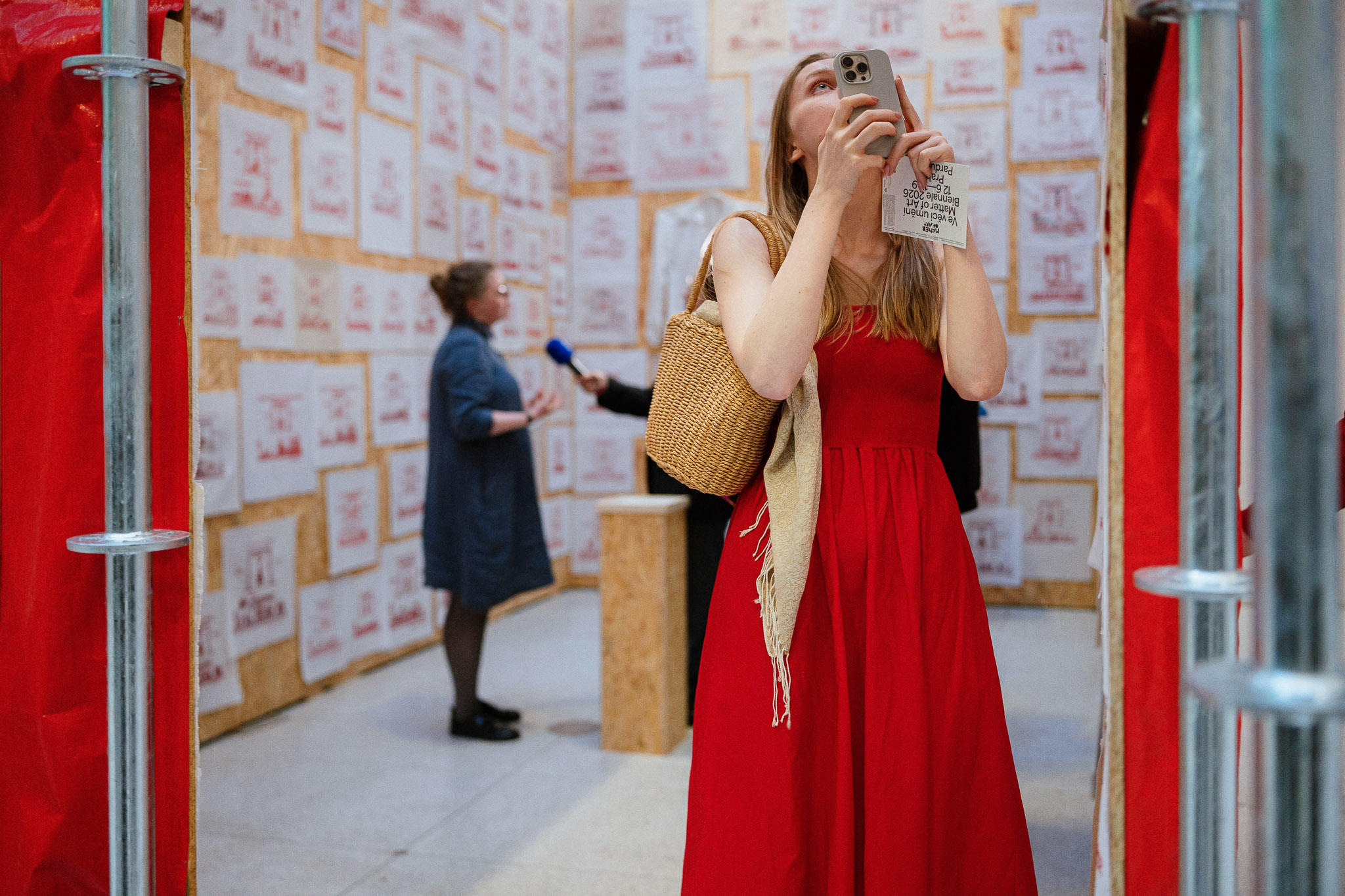
Visitors were struck by the scale of the work — both that of the project team and of the large number of people who embroidered these stories. And, of course, by the sheer number of political prisoners.
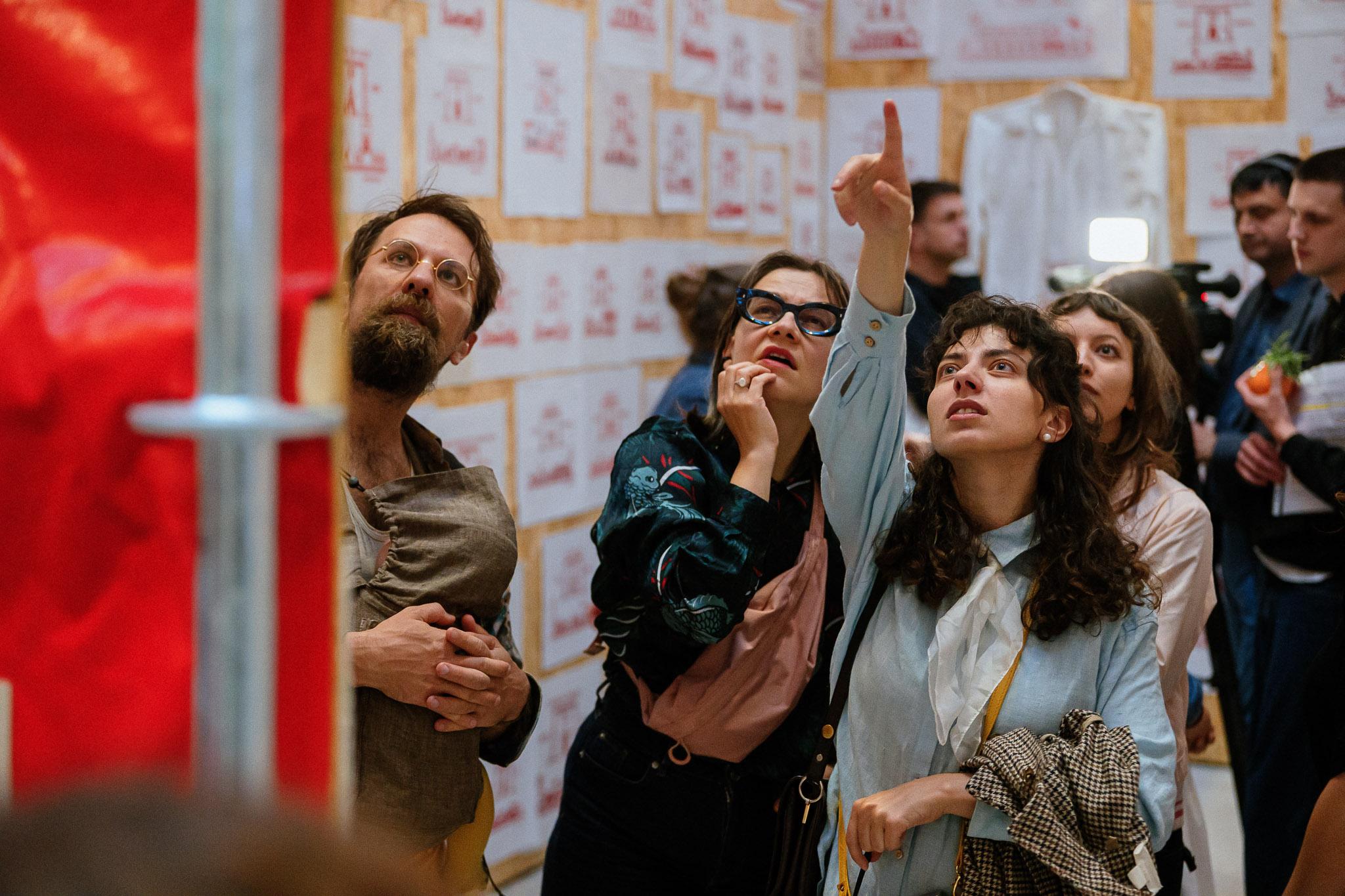
Many participants in the #FramedinBelarus project traveled to Prague for the opening, some coming from other countries. Rufina Bazlova also recalled that Sviatlana Tsikhanouskaya attended the event and effectively served as a guide for Czech Minister of Culture Oto Klempíř, explaining both the project, with which she is well acquainted, and the stories of Belarusian political prisoners.
Belarusian artist Hleb Amankulau is also participating in the Matter of Art Biennale.
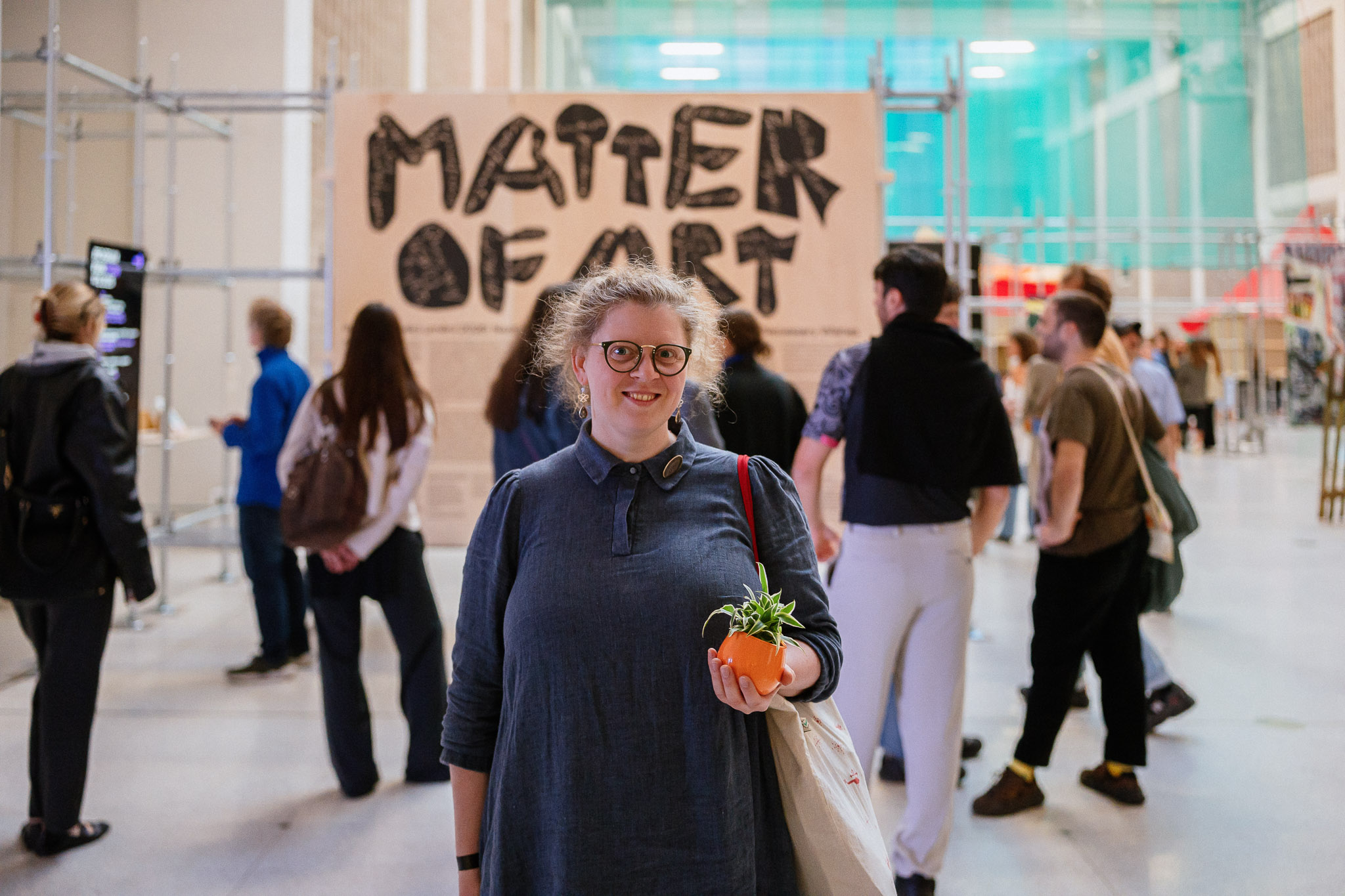
Voices of the Oppressed
The fourth edition of the Matter of Art Biennale, titled “Necessary Desires,” runs until September 13, 2026. The curatorial concept is the result of collective work by this year’s team consisting of František Fekete, Jakub Gawkowski, and Yaroslava Tamanova. Within this framework, art is viewed as a vital necessity — something unavoidable and deeply embedded in the structures of everyday life.
The biennale views artistic expression as a means of solidarity and empathy, as a vehicle, mediator, and tool for strengthening communities and giving a voice to those whom others seek to silence.
Subscribe to Reform.news cultural news updates on Telegram