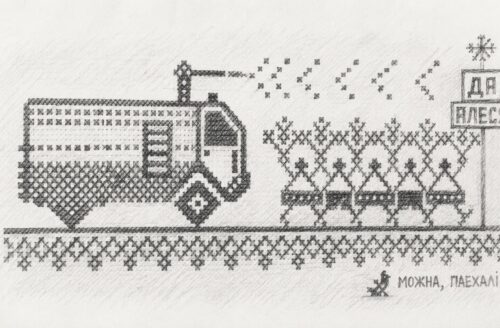
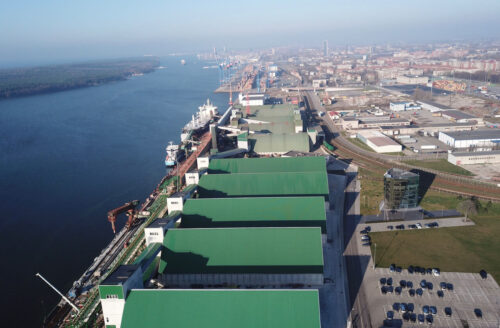
After Ukrainian drones struck Russia on the night of July 18, Russian online retailer Wildberries found itself facing serious problems. Massive fires engulfed the company’s largest logistics hubs in Kotovsk, Tambov Region, and Elektrostal outside Moscow after the attacks. During the following night, the Armed Forces of Ukraine destroyed two more of Wildberries’ largest warehouse complexes in southern Russia — in Kotovsk and Elektrostal, followed by warehouses in Krasnodar and Nevinnomyssk. The online retailer and the businesses working with it are suffering losses. This could well affect Wildberries’ projects in Belarus, where the authorities have a habit of extracting an additional price from investors whenever their business runs into trouble.
Staggering losses
For now, the scale of the losses can only be estimated. An unnamed source familiar with the situation at Wildberries told The Bell that up to 15% of the company’s warehouse space was damaged in the July 18 attack. Russian newspaper Vedomosti, citing industry experts, reports that the logistics centers in Kotovsk and Elektrostal alone are worth more than 20 billion Russian rubles (over $255 million). Including equipment and inventory stored at the facilities, the total damage could reach 50 billion rubles.
Experts surveyed by Forbes believe the losses could be even greater. Rebuilding the warehouses is expected to cost around 30 billion rubles. Meanwhile, a “conservative” estimate values the inventory stored at the logistics centers at between 150 and 170 billion rubles.
“That means that even according to preliminary estimates, fully covering the damage would require a sum exceeding the entire net profit of the Wildberries & Russ group, which amounted to 175 billion rubles in 2025—almost 1.7 times higher than in 2024,” the publication notes.
Wildberries suffered additional losses overnight. The combined area of the warehouses attacked by Ukrainian forces in Krasnodar and Nevinnomyssk amounts to about 270,000 square meters, representing another 5% of the retailer’s warehouse infrastructure. The financial impact of those strikes has yet to be assessed, but it is already clear that it will be substantial.
Whether sellers using Wildberries will receive compensation for destroyed goods remains an open question. Since July 7, the company has changed its terms of service. Under the new rules, Wildberries is no longer liable for goods damaged by “force majeure” events, including drone attacks. However, The Bell’s source believes it is too early to conclude that Wildberries will refuse all compensation payments: the company will either have to reimburse sellers or risk losing them to competing platforms.
Even without such compensation, however, the losses are staggering.
Wildberries may not have been chosen as a target by chance. A couple of years ago, the merger between Wildberries and outdoor advertising operator Russ triggered a series of scandals, including a deadly shooting, blood-feud threats, and the involvement of figures close to the Russian authorities, including Chechen leader Ramzan Kadyrov, billionaire Suleiman Kerimov, and State Duma deputies Berkhan Barakhoev and Rizvan Kurbanov. Russian media reported that the merger was personally backed by Vladimir Putin, who tasked Deputy Head of the Presidential Administration Maksim Oreshkin with overseeing the process. Now, Ukraine is striking a business linked to people close to the Russian president.
Kyiv offers a different explanation. According to Ukrainian President Volodymyr Zelenskyy, Wildberries facilities were being used to supply sanctioned components for the production of drones and navigation equipment, making them legitimate military targets.
In either case, there is little reason to believe that the Ukrainian military will stop here or that other Wildberries logistics hubs will be spared. That would inevitably lead to even greater losses for the company.
Wildberries in the Belarusian Reality
In November 2023, Wildberries and the China-Belarus Industrial Park Development Company signed a purchase agreement for a more than 27-hectare land plot in the Great Stone Industrial Park. The site was intended for the construction of a Wildberries distribution center that was to become the largest Class A+ logistics facility in Belarus, covering approximately 140,000 square meters. The project was expected to create between 5,000 and 6,000 jobs. At the time, the marketplace already operated three logistics centers with a combined area of more than 20,000 square meters in Minsk, Minsk Region, and Homiel.
In May this year, the Wildberries logistics complex in Great Stone began operating in test mode. One section of the facility has already started receiving deliveries, while finishing work and equipment installation continue in the remaining parts of the complex.
“The facility is currently undergoing capacity testing and business process adjustment,” the press service of RWB, the merged Wildberries and Russ company, said at the time. Total investment in the multifunctional warehouse complex amounted to around 11 billion Russian rubles.
To mark the occasion, Wildberries CEO Tatyana Kim visited Minsk, where she met with Belarusian Prime Minister Aliaksandr Turchyn. The talks focused on developing the strategic partnership, supporting Belarusian businesses, and expanding the presence of Belarusian-made goods on the marketplace.
The phrase “the presence of Belarusian goods” is exactly where the Belarusian authorities’ cautious attitude toward online retailers in general—and Wildberries in particular—becomes clear. Their main concern has always been the influx of imported goods into Belarus through marketplace platforms.
From the very beginning, the Belarusian authorities sought to force Wildberries to operate within strict limits, explaining the “key factors for successful operations” in the country.
In February 2025, Aliaksandr Lukashenka held a meeting with representatives of private businesses, during which he promised them “harsh support”. Tatyana Kim attended the meeting. A letter from the Belarusian government concerning Wildberries’ operations prompted an emotional response from Lukashenka:
“They are ready to expand here and sell. The question is: sell what? We are pursuing import substitution. Our market is small, but we would like our own producers to occupy it. And so on and so forth. If that’s the case, you are welcome. <…> Every enterprise must work for Belarus, for the state. If it does, I will have no complaints.”
Immediately after that meeting, the Belarusian Ministry of Antimonopoly Regulation and Trade launched inspections, accusing the marketplace of selling goods from “unfriendly countries” and improperly refunding customers.
There is a theory that Putin’s Deputy Chief of Staff, Maksim Oreshkin, had to travel urgently to Minsk to shield Wildberries from pressure by the Belarusian leadership.
Back in 2024, Belarus’ Ministry of Antimonopoly Regulation and Trade and Wildberries signed a cooperation agreement intended to create “favorable conditions for the development of online trade and for promoting Belarusian-made goods in domestic and foreign markets.” On August 18, 2025, however, the ministry terminated the agreement, accusing the company of failing to fulfill its obligations.
Instead, Wildberries was invited to join the broader agreement of April 11, 2025, aimed at increasing sales of Belarusian products. By then, more than 530 companies and sole proprietors had signed it.
Wildberries understood the message. It became the first marketplace to launch a dedicated “Made in Belarus” section, where Belarusian products are offered without intermediary markups.
“We understand the challenges Belarusian state-owned enterprises usually face in retail, which is why our Growth Platform includes a special track for such companies, helping them use modern marketing tools and promotional opportunities. As for special conditions for state-owned enterprises, negotiations are currently underway,” said Tatyana Kim during the presentation of Wildberries’ business support program, held during her visit to the Great Stone logistics center. At the same event, the Bellegprom state concern showcased products manufactured by Kamvol.
“We have signed an agreement with Wildberries and are working with our top ten enterprises. <…> The owner of the platform has confirmed individual support for our ten state-owned companies, including assistance with advertising and other practical measures,” said Nadzeya Lazarevich, chairwoman of Bellegprom, in June this year.
Wildberries Belarus director Dzianis Siamionkau said in an interview with Office Life that the company is already working with 15 Bellegprom enterprises, including Vitebsk Carpets, Lenta, Milavitsa, Galanteya, and others. Sales of Belarusian-made products on the marketplace increased by one-third over the past year.
Meanwhile, the Ministry of Antimonopoly Regulation and Trade continues to inspect the company with remarkable regularity—apparently to make sure it does not become too comfortable.
Just as both sides seemed to have reached an understanding and accepted the rules of the game, the Ukrainian military intervened. Under certain circumstances, those attacks could seriously undermine not only the Russian retailer’s ambitious plans in Belarus, but also the future of the company’s Belarusian operations themselves.
Ambitious Plans
Yet Wildberries’ plans in Belarus extended far beyond opening the logistics center in Great Stone.
The company launched its WB Taxi service in Minsk. Just days ago, testing was completed, and the service entered full commercial operation.
Wildberries was also reported to be working with the National Bank of Belarus on fintech projects and expressed interest in acquiring one of the country’s banks. According to sources, the target was RRB-Bank.
Finally, the company planned to build another—and even larger—logistics center in Belarus. According to Dzianis Siamionkau, director of Wildberries Belarus, a 200,000-square-meter warehouse complex is to be built near Fanipal. The facility was expected to be commissioned in stages during 2027–2028.
Following the Ukrainian strikes on the company’s warehouses in Russia, however, it may be more appropriate to write not that the project “is planned” but that it “was planned.” Will Wildberries still be able to carry out these ambitious projects given the losses it has already sustained—and those it may yet face?
And this is where the Belarusian regime may once again step onto the stage in all its glory, acting just as it has on many previous occasions.
Motovelo and Others
It is possible that Wildberries will still manage to complete the nearly finished logistics center in Great Stone—if the official reports are to be believed. But that is far from certain. The launch date has already been postponed once: originally, the facility was scheduled to open in October of last year.
It is entirely possible that, due to a shortage of funds needed to complete the remaining work, the opening will have to be postponed again—or the finishing work and equipment installation could be frozen altogether. After all, the company also has to rebuild its warehouses in Russia. And even if the facility is completed, will Wildberries be able to provide enough business to keep it operating at full capacity?
As for the logistics center near Fanipal, it appears to be turning into a pumpkin before it has even begun taking the shape of a carriage.
In other words, there is a high probability that Wildberries will simply be unable to carry out its ambitious investment plans in Belarus. That also means it will fail to fulfill the promises it made to the Belarusian authorities when entering the market. And that could have consequences.
What does the Belarusian regime like to do with businesses that fail to keep their promises?
That’s right—it confiscates their assets.
Take the case of Motovelo and Aliaksandr Muravyou, owner of the Austrian company ATEC Holding GmbH, which acquired a 99.7% stake in the enterprise in 2007. In 2013, Aliaksandr Lukashenka sharply criticized the company’s performance. He recalled that one of the conditions of the privatization had been preserving Motovelo’s production profile and investing at least $20 million in the enterprise between 2007 and 2012, obligations that, according to him, had been fulfilled only partially.
Muravyou was arrested in 2015, and the company was nationalized. In 2017, he was sentenced to 11 years in prison on charges of fraud, embezzlement, tax evasion, organizing crimes, and aiding criminal activity. Only in the winter of 2023 did he leave prison and depart Belarus.
No one seemed interested in the fact that the company’s failure to meet its commitments was caused not by criminal intent but by objective circumstances. The core of Muravyou’s problems—and those of Motovelo—lay in rising gas prices and a sharp decline in exports to the European Union by the Yelizovo Glass Factory, 65% of whose shares were also owned by ATEC.
Another example is the Miory Metal Rolling Plant. In August 2021, Lukashenka announced that the enterprise would be nationalized. He justified the expropriation of private property by saying that “the private owners failed to fulfill their obligations.”
“This plant simply cannot be worth that much. We can already see that at first glance. So those who promised to build this plant took out bank loans, ordered equipment, imported it, and built the factory. At great expense. Where is the money? That is the main question for those who are currently sitting in a detention center,” Lukashenka said.
So in Belarusian reality, a business failing to fulfill its promises is a perfectly sufficient pretext for confiscating its assets.
The authorities could also choose another route.
Belarusian manufacturers have also suffered losses as a result of the drone attacks on Wildberries’ logistics centers in Russia. Cosmetics producer Modum said it lost around 30% of its products because they had been stored in the warehouses destroyed in Elektrostal and Kotovsk.
Companies belonging to the Bellegprom state concern that cooperate with Wildberries have likely suffered losses as well, along with many other manufacturers—including state-owned enterprises.
If Wildberries either refuses or proves unable to compensate them, the Belarusian regime could easily justify confiscating the company’s Belarusian assets under the guise of “protecting domestic producers.”
In short, if there is a will, there will always be a pretext. And the prize is an attractive one.
Nor is it certain that Tatyana Kim and her company would receive much protection from their influential Russian patrons. After losses on this scale, both Wildberries and its nominal owner could become exactly the sort of burden that is easier to abandon than to continue carrying.
Tatyana Kim may yet come to regret the decision she once made to expand her business into Belarus. Influence, connections, and political backing are fickle things—today they exist, tomorrow they may disappear. And then, as the saying goes, even the Ukrainian Armed Forces may have the final word.
Subscribe to our Telegram channel “Reform.news: The Most Interesting”
***
The opinions and assessments expressed by the author do not necessarily reflect the editorial position of Reform.news.