
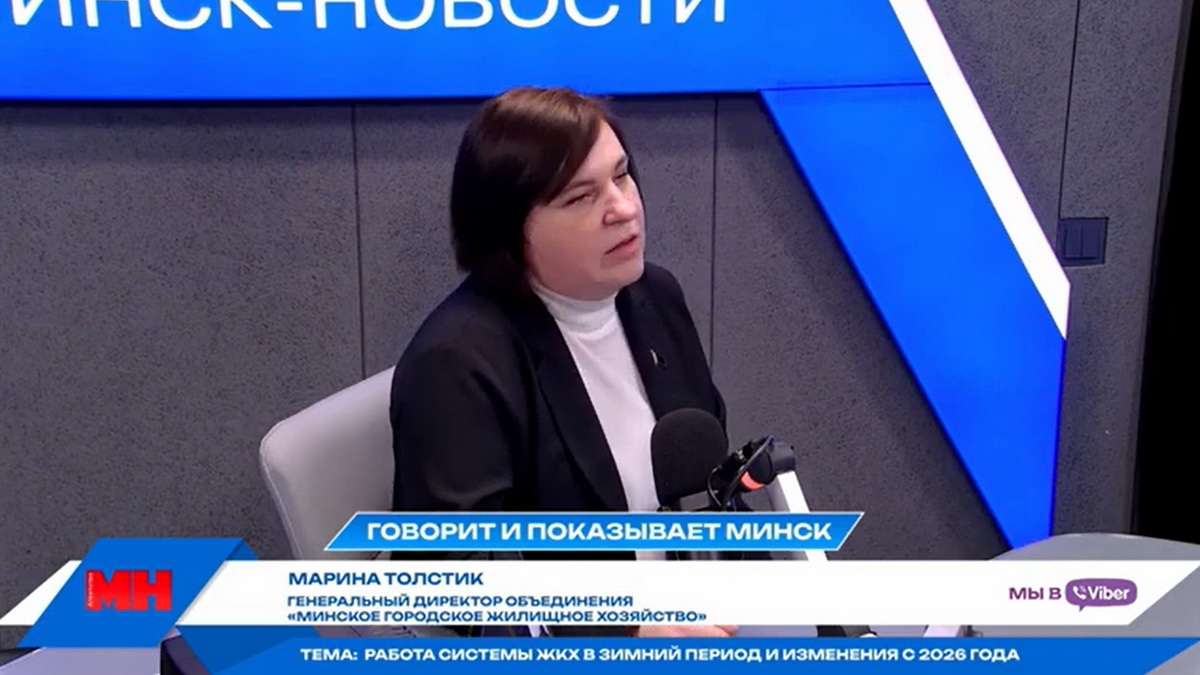
Minsk City Housing Management will install more than 20,000 surveillance cameras on residential buildings, the organisation’s director general, Maryna Toustik, said on Radio-Minsk.

She explained that housing and utility services are divided into core and additional services, and the list of additional services is defined by the government under Council of Ministers Resolution No. 99.
“It is an exhaustive list — there cannot be any additional types of work beyond what is specified. This list includes tasks such as installing intercom locking devices, installing surveillance cameras, landscaping adjacent areas, and concierge services. But additional housing and utility services are provided only if a contract is signed with the consumer. And if a person does not want this additional service, the law provides the right to refuse,” the representative of Minsk City Housing Management said.
According to her, a large-scale project to install surveillance systems in Minsk is expected to begin in 2026.
“At this stage, preparations for its implementation are underway. Briefly put, we are currently inspecting residential buildings to determine whether installation is feasible and to clarify specific locations for the cameras. This will indeed affect buildings where housing services enterprises are clearly authorised by the police. The plan is to install more than 20,000 cameras. (…) Minor regulatory adjustments are being made at the legislative level to ensure the possibility of seeking reimbursement of expenses and, accordingly, to launch an open tender for the installation work,” she said.
The head of the organisation noted that the police also have a parallel camera installation project, but the project of Minsk City Housing Management aims to monitor the quality of work performed.
“In principle, it will take two years to inspect all residential buildings and develop individual placement plans. We understand that the priority source of funding is likely to be the state budget. The purpose of the cameras is to verify the volume and quality of work performed by utility services. And, of course, safety: we are working closely with the police, who have their own parallel camera installation project. We also want to place cameras in courtyard areas — but primarily to confirm the work carried out there,” she said.