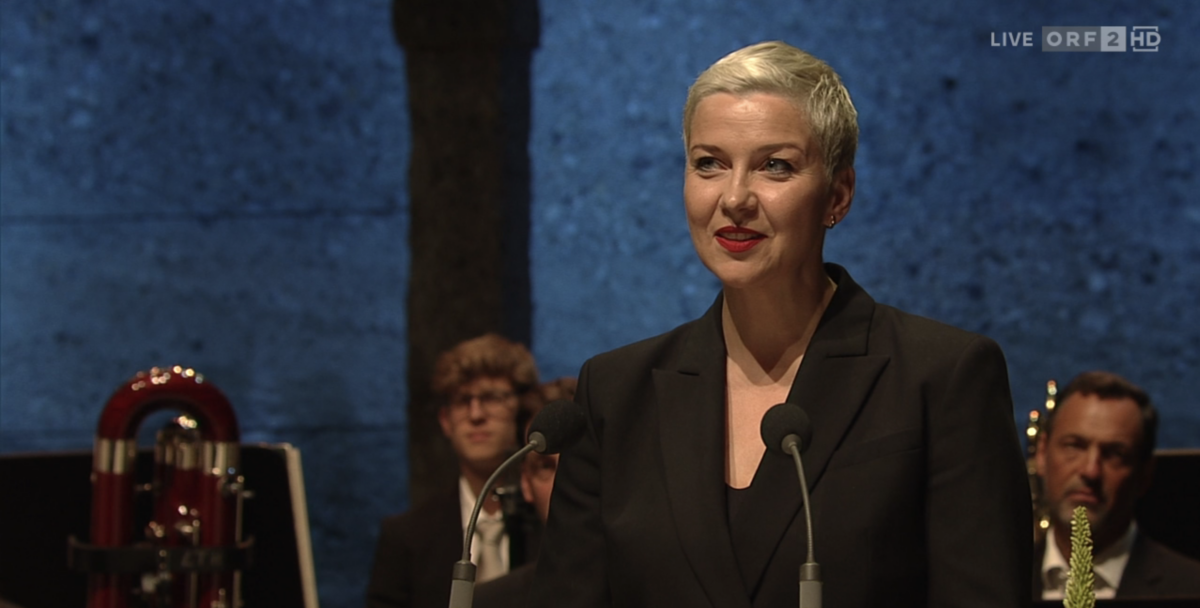
Today, July 26, 2026, the Salzburg Festival — one of the world’s best-known cultural events — officially opened at the renowned Felsenreitschule in Austria. The opening address was delivered by Belarusian musician and political activist Maryia Kalesnikava. She is an honorary professor at the Mozarteum University Salzburg and a recipient of the International Charlemagne Prize. Her speech focused on freedom, the role of culture, and the importance of preserving humanity and dialogue.

“Not Long Ago, I Could Not Imagine I Would Stand on a Stage Again”
Kalesnikava began her address with a deeply personal reflection: she has now spent exactly 226 days in freedom after more than five years in prison.
“This day has a very special meaning for me. Not long ago, I could not imagine that I would once again stand on a stage, listen to live music and speak before a full audience. Today marks exactly 226 days since I regained my freedom. They have been the most precious days of my life… But this joy is never complete. There is not a single day when I do not think about those who are still behind bars.”
Running through every part of her speech was the idea of rejecting hatred and preserving one’s inner freedom.
“My greatest victory was that I did not allow hatred to take root in my heart and that, despite everything, I remained human. During my imprisonment, I often thought about one phrase: ‘If you hate, they have already won.’”
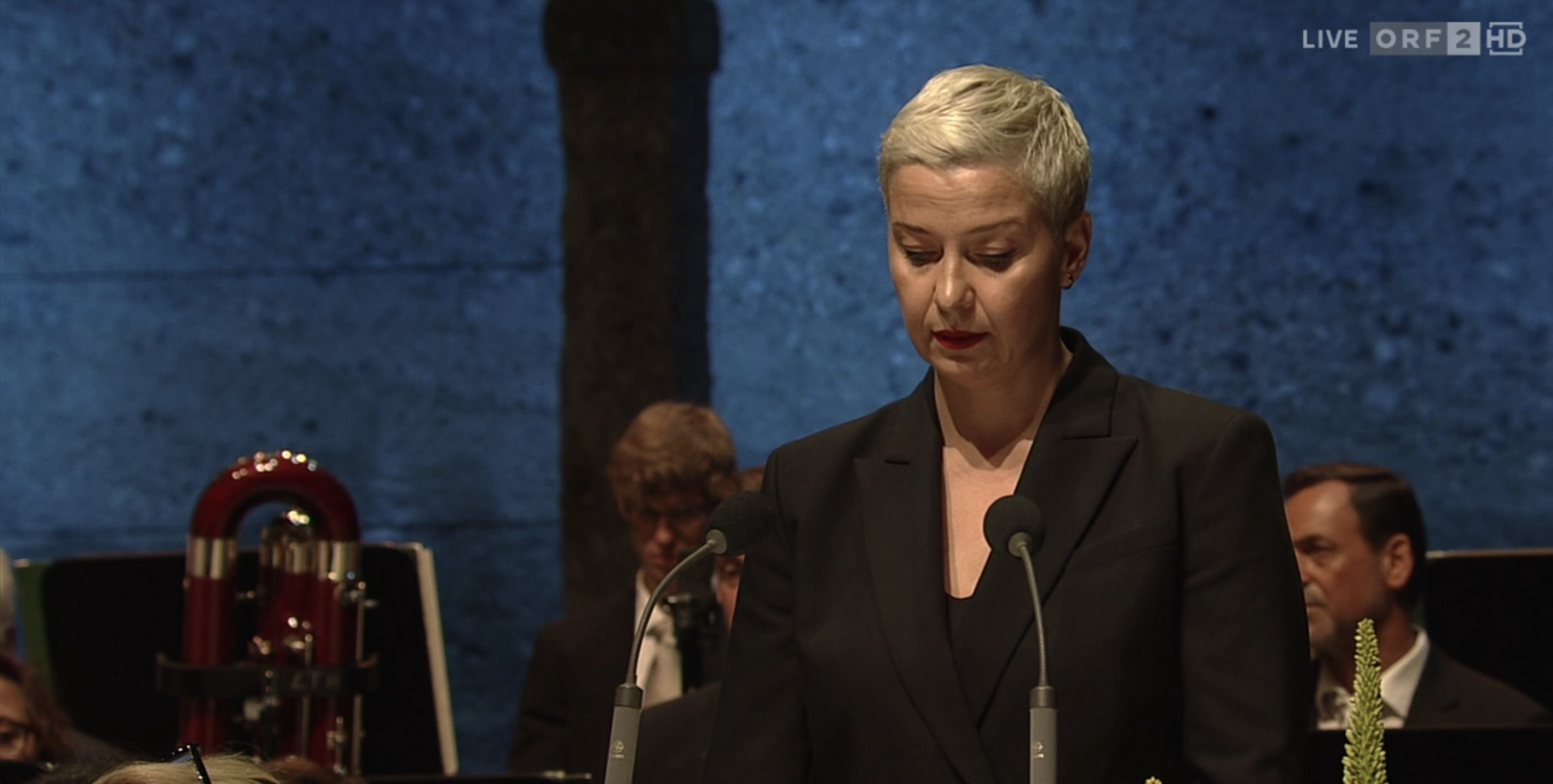
Orchestra as a Model of a Free Society and the Deeper Role of Culture
Drawing on her experience as both a flutist and a politician, Maryia used musical metaphors to explain how genuine democracy is built. She stressed that culture and the arts are not merely a pleasant addition to life but its foundation.
“Culture, education, science and free artistic expression are not secondary matters. Culture forms the foundation of a free society. It is the space where a person learns to be human. It teaches us compassion, doubt and the ability to see the world through another person’s eyes.”
Kalesnikava compared a healthy society to a symphony orchestra, where every individual contributes something unique while success depends on the ability to listen to one another.
“An orchestra is one of the most beautiful models of a free society. Every musician brings their own experience, character and voice. No one has to give up their individuality. On the contrary, it is precisely that individuality that makes music come alive.
But music emerges only when people are willing to do more than simply make their own voices heard. It comes into being where they listen to one another. Where everyone knows when to lead and when to follow. Music can teach not only individuals, but entire societies to listen to one another.”
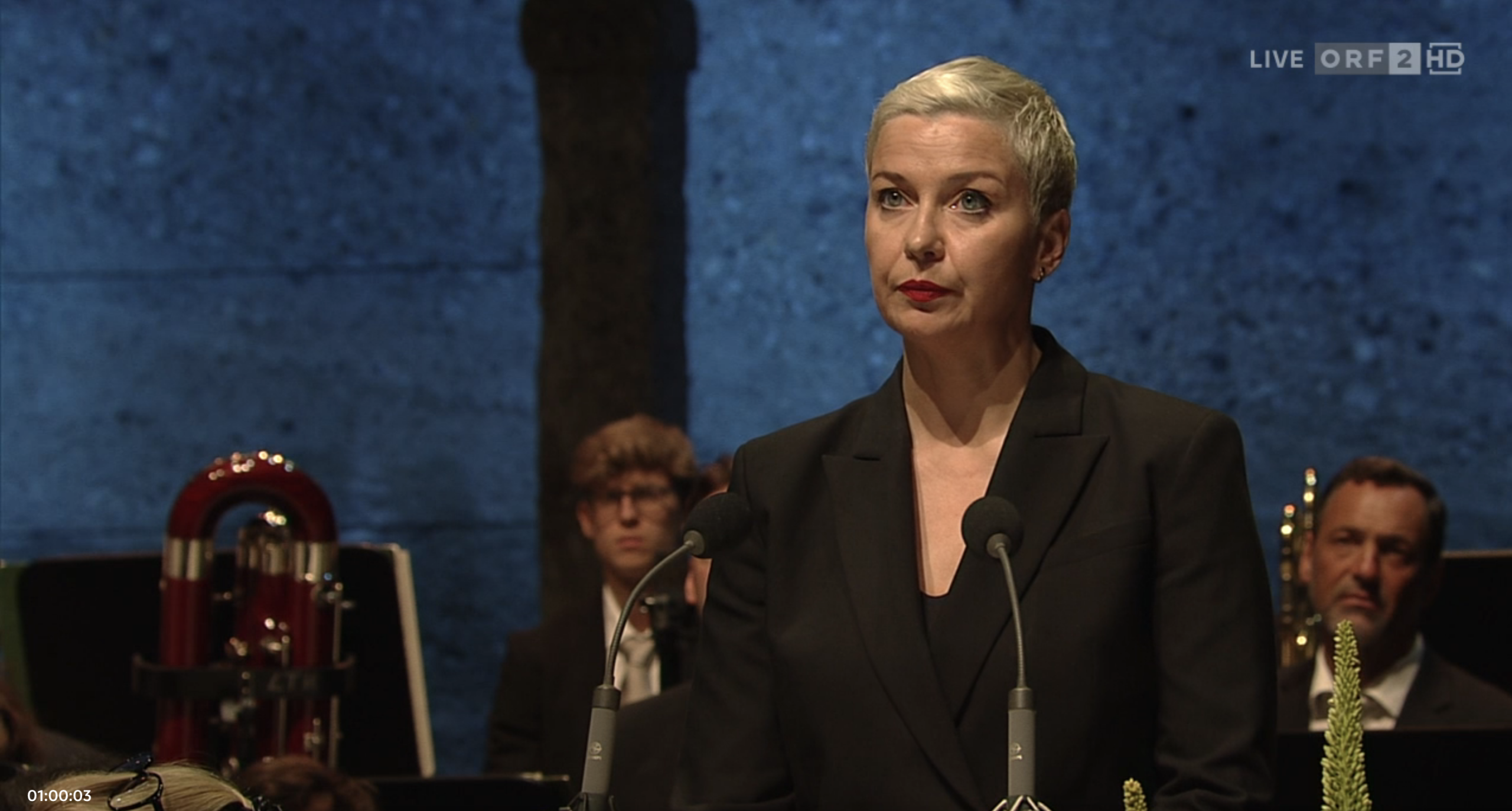
On Freedom, Dialogue and Europe
A significant part of the speech addressed today’s challenges — growing aggression in society, fascination with technology and, at the same time, the decline of a culture of conversation. Kalesnikava argued that the ability to continue dialogue under difficult circumstances is now one of humanity’s greatest strengths.
“Europe’s strength lies not in the absence of crises, but in the fact that its people have never stopped talking to one another, even in the darkest moments. It was not violence that restored people’s freedom, but the courage to continue dialogue in the most difficult circumstances… Only a strong Europe can preserve a safe space — a space where people can think, create, argue, make mistakes, learn and be heard.”
“I know from personal experience what diplomacy can achieve. The fact that I am able to stand here before you today is thanks to people who refused to abandon dialogue even where it seemed hopeless. Dialogue is not a sign of weakness. It is one of the greatest strengths of free societies,” the musician said.
Kalesnikava also touched on the subject of artificial intelligence.
“Just a few years ago, artificial intelligence seemed like something from science fiction. Today it writes texts and composes music. But the future will not be determined by how intelligent our machines become. It will be determined by how human we remain. Artificial intelligence is capable of many things. But it will never learn compassion. That is why culture and creativity are more important in the age of artificial intelligence than ever before,” she said.
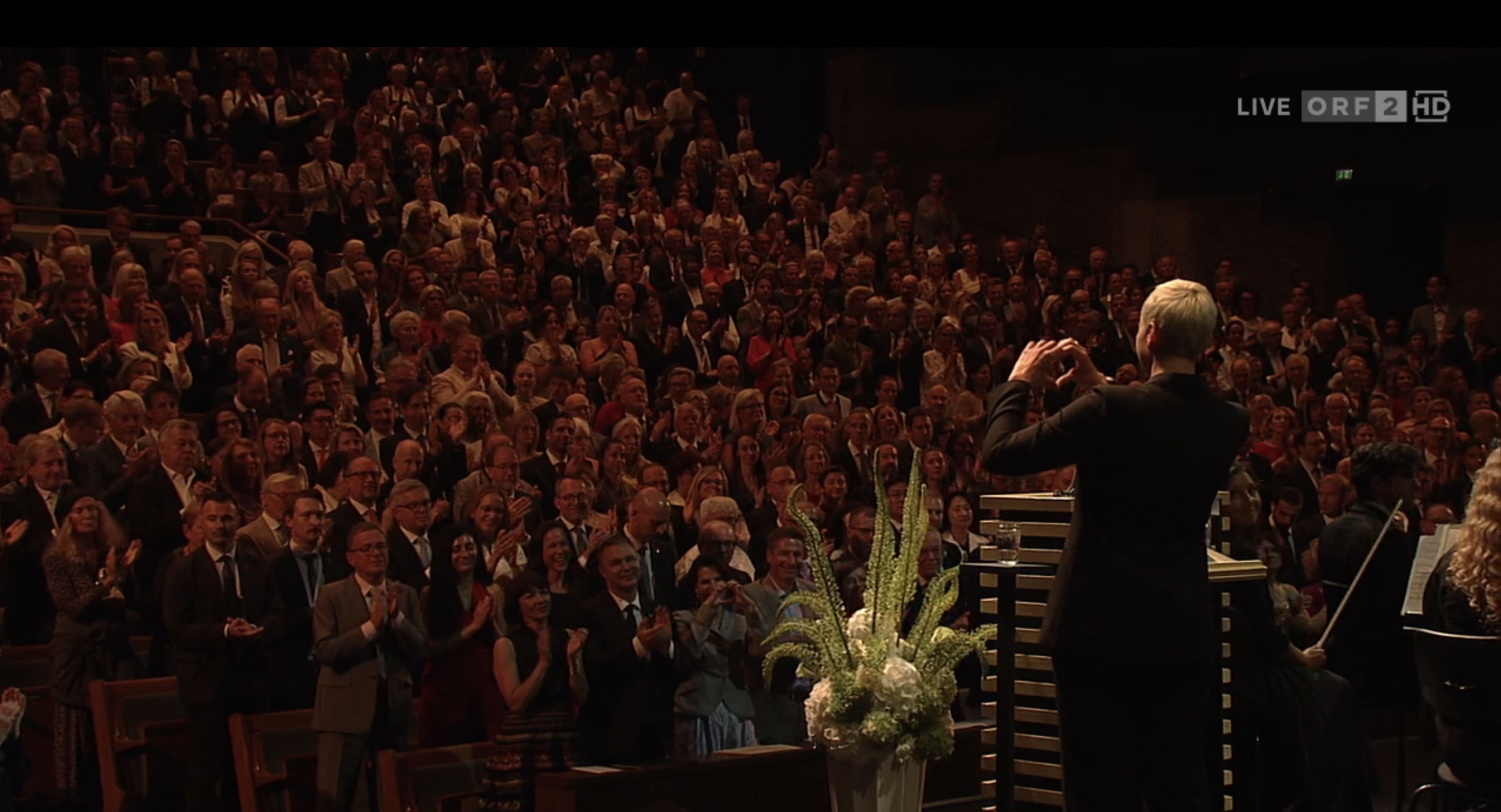
At the end of her speech, Maryia Kalesnikava urged the audience not to remain indifferent and to choose trust over fear.
“The future does not arise on its own. It is created through millions of human decisions — including ours. It begins with the choices we make today: to place freedom above fear, trust above suspicion, humanity above indifference, and never to give up on dialogue.”
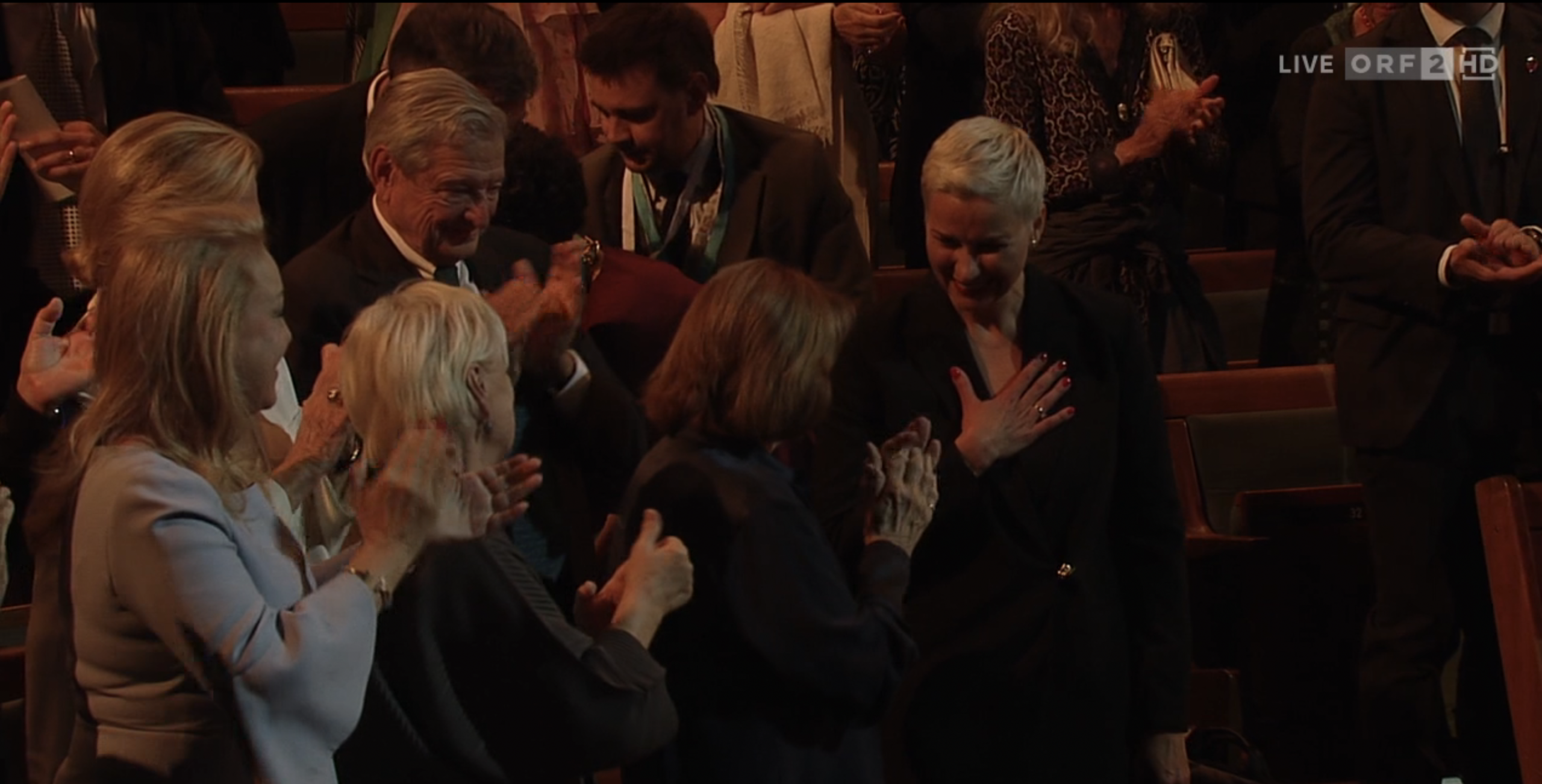
After these words, the entire audience at the Felsenreitschule rose to its feet, greeting Maryia Kalesnikava with prolonged and warm applause.
About the Festival and Its Program
This year’s Salzburg Festival, held at the renowned Felsenreitschule, was officially opened by Austrian President Alexander Van der Bellen. In his address, he paid special tribute to Maryia Kalesnikava’s exceptional civic courage.
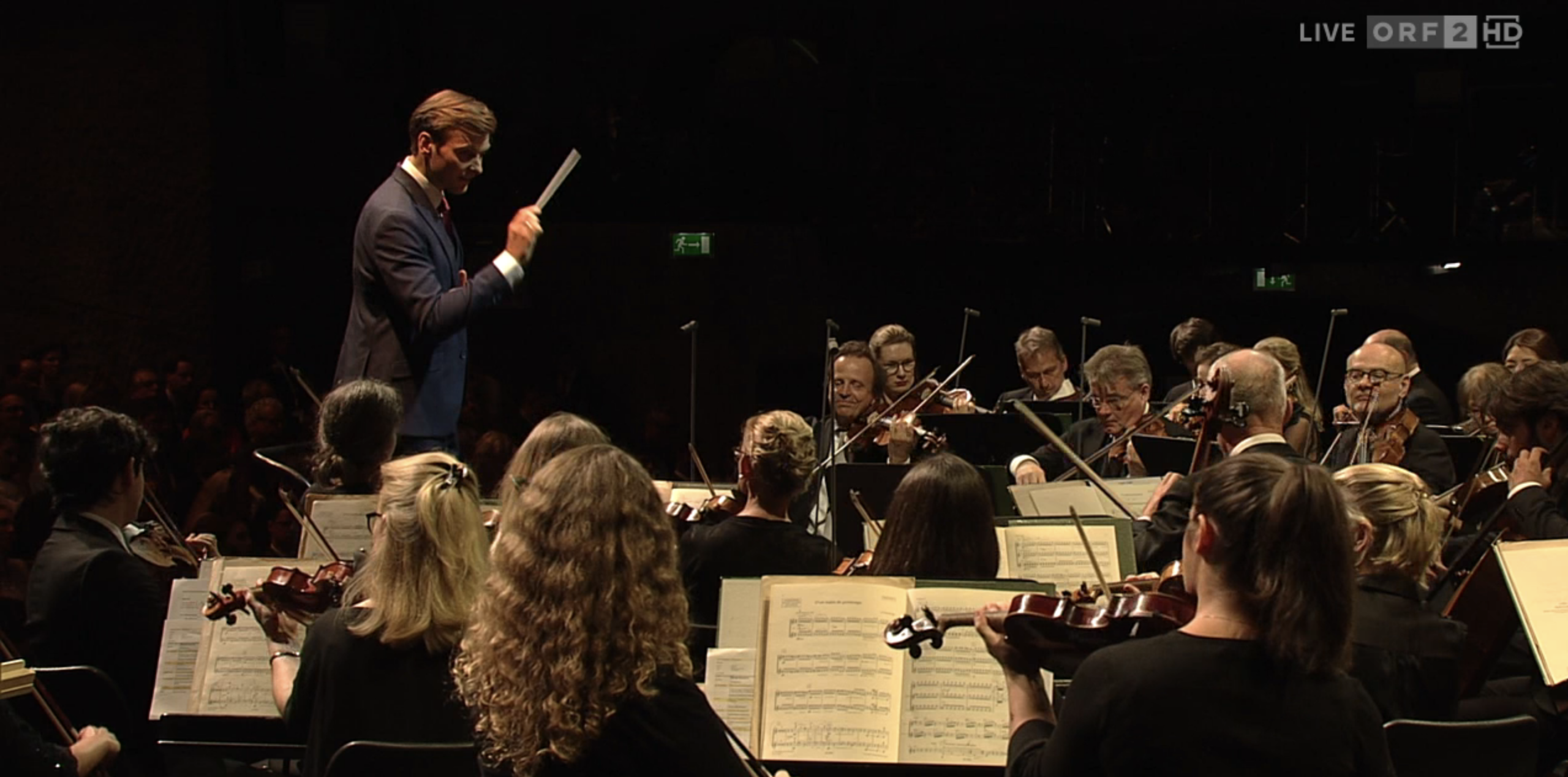
The musical program was opened by the Mozarteum Orchestra under the baton of another distinguished Belarusian musician, conductor Vitali Alekseenok, who is currently chief conductor of Deutsche Oper am Rhein in Düsseldorf and Duisburg.
This year’s Salzburg Festival will run until Aug. 30. Over 45 days, more than 170 opera performances, theater productions and concerts will take place at 19 venues across the city, featuring many of the world’s leading stars of opera, theater and symphonic music.
The festival’s main opera premiere will be a new production of Georges Bizet‘s Carmen, directed by Belgian stage director Gabriela Carrizo, starring Asmik Grigorian and Jonathan Tetelman. The production will be conducted by Teodor Currentzis, leading the Utopia orchestra. His return continues to spark debate because of his ambiguous stance toward the Kremlin. Other major highlights include productions of Ariadne auf Naxos by Richard Strauss and Saint François d’Assise by Olivier Messiaen, world premieres of new plays by Nobel Prize laureates Peter Handke and Elfriede Jelinek, as well as concerts by the Vienna Philharmonic and the Berlin Philharmonic under Kirill Petrenko, Riccardo Muti and Andris Nelsons, featuring pianists including Martha Argerich and Igor Levit.