
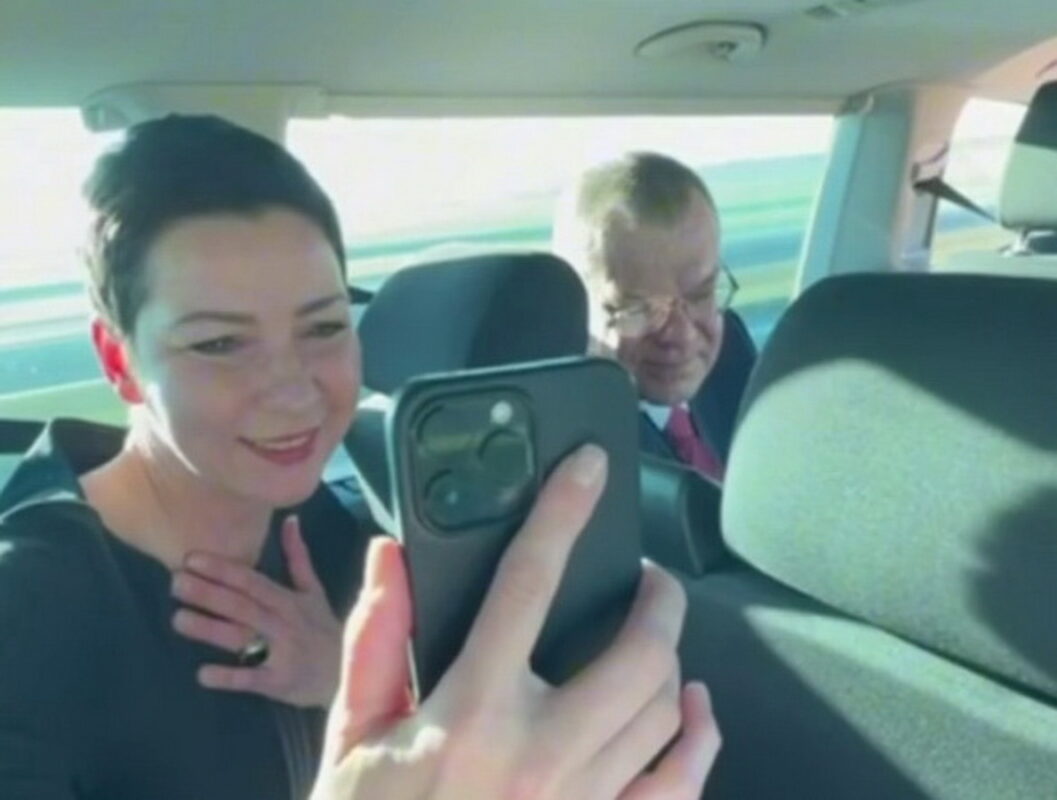
The content of a conversation between Sviatlana Tsikhanouskaya, Viktar Babaryka, and Maria Kalesnikava has become known. It was their first conversation after the release of 123 political prisoners. A video of the emotional exchange was published by Babaryka’s team.

The participants exchanged words of support and gratitude, discussed the events of 2020 and the situation of recent years, and agreed to focus on joint work and on securing the release of those who remain behind bars.
“Sveta, you cannot imagine how many times I pictured this moment, that we would finally see each other! But the next step is that we must definitely hug! (…) I thought many times about what I would want to say to you at our first meeting. It is clear that it has been delayed a bit — but I think you understand that we are not in a condition right now to enter openly into contacts, it is hard for us (…) I know what you went through back then, in the summer. I know what happened on the day when you were taken out, I was there. And I know what you experienced. And people who criticize you in some way — just do not pay attention to them. Know that I have always supported you. Very few people could have done what you did. I value this greatly. (…) We will come to our senses, think things through, meet, and decide something. (…) But just know that I support you, no matter what anyone says, no matter what happens, I am grateful that back then, in the summer, you were with us and that despite everything you continued your path,” Maria Kalesnikava said.
Tsikhanouskaya thanked her interlocutor and noted that it was important for her to hear these words.
“Because I really do not like the situation where we still have not met, and the media are already trying to pit us against each other. Because all these five years I carried you in my heart. I remembered how strongly you supported me when I was absolutely inexperienced. (…) I waited for you so much, and I want us to sit down together and think about how not to let fall apart what they have been trying to destroy all this time. That is why I very much hope for your wisdom and that we will see each other very soon,” she said.
During the conversation, Viktar Babaryka noted that in isolation he had not been as informed about the situation as Maria and reflected on the events of five years ago.
“What was done after we were locked up is incredible. Incredible that you did not just take the banner in your hands — you actually kept our cause alive. It could have been better, it could have been worse — anything. But it exists. And the fact that it exists is largely your заслуга, the merit of you, your Office, and the people around you. And that is why I am absolutely convinced that since it exists, we can turn it into not just a good and beautiful story, but a story that not only we, but also our children and grandchildren will be proud of. (…) We need to think about what comes next — and that lies ahead of us. (…) Thank you to everyone who stayed, who held this fragile little plant called a New, Free, and Happy Belarus in their hands,” he said.
Sviatlana Tsikhanouskaya noted that she had heard about Viktar Babaryka’s resilience in prison. She suggested organizing together and thinking about how to move forward.
Maria Kalesnikava emphasized that the release of Belarusians is the top priority of her future activities.
“It is very important for us now to free other people. I cannot sleep peacefully knowing that girls are still there and grandmothers who are 70 years old. And at the same time they release me and do not release them. This is my personal number one goal right now. (…) We very much ask you to support us on this issue. Because for us it is a personal story. We know exactly what we are talking about and what every day spent there means,” she said.
“Let us just understand that this point unites all of us. This is very important. (…) I am convinced that kindness and empathy are among the best traits of Belarusians’ character. And that means this is the pain and the desire of all the people of Belarus. I think, Sveta, you understand this no worse than we do — you and those who remained outside Belarus did what you could. That is great. Thank you,” Babaryka added.