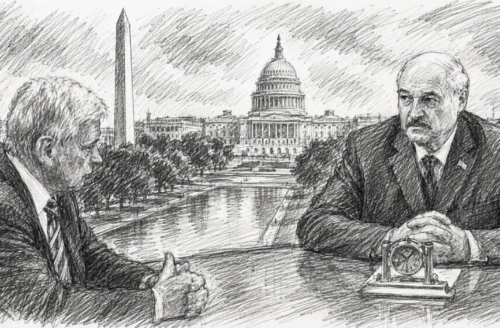
“Sometimes it’s better to chew than to speak” — the slogan from an old Stimorol chewing gum advertisement came to mind after reading a statement by Maksim Ryzhankou’s ministry on the situation at the Belarusian-Latvian border. The Latvian authorities deliberately left official Minsk room for maneuver, but in return received nothing but a barrage of rudeness from the regime’s Foreign Ministry.

Latvia Under Pressure
The head of Latvia’s State Border Guard, Guntis Pujats, said that Latvia has become the main target of the hybrid war waged by Belarus. Indeed, the relatively short Belarusian-Latvian border now features more frequently than any other section of the EU’s external frontier in reports about groups of migrants attempting to cross illegally.
On July 1, a record number of attempted illegal crossings from Belarus was registered, with 232 migrants trying to enter Latvia in a single day.
Overall, Pujāts said, Latvian border guards stopped 7,600 people attempting to cross the border illegally during the first half of the year. That was significantly more than during the same period last year.
Authorities say both the migrants themselves and the drivers transporting them have become more aggressive, forcing border guards to use increasingly tougher methods to detain them. The head of Latvia’s State Security Service, Normunds Mežviets, told Britain’s The Telegraph that in Belarus, migrants are trained in special camps before being sent to the border. According to Mežviets, Belarus has established infrastructure along the frontier that includes “warehouses and hotels”, as well as “camps where migrants receive combat training before being pushed into Latvia.”
The overwhelming majority of these migrants have no intention of remaining in Latvia. Instead, they attempt to continue to Western Europe. Groups of migrants have been detained in both Estonia and Lithuania. “Migrants enter Latvia and disappear, and later our border guards have to detain them on the Riga–Warsaw bus route in Lithuania using forged documents,” said Lithuania’s interior minister, Martynas Katelynas.
Katelynas did not rule out introducing temporary border controls with Latvia to combat secondary migration. However, the presidents of Lithuania and Latvia, Gitanas Nausėda and Edgars Rinkēvičs, described restoring border controls between the two countries as “capitulation.” Instead, other measures were adopted. Additional officers from Estonia’s Police and Border Guard Board and Lithuanian border guards were deployed to Latvia to reinforce border security.
Among the reasons for the growing migration pressure, Pujats cited Latvia’s consistent support for Ukraine, its condemnation of Russian aggression, Russian propaganda narratives, and parliamentary elections due in October. According to him, the migrant flows are intended “to destabilize the situation, fuel public dissatisfaction and create divisions in society over the alleged inability to cope with these challenges.” Latvia takes seriously the threat of escalation from Russia and its ally, the Belarusian regime. The latter, acting in line with the Kremlin’s interests, may also have its own objectives — for example, forcing Riga into negotiations. From there, it might hope to push for the restoration of Belarusian transit through Latvian ports on the Baltic Sea. The approach failed with Lithuania and Poland, so the pressure has shifted elsewhere.
However, that strategy has not succeeded. In July, Latvia’s National Security Council approved new measures to strengthen the Belarusian-Latvian border. On July 30, Latvia’s Cabinet of Ministers decided to extend the enhanced border security regime along the Belarusian-Latvian frontier until Dec. 31, 2026. The special security regime for sections of the border was first introduced by the Latvian government in August 2021, after the migration crisis began on the EU’s external borders.
This time, however, Latvia’s patience appears to have run out. It is likely that another decision was taken on June 30, the consequences of which became apparent the following day.
A Final Warning?
On June 30, Latvia’s Interior Minister Jānis Dombrava urged citizens not to plan trips to Belarus and called on those already there to return to Latvia.
“Safe travel between the two countries may become more difficult under the conditions of the hybrid war being waged by Belarus,” the minister warned.
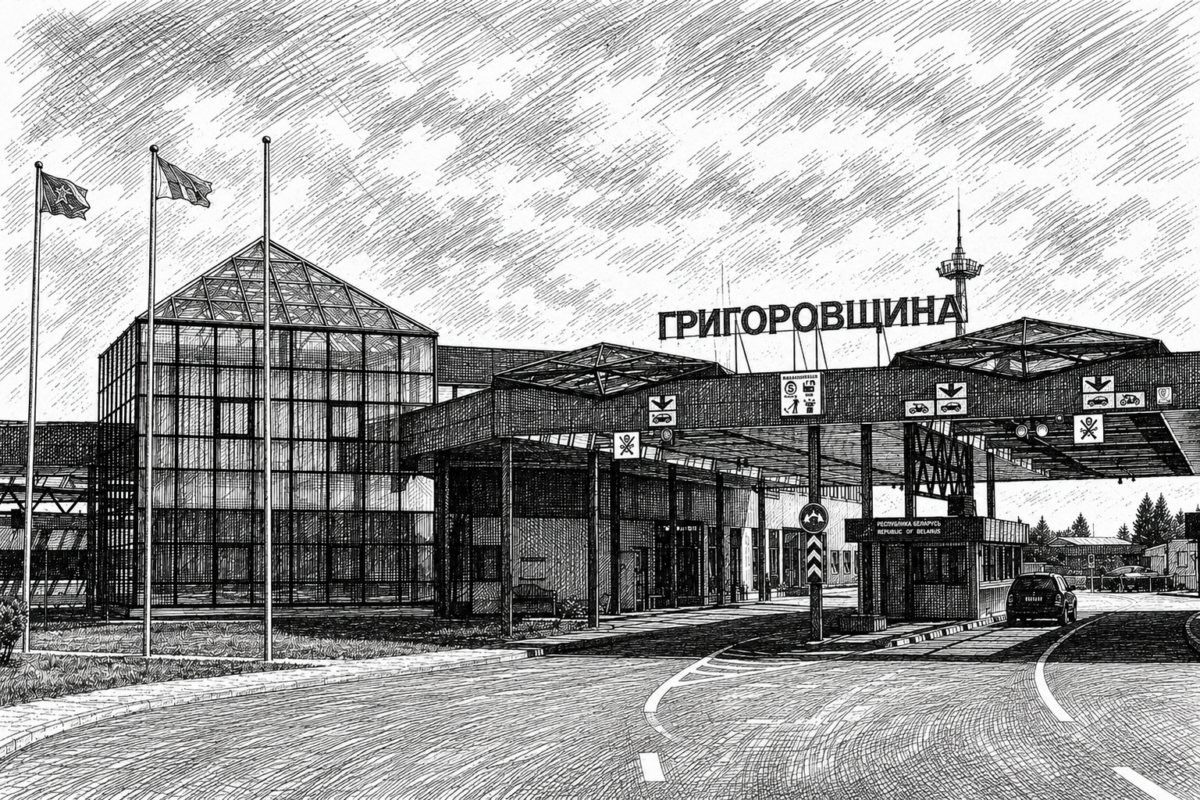
Then, on July 31, the head of Latvia’s Interior Ministry announced that the Latvia-Belarus border had been closed “for technical reasons”. As Latvia’s State Border Guard spokesperson Kristīne Petersone later explained, an information systems failure had occurred at the Paternieki border crossing, known on the Belarusian side as Hryharoushchyna. The Belarusian-Latvian border remains closed for the time being.
In this case, however, the information systems failure appears to have been little more than a pretext. A final warning. Latvia could have immediately and officially linked the closure of the only international road border crossing between Belarus and Latvia to the migration crisis orchestrated by the Belarusian regime. Instead, Riga apparently chose to leave official Minsk room for maneuver — and time to assess the situation and send a signal in response: the message had been understood and steps would be taken to remedy the situation.
Instead of drawing the right conclusions and making reasonable decisions, however, Maksim Ryzhankou’s ministry once again entered the stage.
The Moscow School
Today, Belarus’ Foreign Ministry issued a statement in response to the suspension of operations at Latvia’s Pāternieki border crossing.
The statement accuses Latvia’s leadership of “instrumentalizing the border issue,” “political bias,” and betraying European values because “the freedom of movement of citizens has once again been crudely sacrificed to short-term domestic political considerations.” One might think they were writing while looking in a mirror.
According to the Belarusian Foreign Ministry, “such irresponsible actions cause tangible damage to international trade by undermining transit routes between the European Union and China, as well as the countries of Central Asia, while harming Latvia’s own economic interests.”
The statement goes on in a similarly offensive tone that has now become characteristic of Belarusian diplomats imitating Moscow’s style. And in this Moscow diplomatic school, named after a St. Petersburg back alley, Ryzhankou and his ministry appear eager to be top students.
The statement concludes by threatening Latvia with “asymmetric measures.” As though the measures previously taken against Latvia had somehow been symmetrical and friendly.
Riga took note of the response. Latvia’s Interior Ministry prepared and submitted to the government a draft decision to suspend operations at the Paternieki border crossing on the Latvian-Belarusian border. The Cabinet of Ministers is expected to consider the document under an expedited procedure.
It is entirely possible that the draft had been prepared in advance. It simply remained in one of the Latvian interior minister’s desk drawers, awaiting its moment. It could either have been submitted to the Cabinet or left where it was, depending on the public — or private — response from Minsk. But after reading the statement prepared by Ryzhankou’s ministry, the Latvian authorities concluded that the Belarusian regime had no intention of making use of its final opportunity. Whether Minsk is unwilling to take the necessary steps on its own or is being held tightly by Moscow is of little importance to Latvia in this case. Security comes first. And so, there is now one more closed border. Was this really what Ryzhankou’s ministry wanted? Or did it once again miscalculate its zeal?
As for undermining transit routes between the European Union and China, the Belarusian Foreign Ministry would be better off remaining silent. When Poland closed its border with Belarus, Minsk had already faced criticism over the issue from its Chinese partners. But Maksim Ryzhankou’s ministry, it seems, is incapable of learning from its mistakes. Sometimes it really is better to chew than to speak.
Of course, Ryzhankou is not the one making the decisions. His ministry merely follows orders. Not even those of Aliaksandr Lukashenka, but of its immediate supervisor, Russian Foreign Minister Sergey Lavrov. Still, someone should buy Ryzhankou and his staff a box of Stimorol. A foreign ministry behaving like this is an embarrassment. The only thing left is to start inserting profanity into its official statements — every other line has already been crossed.
***
The opinions and assessments expressed by the author may not reflect the position of the Reform.news editorial board.