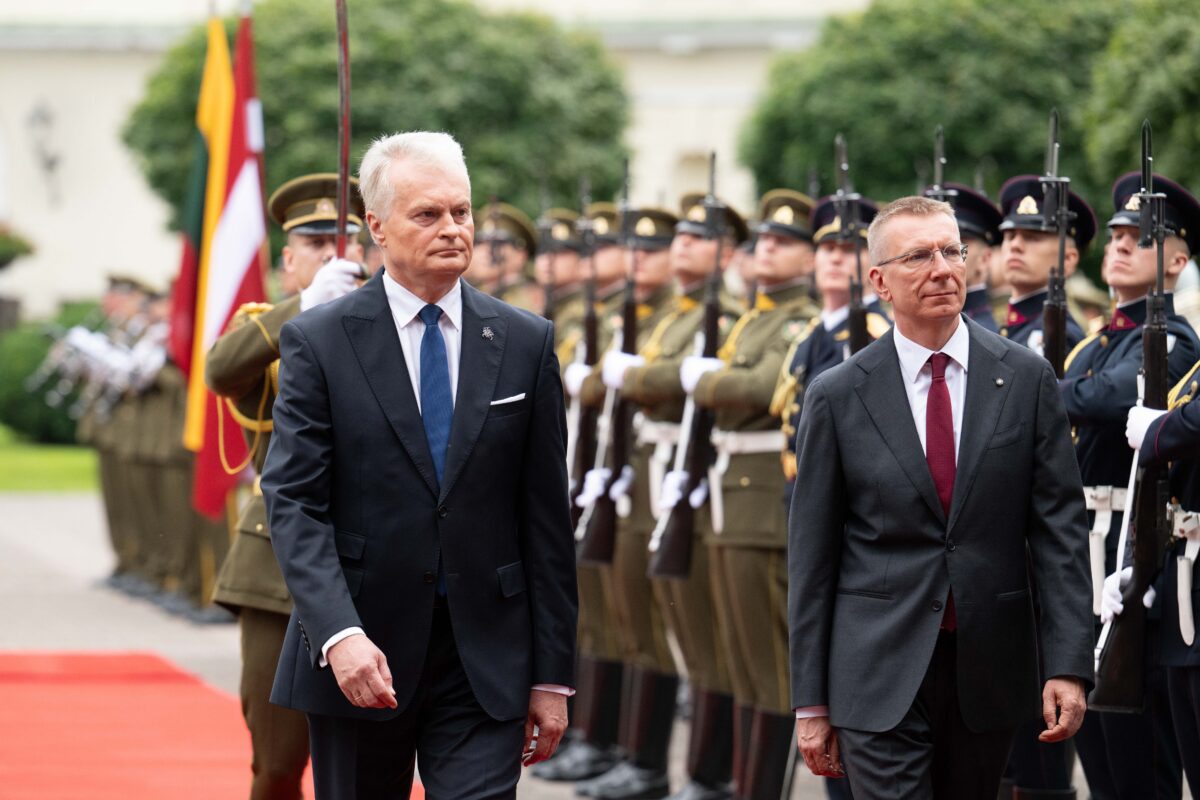
Lithuanian and Latvian Presidents Gitanas Nausėda and Edgars Rinkēvičs described the restoration of border controls between the two countries as a capitulation. Lithuania’s new Interior Minister Martynas Katelinas had earlier raised the possibility of such a move.
“In fact, we do not face any particular problems in our relations with Latvia, so, in my view, creating internal borders within the Schengen area would be a defeat, a kind of capitulation in the face of this phenomenon.
Therefore, we must protect the external border in such a way that people have as little motivation or reason as possible to build internal borders. Building internal borders is a kind of desperate solution, and therefore we must do everything we can to avoid this in the future”, he said.
“It would be a disaster”, Rinkēvičs said.
The issue of restoring border controls between Lithuania and Latvia is linked to an increase in secondary migration from Latvian territory. In recent months, migrants have made virtually no attempts to cross the Polish and Lithuanian borders from Belarus, but they have remained active on the Latvian border. At the same time, migrants who entered Latvia and then tried to move further west are increasingly being detained in Lithuania.
Poland and Germany have previously reinstated selective and permanent border checks. They regularly detain migrants who entered the EU through the Belarusian-Lithuanian border.
Rinkēvičs said the issue had been discussed at the level of the Lithuanian and Latvian interior ministers.
“At present, the main focus should be on ensuring that the existing border control and protection measures function more effectively in order to reduce migration pressure, and I am referring to the issue of readmission. We will continue to give these issues top priority. Hopefully, this problem will cease to be relevant in the future”, he said.
It should be noted that Lithuania’s State Border Guard Service has already sent a second group of border guards, including dog handlers with service dogs, to assist their Latvian colleagues.