
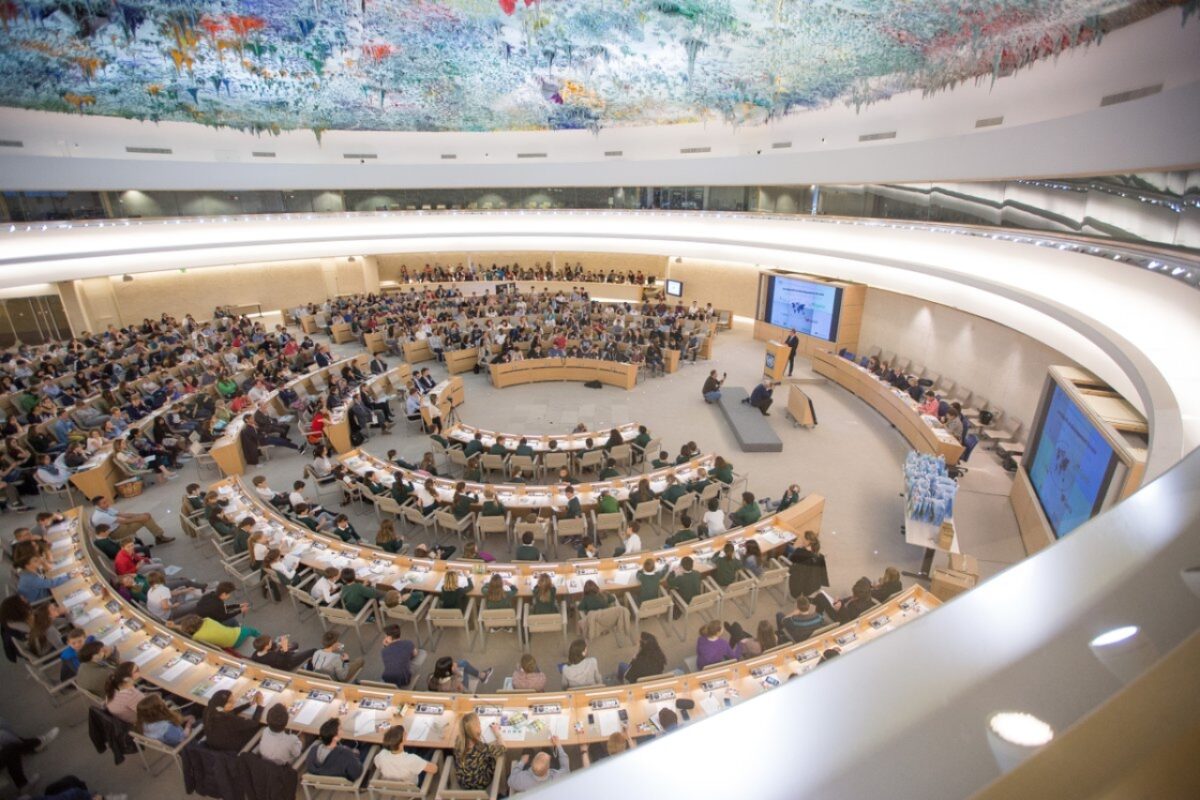
The Human Rights Council has extended the mandates of the Group of Independent Experts and the Special Rapporteur on Belarus. The vote on the resolution took place on March 30. Twenty-eight countries voted in favour of extending the mandates for one year, 15 abstained, while Cuba, China, Vietnam and Burundi voted against.

The Special Rapporteur and the Group of Independent Experts were tasked with presenting updated information on the human rights situation in Belarus to the Human Rights Council at its 63rd session, and comprehensive reports at its 64th session.
The council also strongly urges the Belarusian authorities to engage fully and without selectivity with all United Nations human rights mechanisms, including the Special Rapporteur and the Group of Independent Experts.
The resolution calls on the Belarusian authorities to fully comply with all obligations under international human rights law, as well as to:
- immediately and unconditionally release and ensure effective rehabilitation for all persons arbitrarily or unlawfully detained, arrested, charged or convicted for political reasons or for exercising their human rights;
- end all forms of harassment or pressure that may lead to their forced departure, deportation or deprivation of consular services;
- stop the use of force against peaceful demonstrators, torture and other forms of ill-treatment;
- ensure timely and adequate medical care and humane detention conditions for all persons deprived of their liberty;
- take all necessary measures to ensure the full independence and impartiality of the judiciary, end the misuse of “counter-terrorism” and “countering extremism” policies, including by immediately abolishing the list of extremist materials and the lists of persons and organisations involved in extremist activities;
- adopt comprehensive non-discriminatory legislation and policies guaranteeing every person the right to equality before and under the law;
- reverse decisions on the forced dissolution of civil society organisations and trade unions, and begin a genuine, constructive, inclusive and transparent national dialogue with civil society;
- ensure favourable conditions for the functioning of truly independent media, both online and offline, including unhindered access to an open, interoperable, reliable and secure internet;
- carry out a comprehensive reform of electoral legislation in line with international standards, including by following the recommendations of the Organization for Security and Co-operation in Europe Office for Democratic Institutions and Human Rights, the European Commission for Democracy through Law (Venice Commission) and the Special Rapporteur.