
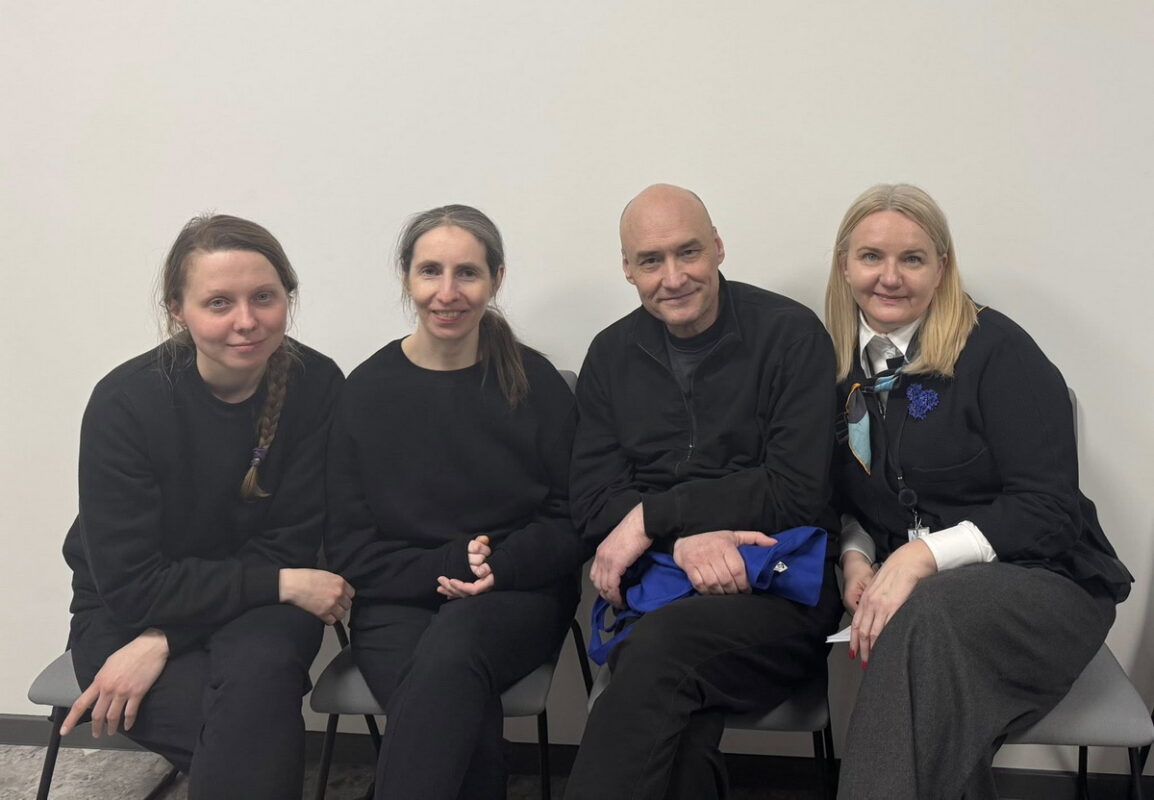
Nobel laureate and human rights defender Ales Bialiatski commented on the release of his colleagues — Valiantsin Stefanovic, Marfa Rabkova, and Nasta Loika.

“I am immensely happy, as are all my colleagues, about the release of our friends. (…) What we had been waiting for — I personally for the past three months, and my colleagues in fact for more than five years — has come true,” Bialiatski said.
“The sentences they were given were a great injustice. These years of struggle for our freedom, and in recent months specifically for their freedom, have borne fruit. Their release is the result of efforts by many people, organisations, and states, including us and our own efforts: the Viasna Human Rights Centre and other Belarusian human rights defenders. Today is a joyful day for us, and thousands of people are also celebrating this news with us. But we do not forget that nearly a thousand political prisoners remain behind bars. And we will continue to fight for their release,” he added.
Valiantsin Stefanovic, a member of the Viasna board and vice-president of the International Federation for Human Rights, had been in custody since July 2021. In March 2023, he was sentenced to nine years in prison in the “Viasna case.” The court found him, as well as Ales Bialiatski, Uladzimir Labkovich, and Dzmitry Salauyou, guilty of organised smuggling and financing group actions that grossly violate public order.
Marfa Rabkova, coordinator of volunteers at the Viasna Human Rights Centre, had been imprisoned since September 17, 2020. She was sentenced to 15 years in prison in the “anarchists’ case.”
Nasta Loika, a human rights defender, was detained in October 2022. In June 2023, she was sentenced to seven years in prison on charges of inciting hatred. The trial was held behind closed doors. According to the Viasna Human Rights Centre, the case was linked to a report on the persecution of anarchists, anti-fascists, and left-wing activists in Belarus in 2017–2018, which allegedly contained criticism of police actions.