
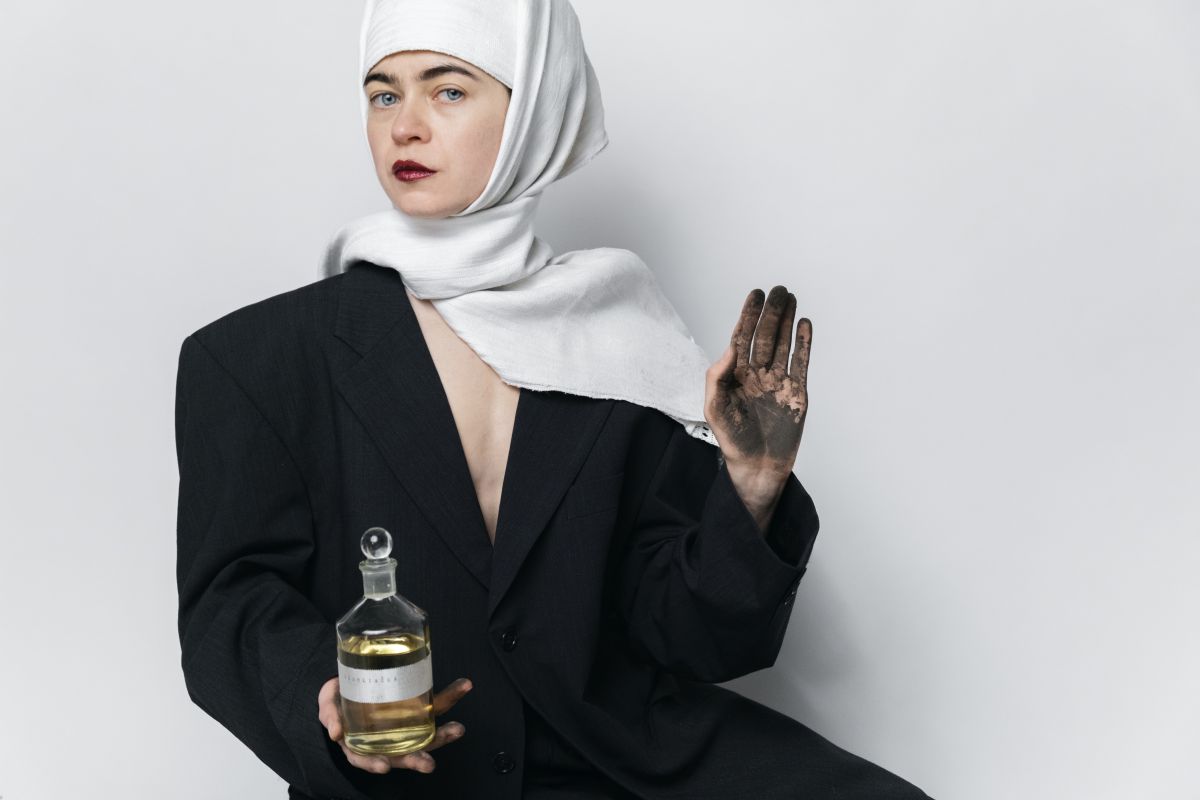
In the space Needle at Kunsthaus Graz in Austria, a project by the Belarusian artist Cemra titled Ziamliačka has opened.
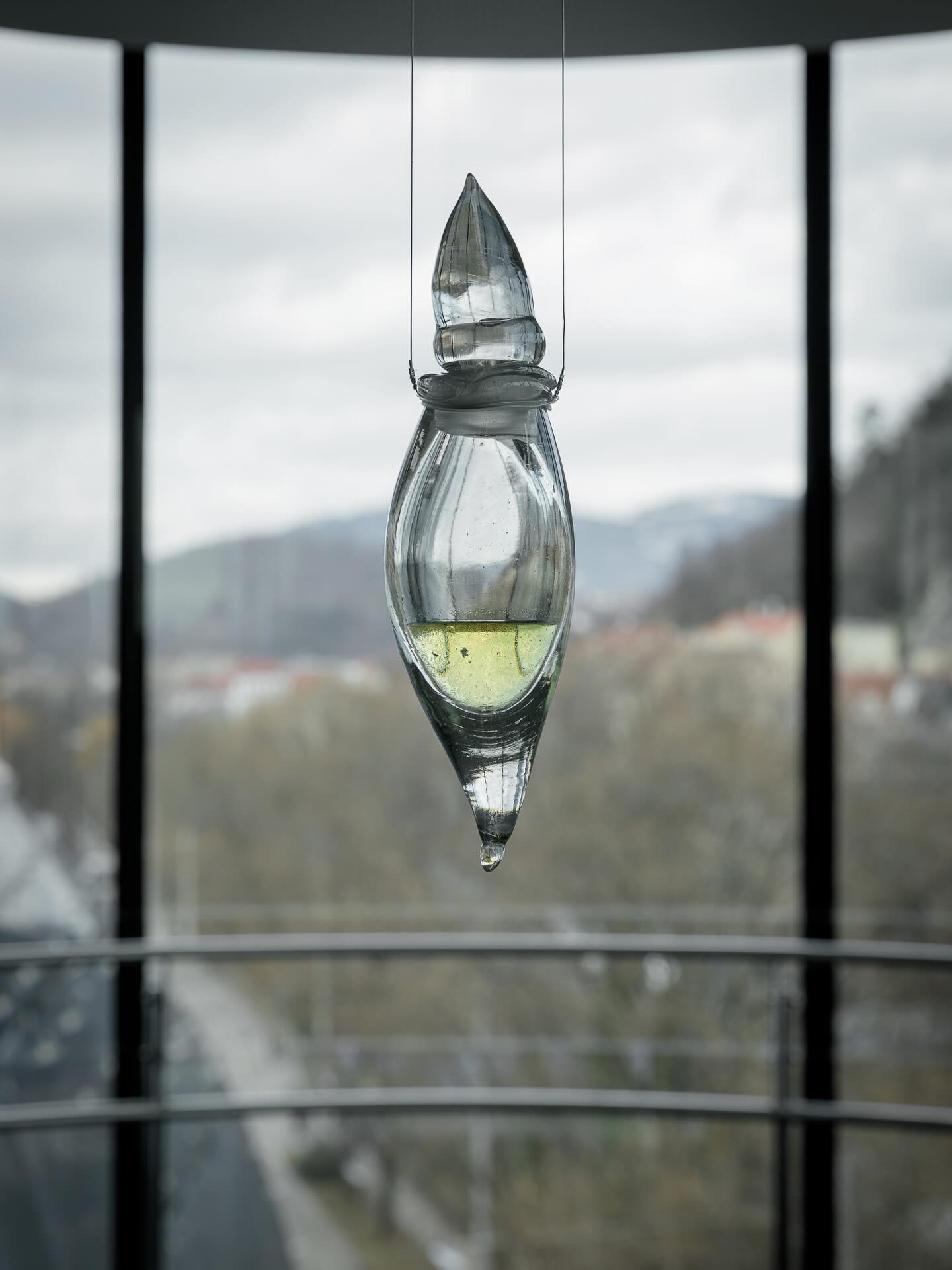
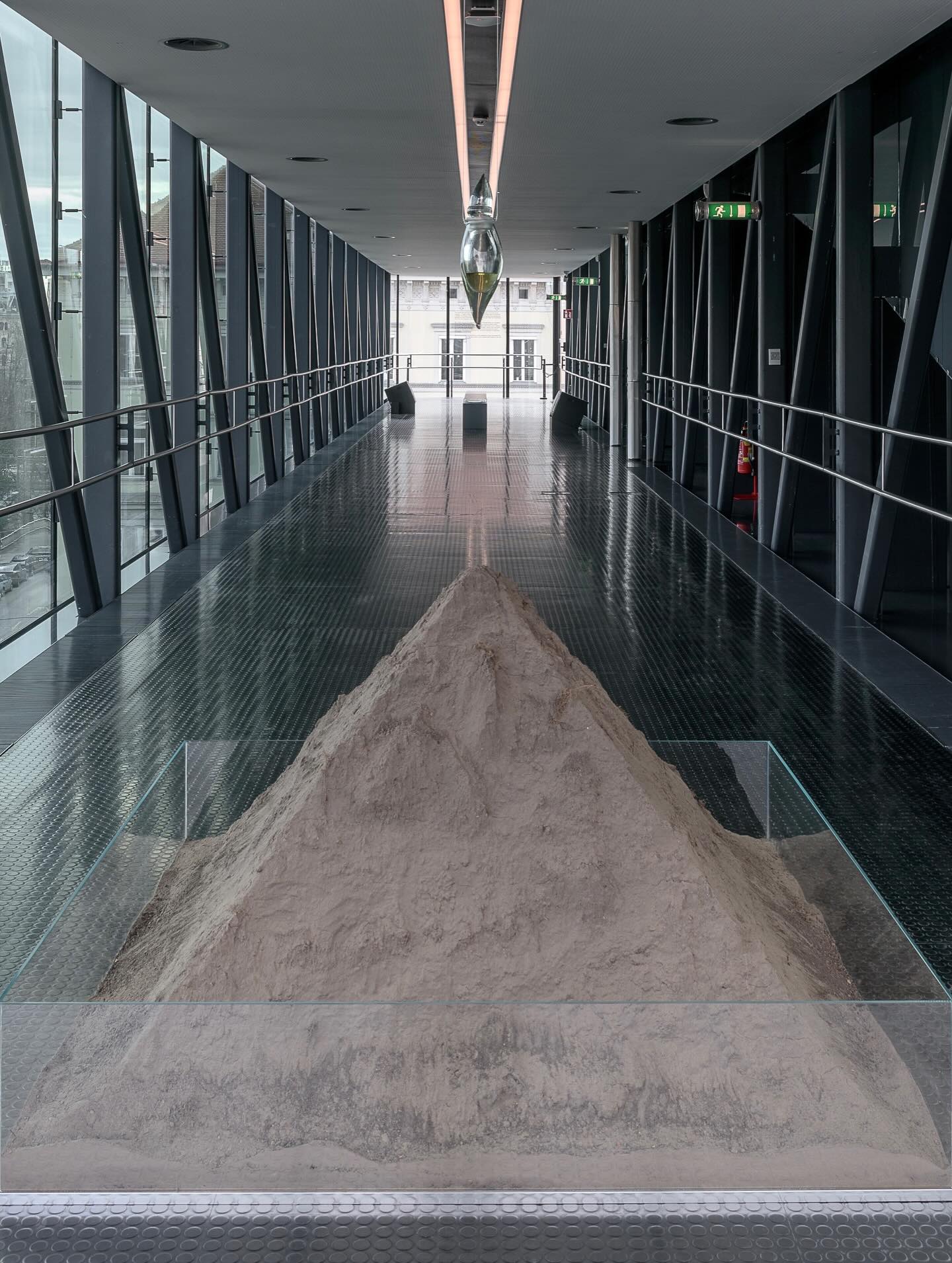
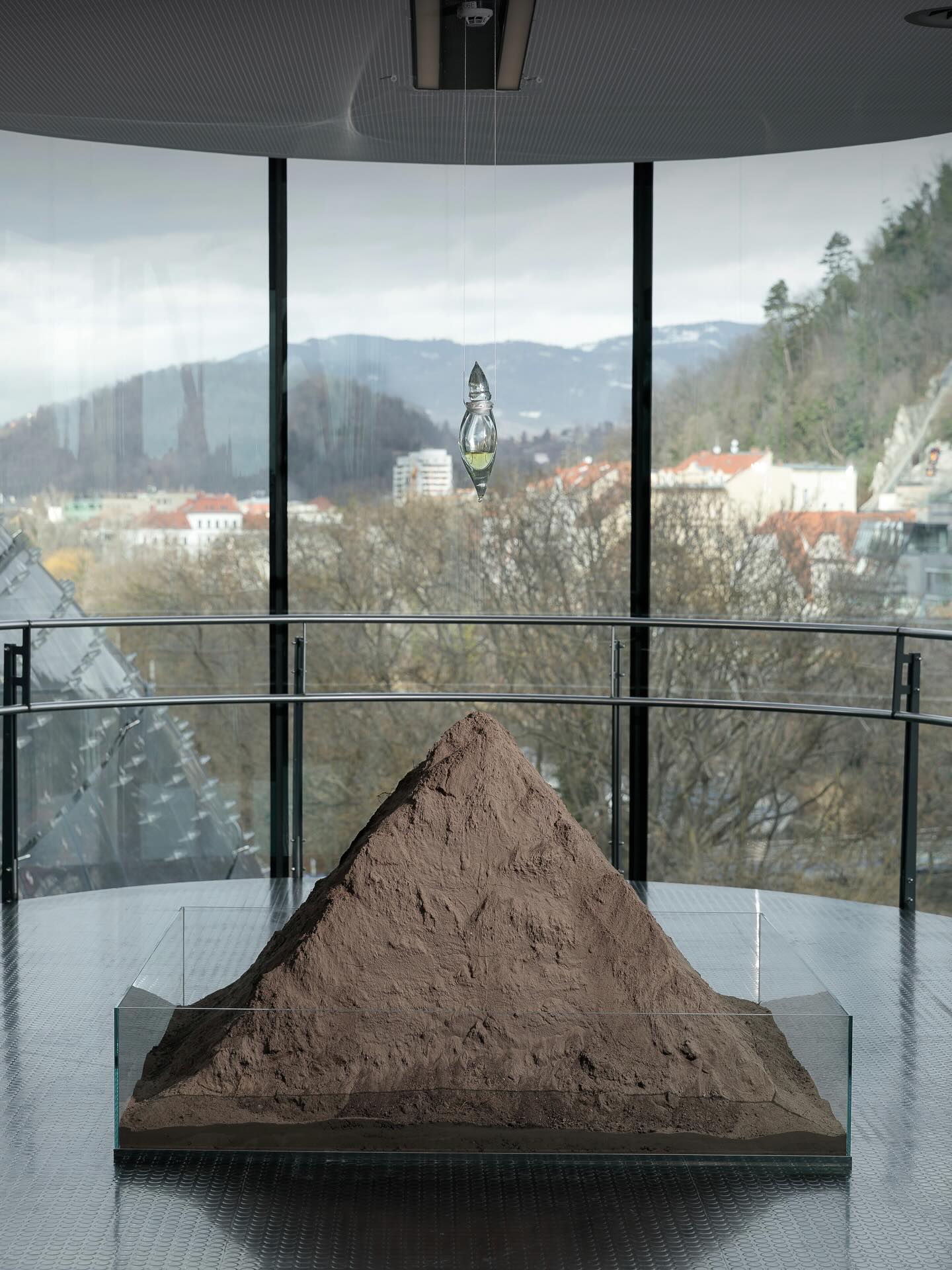
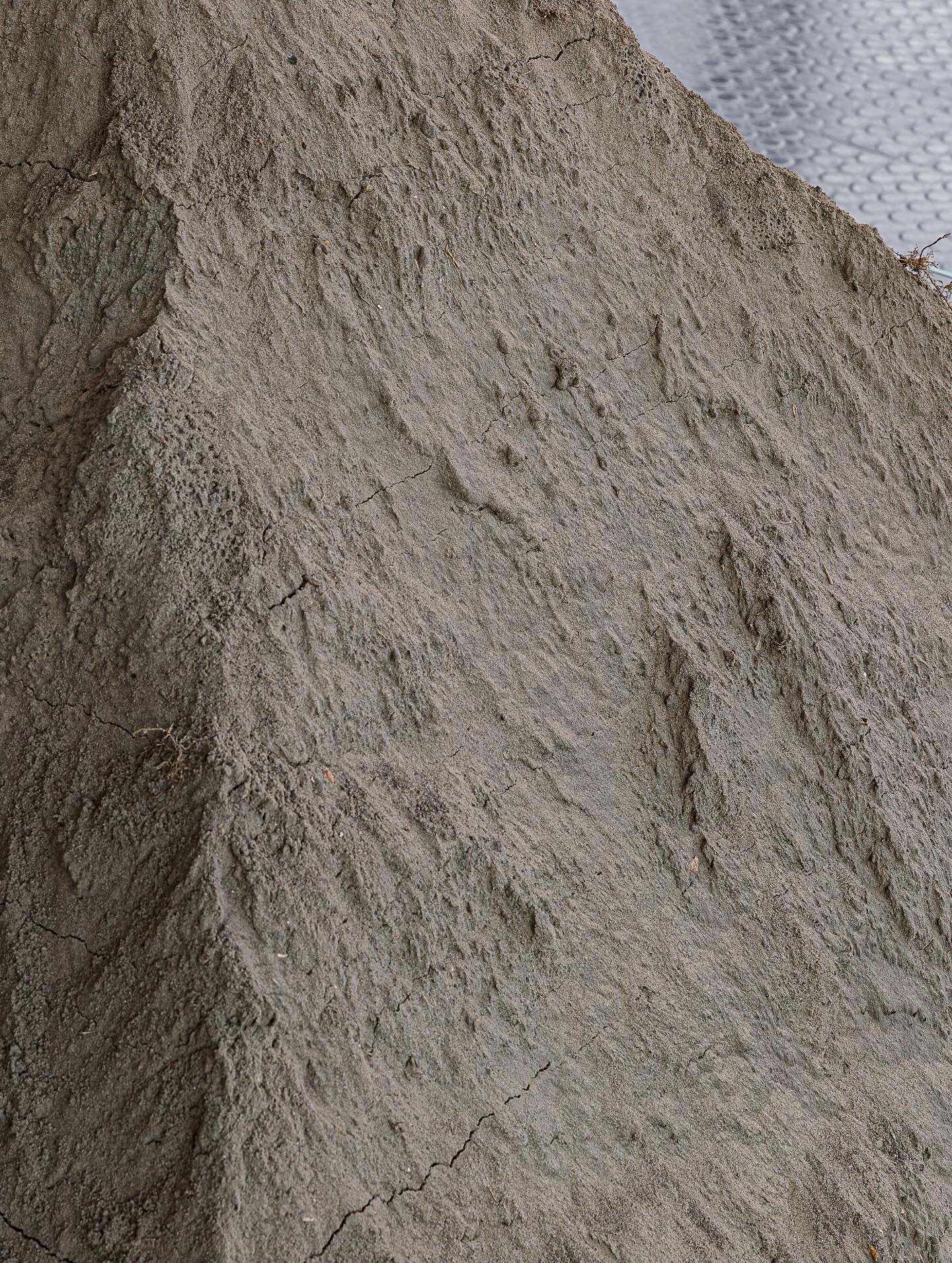
The central object of the exhibition is a mound of soil weighing 225 kilograms, which the artist transported to Poland from her native land. Above it, she placed a glass flask containing an extract of the soil that holds the scent of this earth.
According to the exhibition’s curator, Alexandra Trost, this soil is «not merely matter, but a true political body that crosses borders, resists erasure, and transforms private loss into a shared archive for all exiles».
We spoke with Cemra about attempts to preserve memory and to feel the soil under one’s feet.
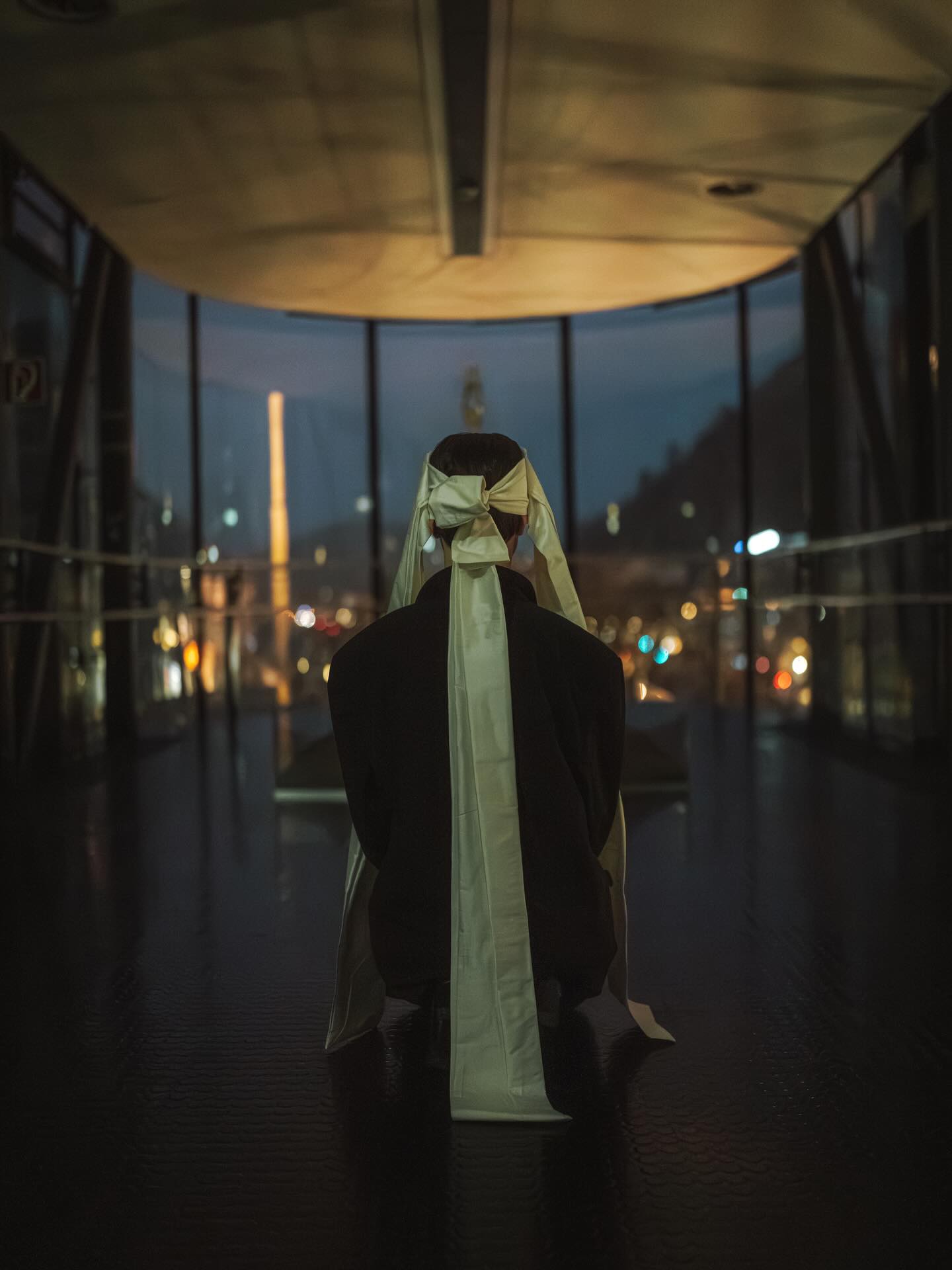
– When did you realise that the project had appeared within you? What was the first signal?
– The project began with a desire for self-help. In the autumn of 2024, I felt completely exhausted. I was afraid for myself. Nothing could replenish my energy, which I was only losing, because unfortunately I have no places that give me strength in Poland.
When I could do nothing except lie down and cry, I realised that support comes not only from people, but also from the ground beneath our feet. Anyone who has never lost their own soil cannot feel the pain of its absence, cannot understand how it holds us.
My mother dug up 225 kilograms of soil from the plot where our ancestral home once stood. Now there is only emptiness there. This soil crossed the border under conditions of restriction. My ritual of drawing close to what has been lost is radical: I reclaim sacred space through enfleurage. I extract scent from the soil, making fat and alcohol absorb the smell of what cannot be taken away. This extract is a form of my memory, an attempt to bring back lost peace.
By the end of 2024, the number of forcibly displaced people worldwide had reached 123.2 million. My glass flask is their shared quiet prayer for the land that no longer holds them.
To feel a physical connection with home, I asked my mother to send me the first 10 kilograms of soil. At that time, I won a grant from Adradzhennia for the idea of a project about extracting scent from native soil. And in order to regain the ability to interact with people, I applied the extract to my body, to my skin. So that I could somehow keep moving, keep overcoming difficulties.
– Tell us about the process of making the work. How did it happen technically?
I tried different experiments. I collaborated with the Poznań Science and Technology Park. They did a test for me, an experiment in high-pressure CO2 extraction. However, this method turned out to be unsuccessful.
Then I tried extracting the scent through hydrodistillation. I obtained a hydrolate. It distinctly smells of soil, but a hydrolate is fragrant water. And that did not satisfy me at all.
Then I tried the method of enfleurage. I adapted it on my own. This technique uses animal fat, but I replaced it with petroleum jelly. On a glass surface, and I had many of them, I laid out the first layer, petroleum jelly. The next layer was soil. The petroleum jelly absorbs the smell of the soil for 10 days. Then I replace the soil with a fresh layer, keeping the same old petroleum jelly. Another 10 days, and then another 10 days. So in effect, you feed the petroleum jelly with the smell of the soil.
Then I poured alcohol over it, also for 10 days. And then the alcohol drew the entire scent out of the petroleum jelly. In the end, I had a large amount of alcohol with dissolved particles in it. Then all of it evaporated for 24 hours in a water bath. In theory, all the alcohol should evaporate, leaving only the essential oil of the soil.
It is very difficult to obtain essential oil from soil, because it is not flowers or plants, but I managed to do it. Although over the course of the preparation, over those four months, the amount of essential oil I got from the soil was very small.
– How did the project develop after the first experiments?
– The funding from Adradzhennia ended, but I kept thinking about the project and then came here, to Graz, for a residency.
There I approached the question more consciously. I thought about the soil, about its energetic and political components. What is Ziamliačka? Ziamliačka means «a woman from the same land». This work is about the exhaustion of exile and about how to find support in the soil itself, by touching the primary foundation of existence. I am firmly convinced that without soil, a person is nothing. We cannot exist without connection and belonging to something larger.
At the same time, I was dealing with transporting the soil. Over the next eight months after the residency, I organised the transportation of the soil from Belarus. I began doing this in the spring, not yet knowing that I would be offered an exhibition at Kunsthaus Graz in February.
In Graz I came up with the idea that there had to be a mountain of soil. I spoke a great deal about the project, and with each meeting it became more and more clearly crystallised.
One of those meetings was with the curators of Kunsthaus Graz. At the end of the summer, they wrote to me saying they would like to exhibit my project. And I began preparing.
– What does the Needle space add to the work? What would have been different in a white cube?
– Needle adds symbolism to the work, because this mountain of soil can be seen from all sides: it is placed in a transparent space suspended above the main body of the museum. It is a mountain of Belarusian soil against the backdrop of Austrian mountains. Everything hovers in space. It is ephemeral and, at the same time, open.
At first I could not understand whether that was good or bad, because I had imagined a white cube. But now that I have seen the space, I began preparing the exhibition in such a way that from the entrance one has to walk for a long time toward the window, almost as if toward an altar.
The curators suggested placing the soil installation right by the entrance. I refused, because I wanted the main parts of the exhibition to be separated into two opposite corners. And I like the fact that one has to take a sufficient number of steps in order to come close to the mountain. There is a certain sacredness in that.
– How was the work with the curators of Kunsthaus Graz structured?
– Very delicately. They do not interfere with your vision, they trust you, and they remain present. Technically, I produced everything for the exhibition in Poland. I had the glass flask blown. I commissioned a glass case for the soil.
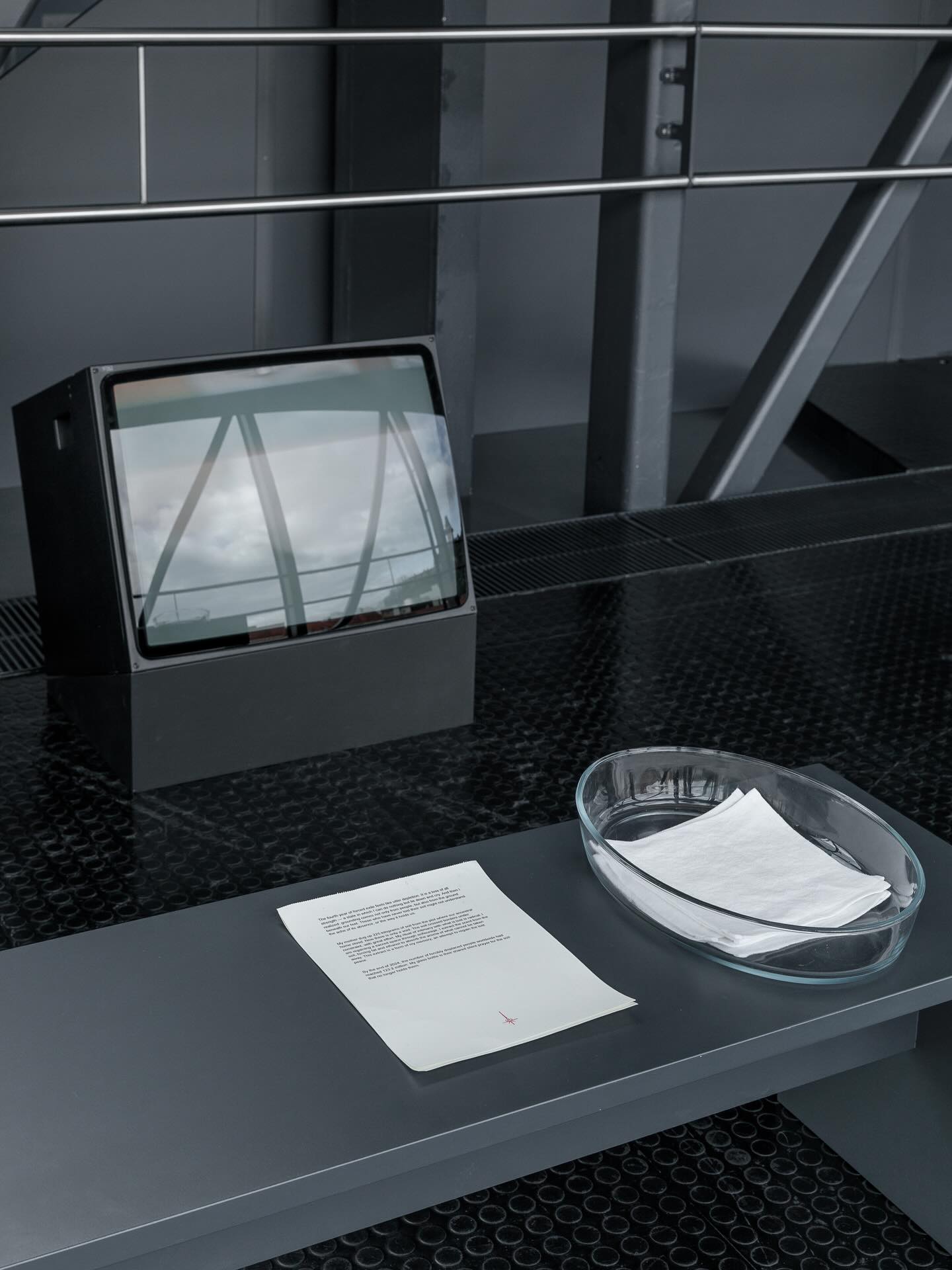
This was my first project of such duration and such conscious depth. Its realisation took fifteen months. I learned to do the technical calculations on my own, and I made all the decisions myself, seeking advice only a couple of times. I realised that no one knows better than I do, and that only I can imagine how it should look. And I argued for all of my decisions. I wrote letters explaining why it had to be exactly this way. And I wrote the exhibition text myself.
– How did the days before the opening go, and how did the performance itself unfold?
– I arrived, and two days later the installation of the exhibition began. I was surrounded by incredible warmth and help. Every question was resolved very quickly. The entire museum staff is female, both the creative and the technical departments. We quickly found a common language, and all these wonderful women supported me, if only with a word, every hour, coming by and asking whether I was all right while I was making the mountain of soil.
People do not talk about such things, but for the first time in my life I fell ill not after an exhibition, not after an opening, but before one. It was very hard for me to speak. And that was the most difficult moment of the opening for me: I could barely stand on my feet. Again I felt such a strong loss of strength. But I managed.
Throughout the whole past year, I was learning to uncover my voice, because just two years ago I could not produce a sound. And only recently I came to the realisation that native soil is associated for me with total acceptance, native because it will always lull you and accept you. I associate it with a lullaby, because this is about care, attention, and peace.
I found a Belarusian lullaby from which I removed all the words except four very symbolic lines. And my lullaby begins with a warm and gentle tone that, through repetition, intensifies into an anxious chant, in order to emphasise the situation in which we find ourselves. It is about the fact that, in reality, even that which is supposed to be something tender, warm, and full of care turns into an anxious chant that resembles sirens.
The lines are these: «Aaa lyuli, aaa ai, the doves flew in, sat on the gate, in red little boots».
These doves flew in and sat on the Gate of our Homeland and do not want to leave. It is a kind of looped motif. It seemed to me very symbolic to open the exhibition with song, because there is nothing more intimate than the voice.
But my throat gave out, and I could not sing, so they played a recording of my singing.
I also gave people the opportunity to sense the fragrance that I obtained from my soil. I sewed squares that repeat the square form of the exhibition. And onto white linen I poured the soil extract.
– At the opening, you gave a speech… It seems to me that it matters, as part of the exhibition.
– I spoke about the power of how women see. I will quote it:
«Today, I want to say a few words about the power of how women see.
Ziamliačka is a woman from the same soil.
This is not only about ‘a woman from the same land.’ It is about women’s power to act and to carry memory. A woman can keep what is invisible but important.
This exhibition would not have happened without women.
Luise was the first to truly see me.
Then Katia, Alexandra, Doris believed in the project and helped bring it to life. My friend Anya helped transport the soil.
And the whole museum team supporting this work – are women.
This is not a coincidence. It means something.
Ziamliačka is the one who holds the bond with the living.
I believe the world can be arranged differently.
It can be built around the one who gives birth.
Around what preserves, not what appropriates.
Around what cares, not what dominates.
If we ever choose not the power of destruction, but the power of birth – the world will change.
And maybe then the earth will stop being a place of loss –
and become a place of life again.
Thank you».