
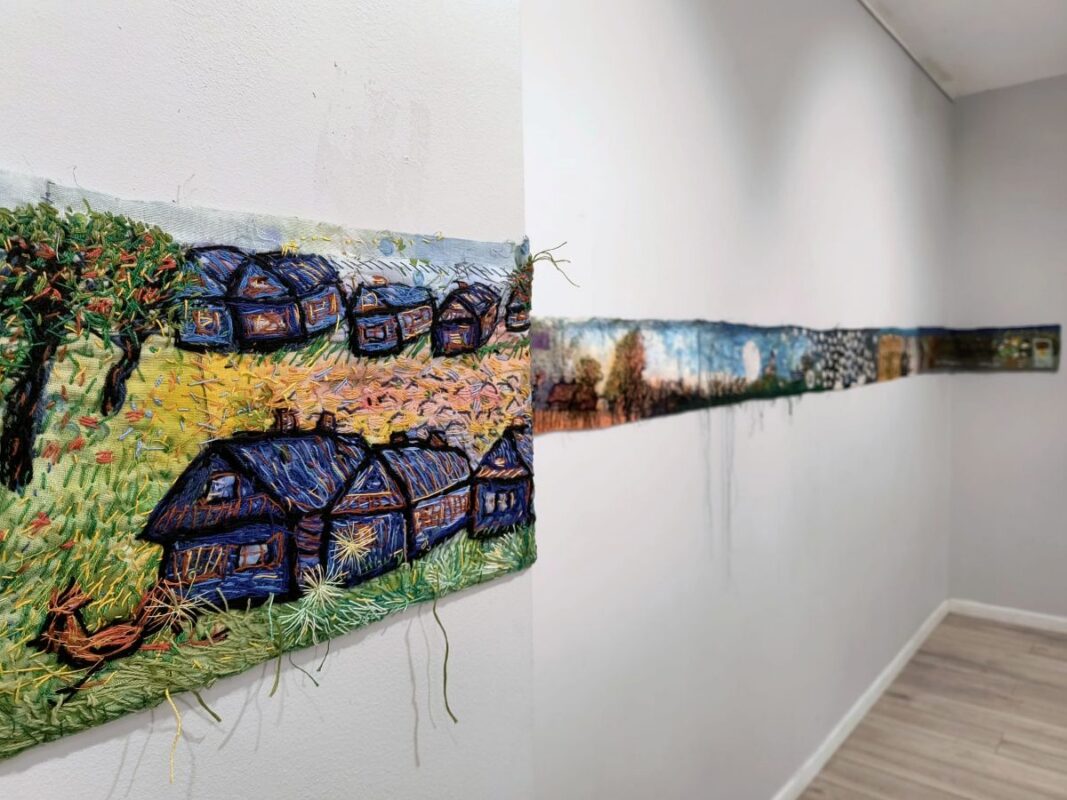
An exhibition titled “The Line of Transition” by Warsaw Academy of Fine Arts professor Małgorzata Dmitruk has opened at the Ivan Lutskievich Belarusian Museum in Vilnius.

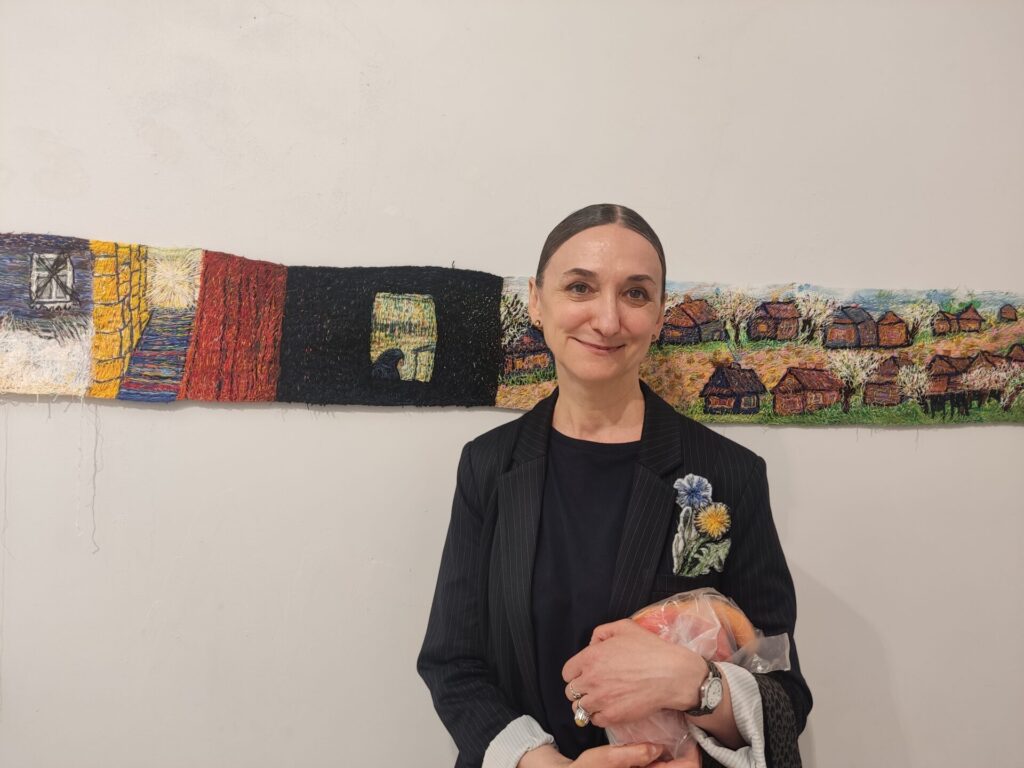
Małgorzata Dmitruk was born in Podlasie, studied for several years at the Belarusian Academy of Arts, and completed her professional education at the Academy of Fine Arts in Warsaw.
“The Białystok region inspires me,” the artist says. Dmitruk’s work originates from family experience deeply rooted in the culture and traditions of the Polish-Belarusian borderland and the Belarusian minority of Podlasie.
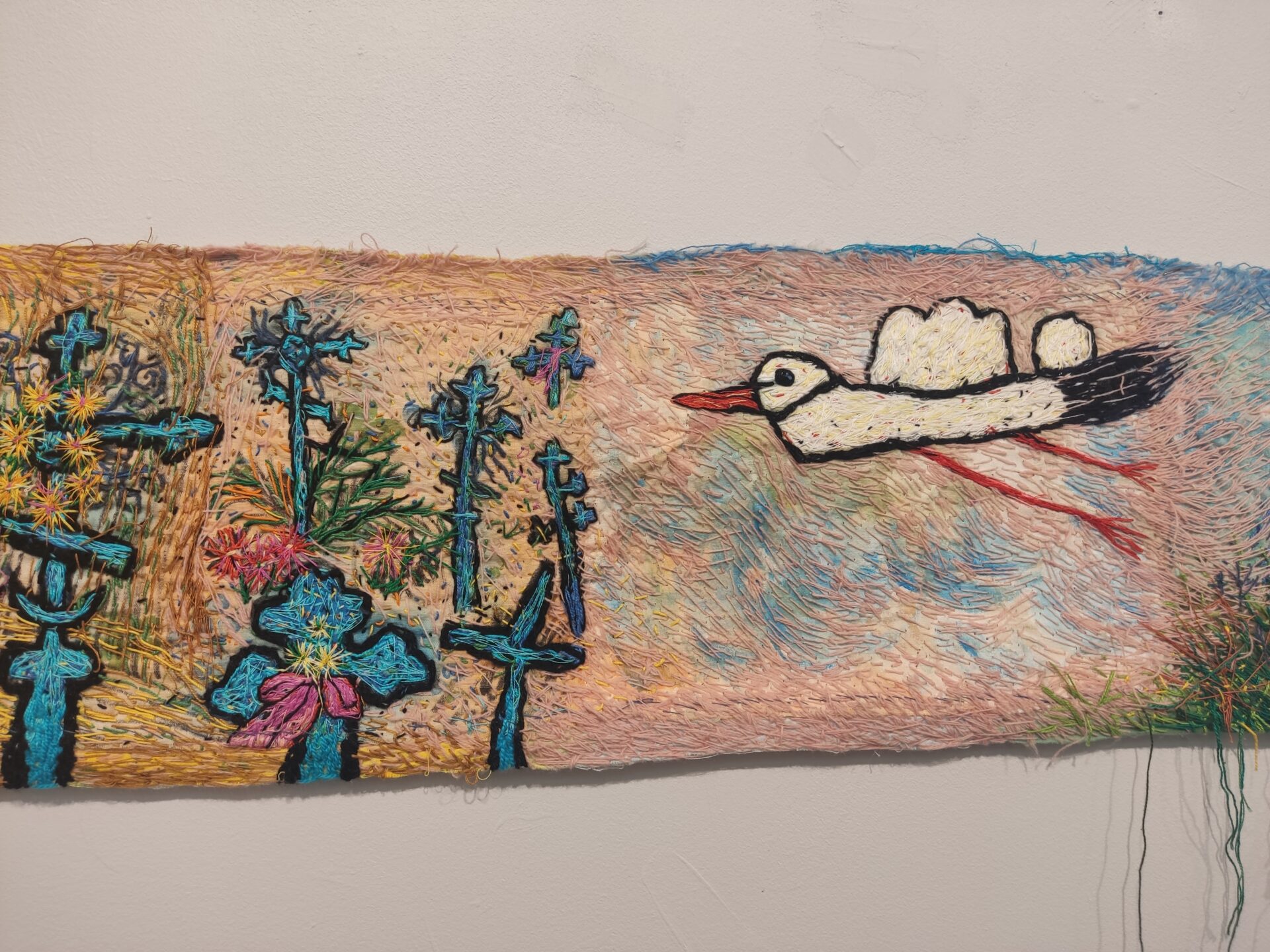
The central work of the exhibition, “The Line of Transition,” is a multi-meter textile composition dedicated to events on the Belarusian-Polish border. Dmitruk worked on it for nearly two years, constantly monitoring news from the border and asking herself why mothers with children were dying in her native region.
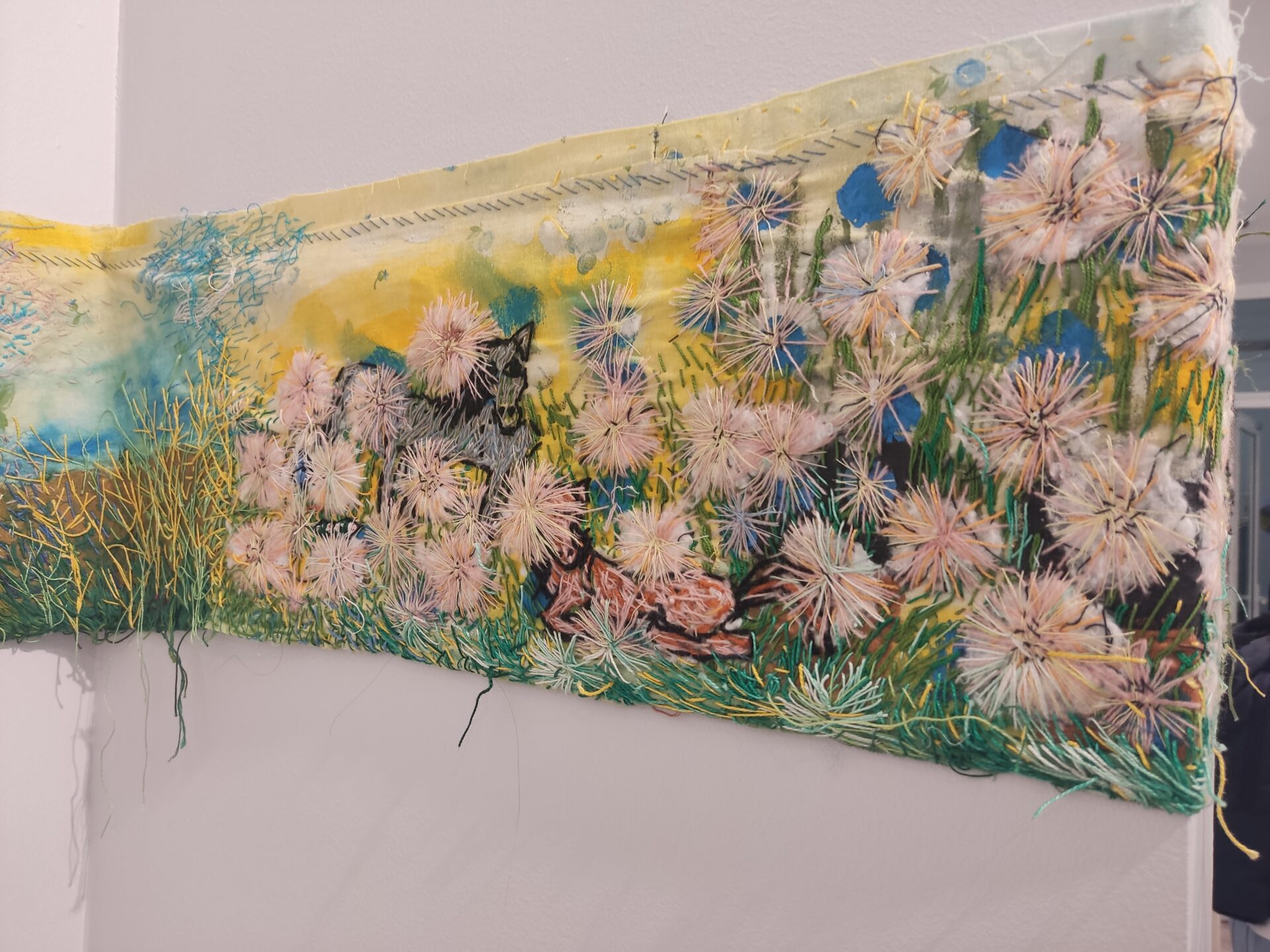
The work is not only about crossing a state border, but also about transitions from forest to field, from field to village, from village to city. “The seasons change, the stages of human life change from cradle to deep old age,” the artist notes.
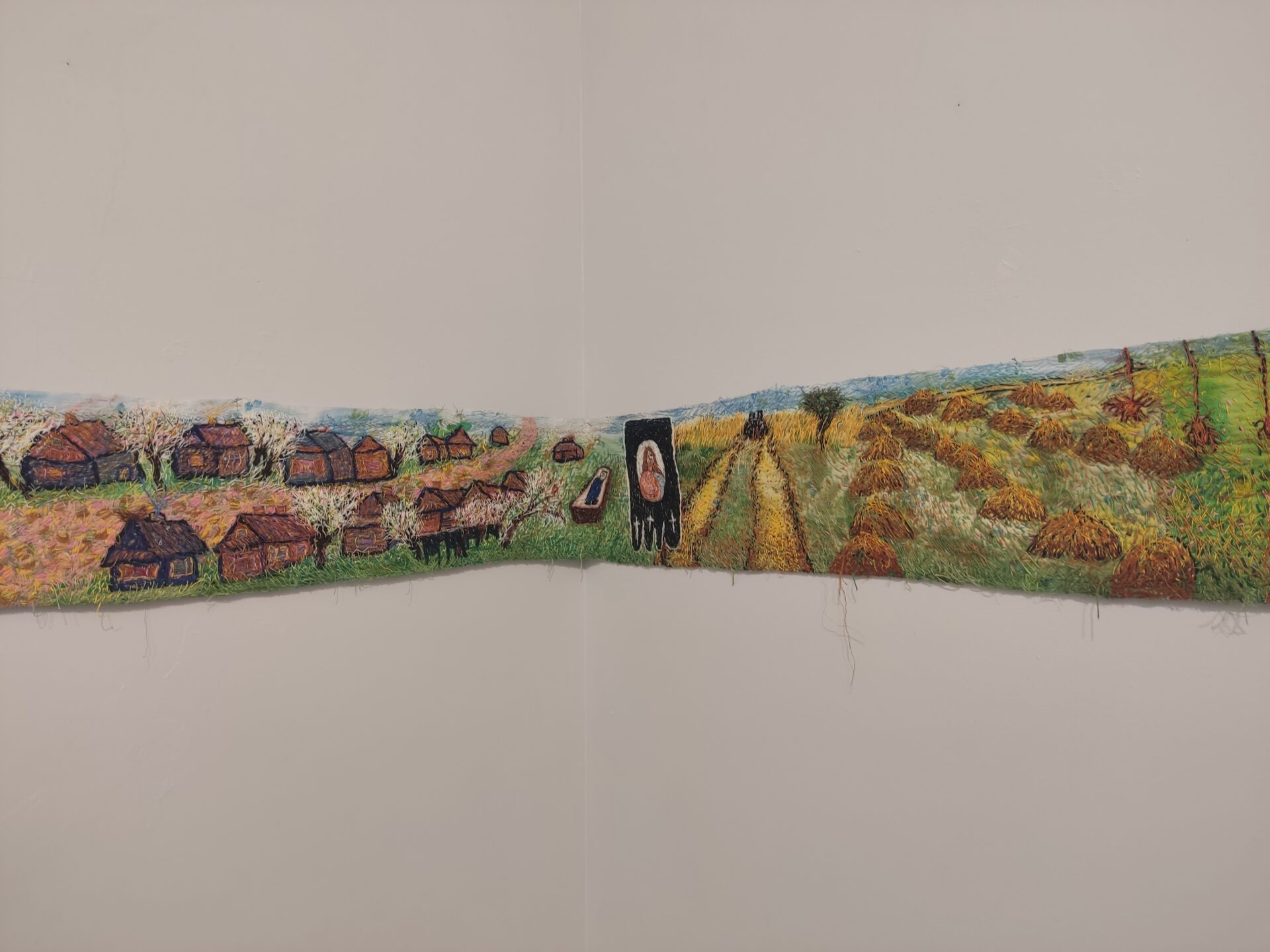
Another important theme is the transition from darkness to light: the composition impresses with its textures and contrasts, while tragic scenes unexpectedly give way to bright landscapes.
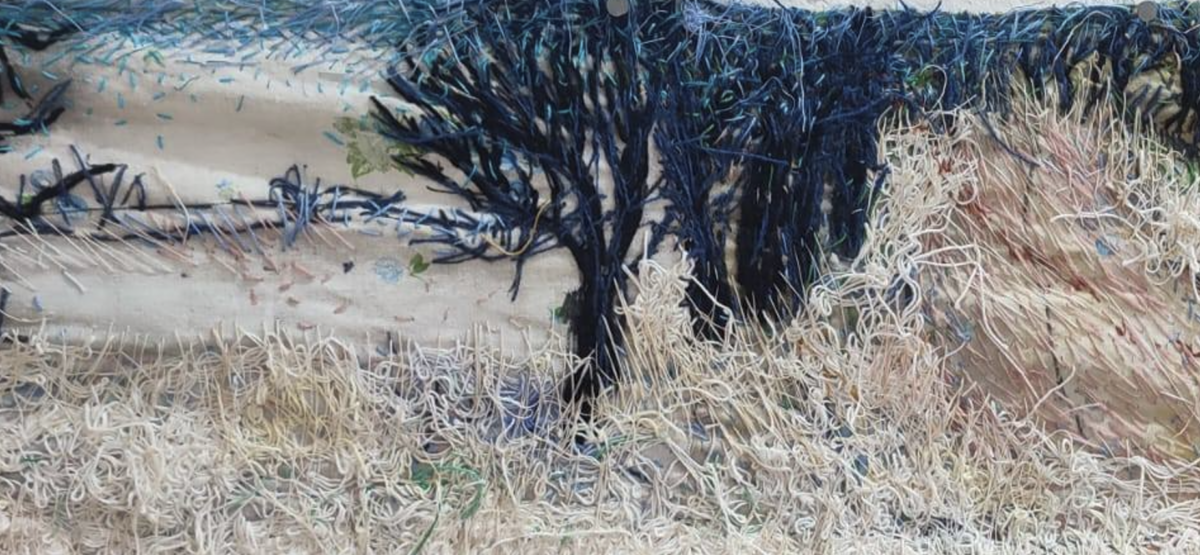
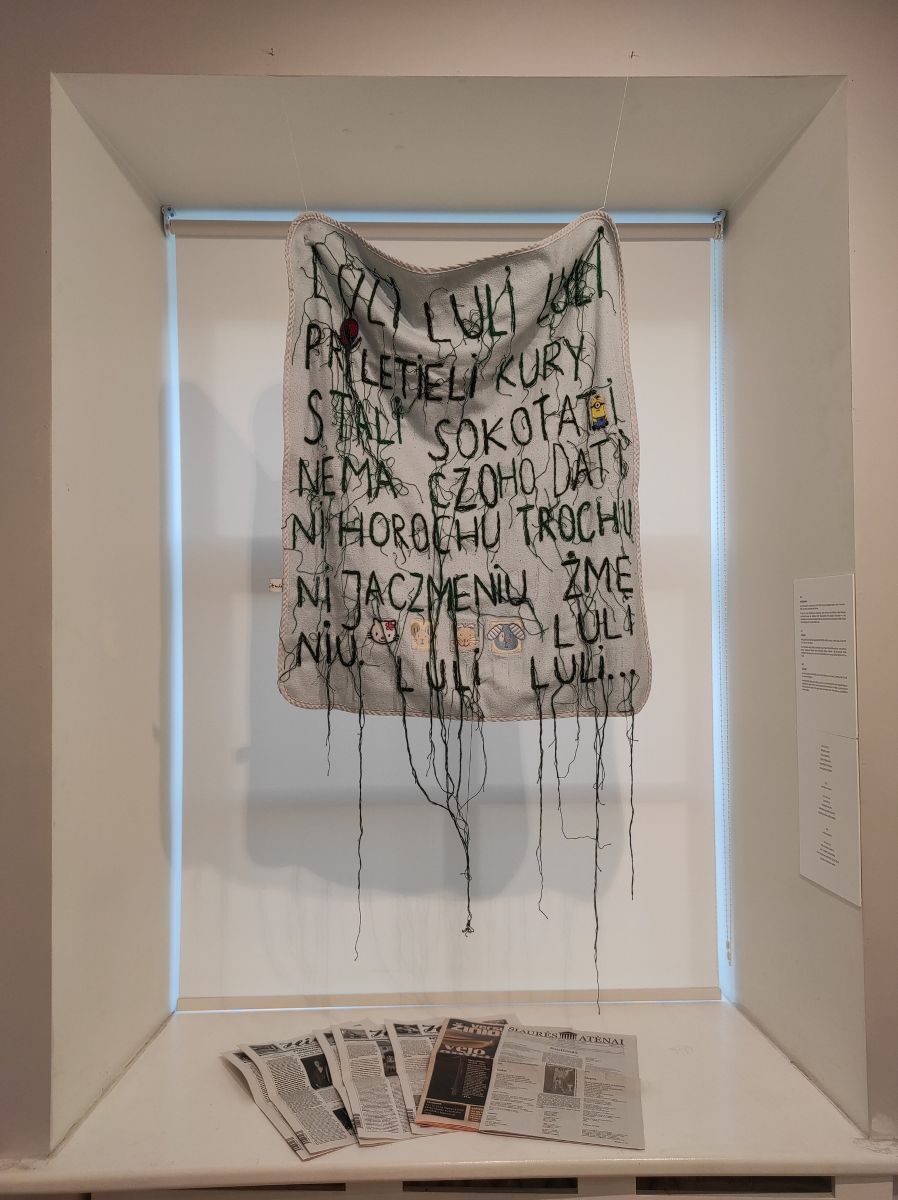
Dmitruk often creates her textile works from found, donated, and inherited fabrics and threads that carry memory and history. For example, one of the works presented at the exhibition, “Lullaby,” was created by embroidering onto her children’s blanket the words of a traditional lullaby from the village of Mokre near Bielsk Podlaski, sung by her grandmother.
The lithograph series “Kombinat” is dedicated to Dzmitry Malatkou, an artist and printer who headed a printing workshop at an art combine in Minsk. Dmitruk worked at the workshop while studying at the Belarusian Academy and later specially traveled from Warsaw to professionally print her lithographic works.
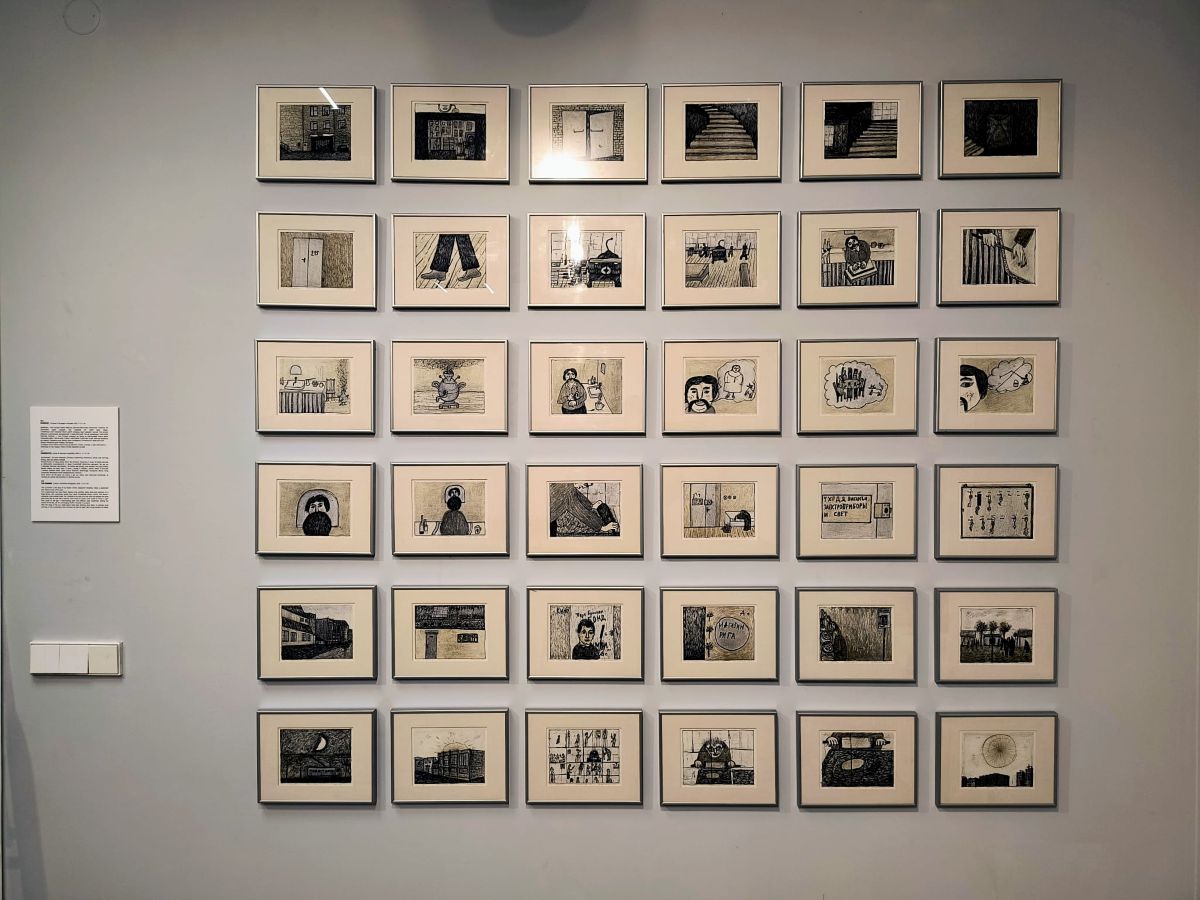
The artist’s style is distinctive and recognizable: having received professional education at two academies, she imitates the drawing style of naïve artists and children in order to preserve the immediacy of creative self-expression. In doing so, while addressing complex and sometimes horrifying themes, she maintains piercing sincerity.
The exhibition will run until June 28.
Subscribe to Reform.news cultural news on Telegram