
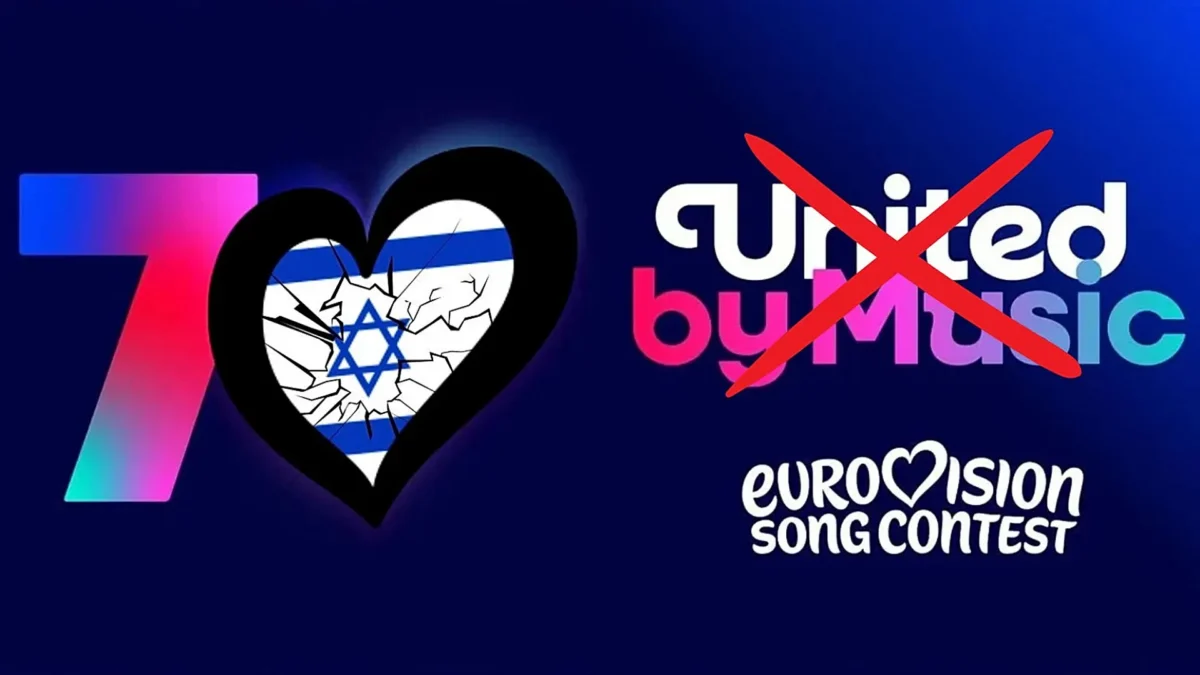
The 70th anniversary Eurovision Song Contest is facing a major political boycott. As Euronews reports, Slovenia has become the third country to take a radical step: not only refusing to send its artist to Vienna, but also declining to broadcast the show altogether. This comes just days after thousands of global stars issued an open call for a boycott.

Timeline of the Protest: From Letter to Programming Shift
The decision by Slovenia’s national broadcaster (RTV Slovenia) followed mounting pressure from the international cultural community. Last week, thousands of artists, including Massive Attack, Brian Eno, Sigur Rós and Mogwai, signed an open letter initiated by the “No Music for Genocide” movement.
In their statement, the musicians directly addressed audiences:
“We, musicians and cultural figures, reject attempts to use Eurovision to whitewash and normalise genocide, siege and the brutal military occupation carried out by Israel against Palestinians… We express solidarity with calls to boycott the contest until the EBU excludes the Israeli broadcaster KAN.”
Following this appeal, RTV Slovenia director Ksenija Horvat announced that the country would not air Eurovision. Instead of the music show, the channel will broadcast a cycle titled “Voices of Palestine”, featuring documentary and fiction films.
Arguments of the Sides: “Double Standards”
According to countries supporting the boycott, the main grievance lies in what they describe as the organisers’ “double standards”. As Euronews notes, critics compare the situation to Russia’s exclusion from the contest in 2022 and argue that allowing Israel to participate contradicts the values of “unity through music”.
For its part, Israel has consistently rejected accusations of genocide in Gaza. However, opponents cite findings by a UN commission (September 2025), which have further fuelled the protests.
Scale of the Boycott
At present, the configuration of the boycott is as follows:
Slovenia, Ireland and Spain — complete refusal to participate and broadcast (for Spain’s RTVE, this is the first such case since 1961).
The Netherlands and Iceland — refusal to send artists, but maintaining broadcast coverage.
Despite the unprecedented controversy, the European Broadcasting Union (EBU) plans to hold the contest with the participation of 35 countries. The final is scheduled for May 16, 2026, in Vienna.
Subscribe to Reform.news cultural updates on Telegram