
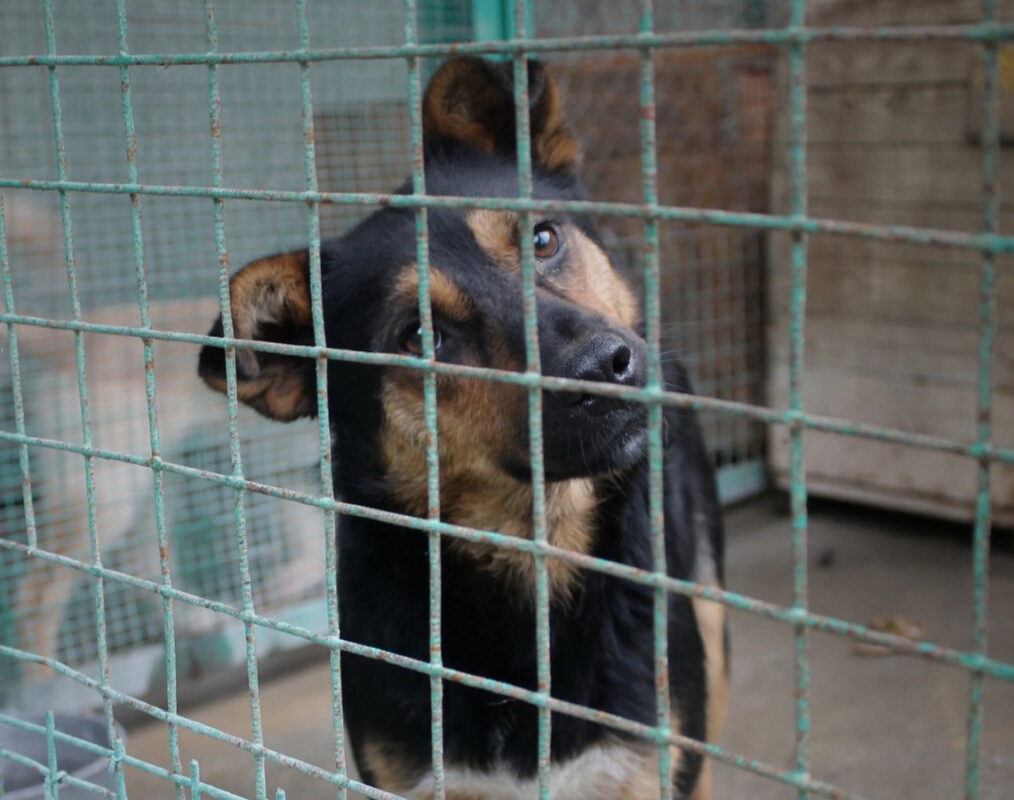
Volunteers report a critical situation at Minsk’s temporary animal holding facility, Fauna of the City, on Hurskaha Street. According to them, the facility is overcrowded, with all kennels and rooms occupied and dogs being housed two or three to a space. Nineteen animals arrived in just two days. To make room for new animal control operations on Monday, at least 30 dogs need to be taken out of the facility.
Animal welfare activists link the overcrowding to the introduction of a mandatory dog ownership tax starting on July 1, 2026. According to them, owners unwilling to register their pets and pay the tax are surrendering domestic animals in large numbers.
“Friends, there is trouble at Fauna of the City on Hurskaha Street in Minsk. After the adoption of the new law, people are bringing animals from everywhere and surrendering them in large numbers to the euthanasia facility so they do not have to register them — household pets, helpless animals. Animal control is picking up all free-roaming animals indiscriminately,” they wrote.
Volunteers are urging Minsk residents to take a dog home or provide temporary foster care.
“Please do not write negative comments or suggest shutting down animal control, refusing to accept animals, or other fantasies that will never happen. The only help that is truly needed right now is to take in a dog,” they said.
Visits are possible daily from 2:00 p.m. to 6:30 p.m. at 42 Hurskaha Street. Visitors must bring a passport.
Starting July 1, 2026, all domestic cats and dogs in Belarus will be subject to mandatory registration. The tax for owning a dog will be 14 Belarusian rubles per quarter, while owners of potentially dangerous breeds will pay 67 rubles. The charge will be included in utility bills. Pets must be registered within three days of acquisition.
People with Group I and II disabilities, owners of guide dogs, large families and several other categories are exempt from the tax. Dogs can be registered free of charge through the one-stop service. Failure to register a pet may result in a fine ranging from 45 to 675 rubles, while non-payment of the tax carries a penalty equal to 15% of the outstanding amount.
Authorities plan to identify unregistered animals using, among other sources, information from veterinary clinics and reports from neighbours.