
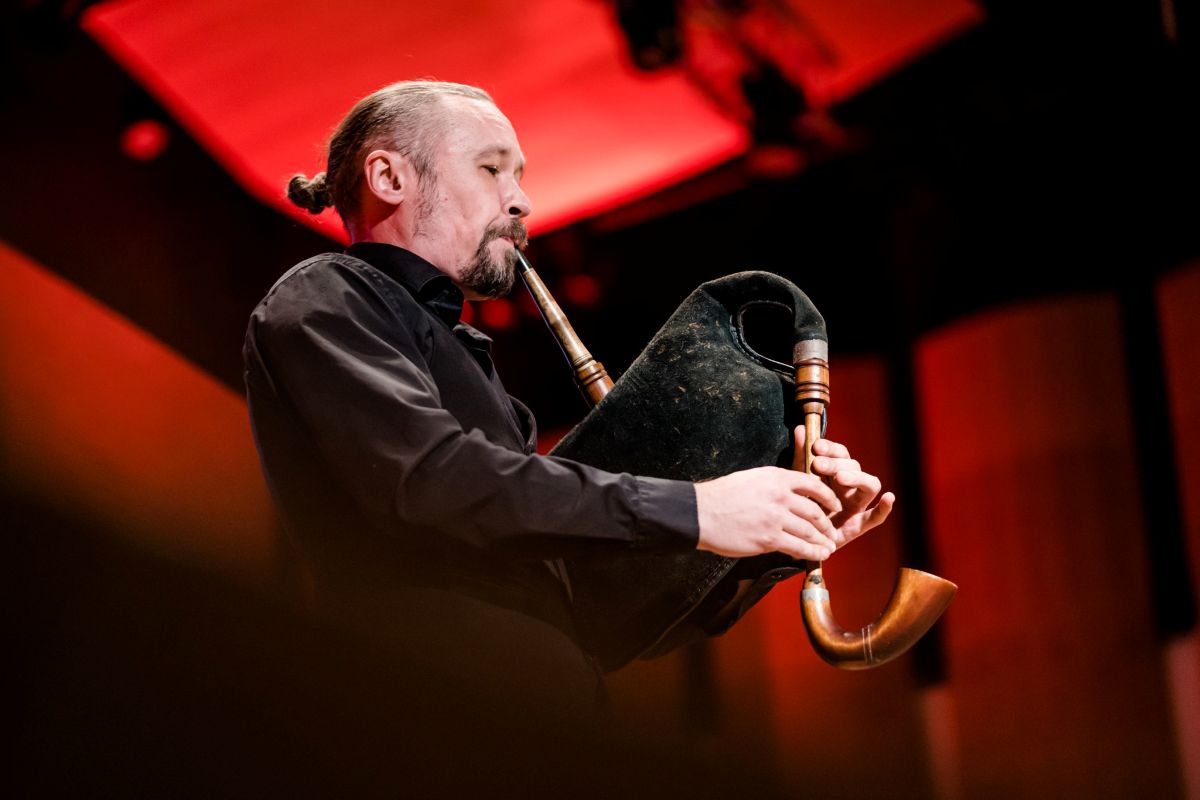
The Free Belarus Museum project “Dudy: Music of the Past and Present” has been included in the program of Warsaw Museum Night 2026. It opens on May 16 with the exhibition “Dudy: Instrument, History, Symbol.”

When and why did the duda become a cultural symbol of Belarusians? When did writers begin calling themselves dudars, and how is this symbol used by today’s Belarusian authorities? We spoke with the exhibition’s curator, musician and researcher of the duda tradition Yauhen Baryshnikau.
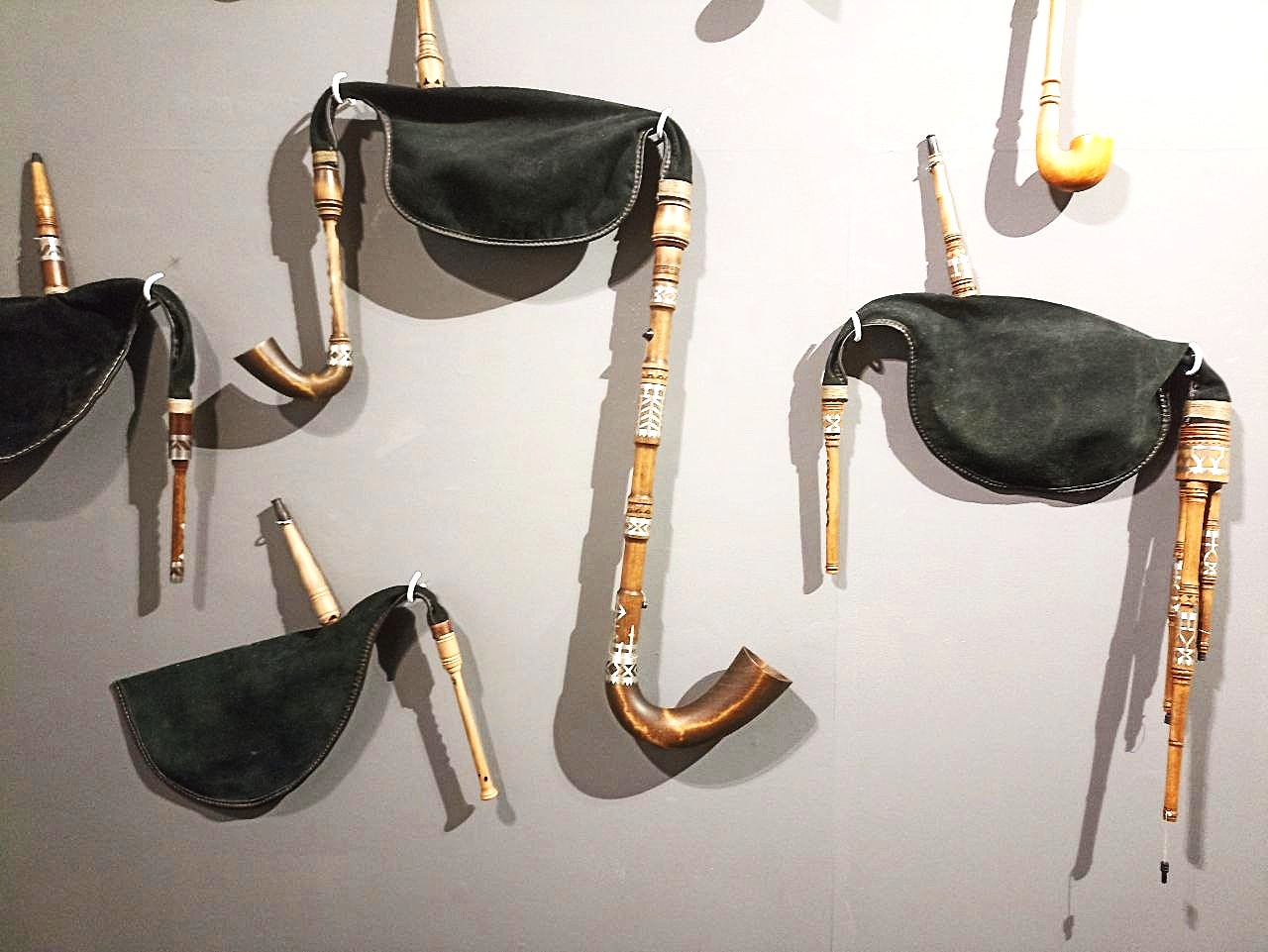
“The Bagpipes for the Exhibition Were Gathered From Polish and Belarusian Musicians”
– How long have you been involved with the duda?
– I have been playing since 2008, from 2010 to 2017 I organized “Dudarski Club” evenings, and since 2012 I have been conducting academic research on the duda. At the Congress of Belarusian Researchers, I organize a special section bringing together specialists from across the region. Right now, together with two co-authors, we are writing a collective monograph on Belarusian bagpipes at the University of Wrocław. One of them is Professor Zbigniew Przerembski, a Polish guru on bagpipes, and the other is Belarusian ethnographer Uladzimir Lobach. The book will be published in Belarusian and English.
We have gathered so much material that any of the exhibition stands showing the historical evolution of the duda tradition could have become a separate exhibition. For me, as someone deeply immersed in this topic, the main challenge was not what to show, but what to leave out in order to fit within the exhibition format.
– Where did you find so many bagpipes while in exile?
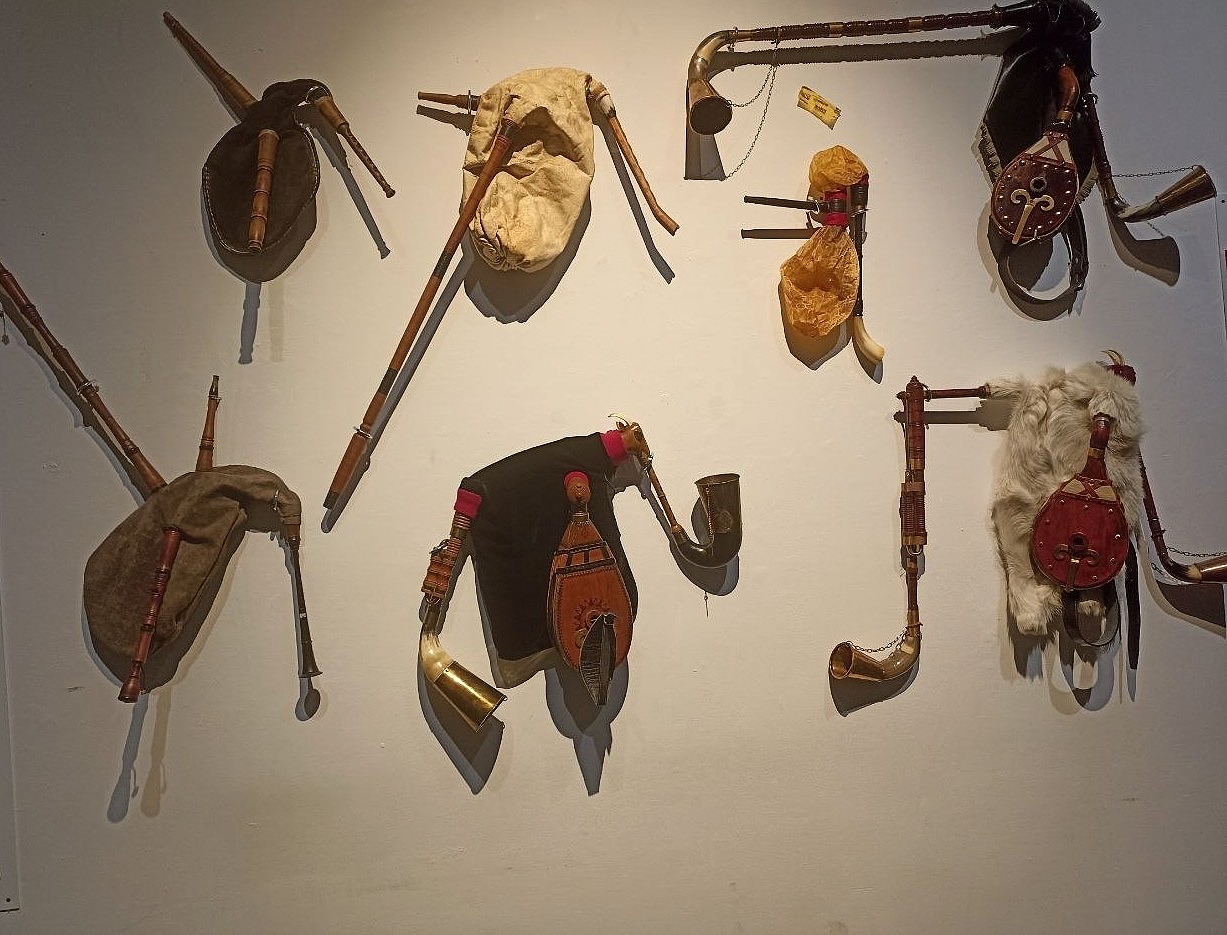
– I am not a collector; only four of the instruments there are mine. The bagpipes for the exhibition were gathered from Polish and Belarusian musicians.
My four bagpipes are working instruments. Recently, we created a band in Gdańsk called “Kapela Tryhradzka.” The old diaspora used to call the Tri-City area “Tryhrad.”
We are now actively integrating into the local music and dance scene.
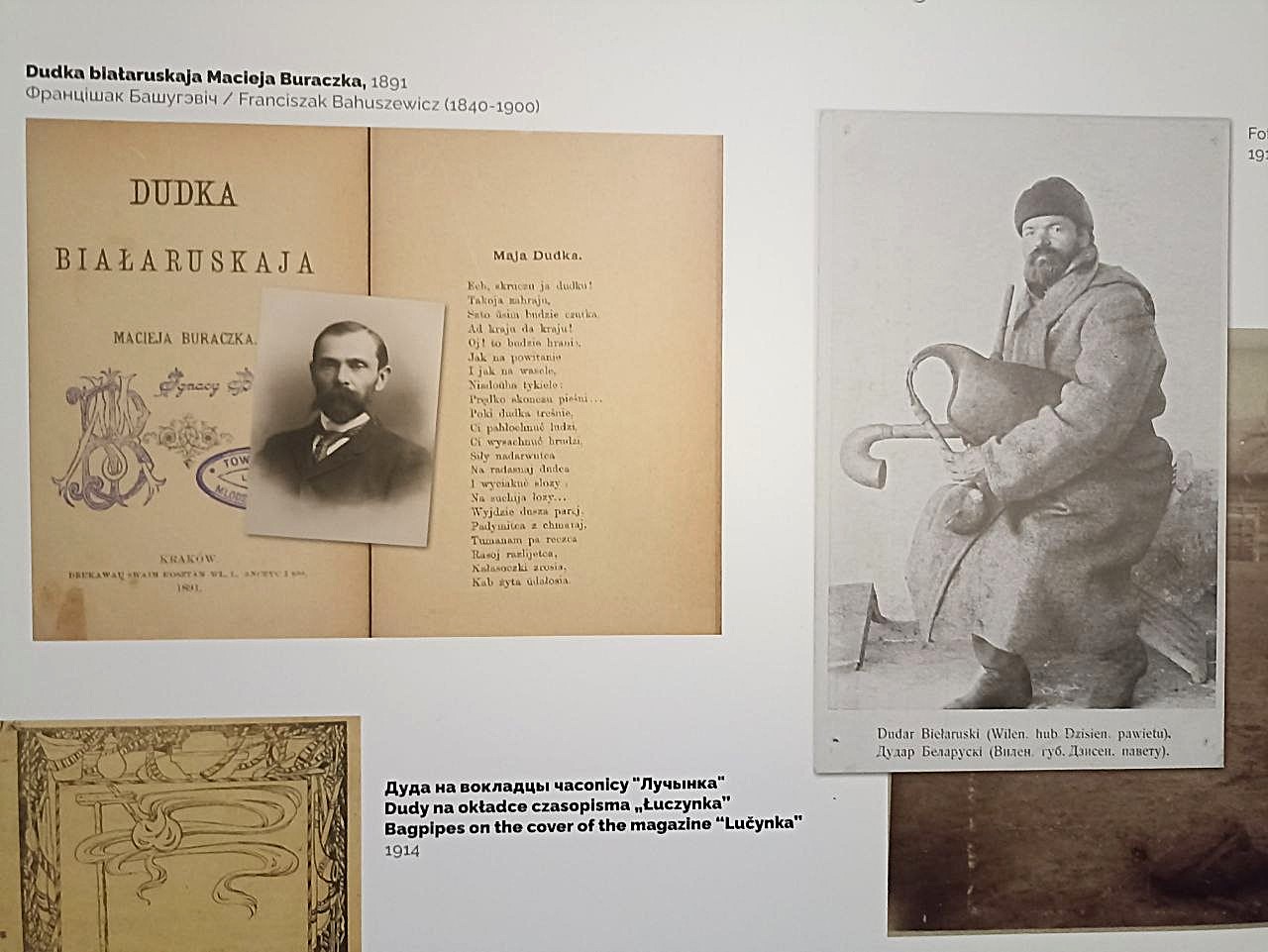
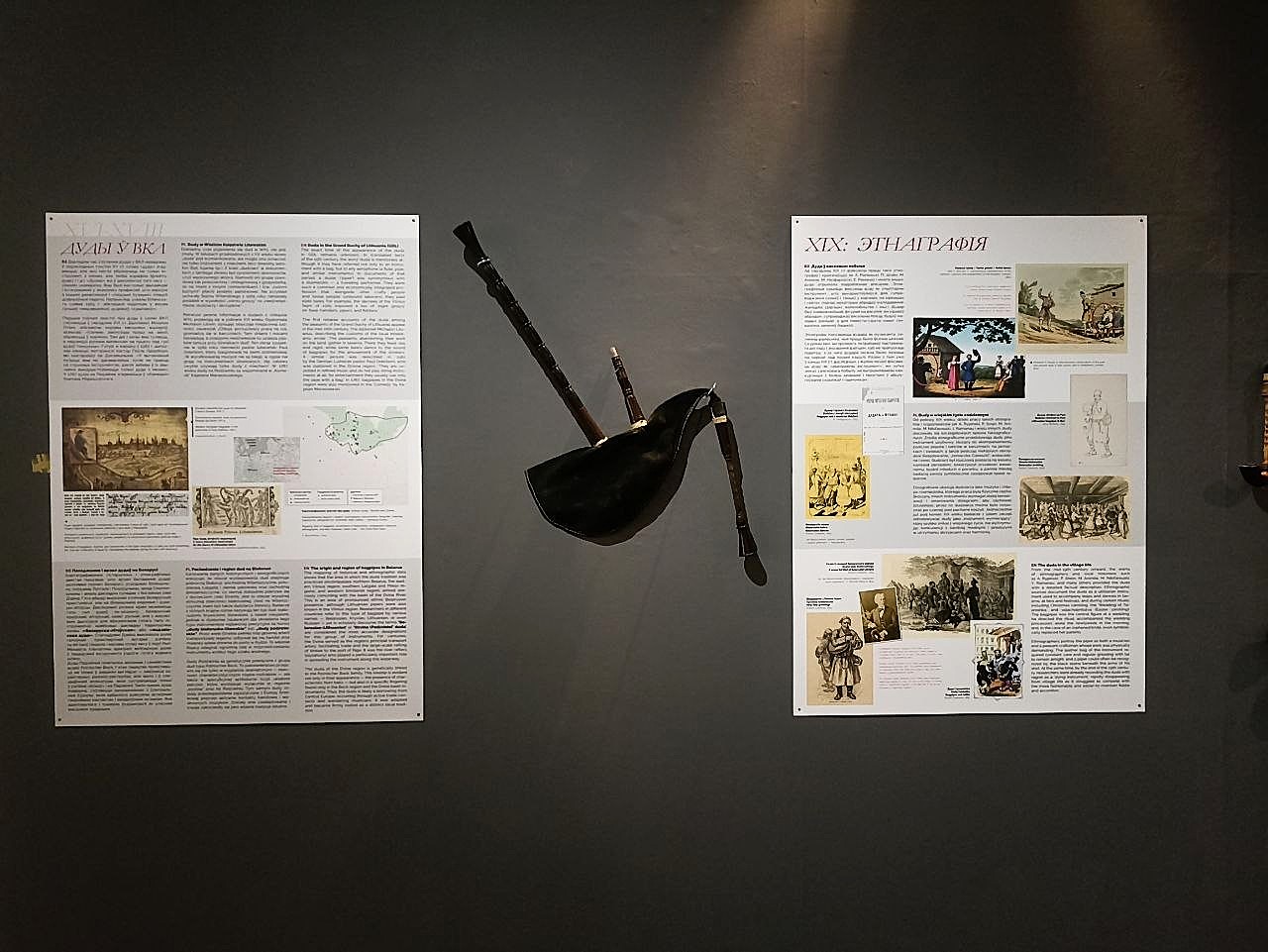
Poles have bagpipes in their musical tradition too, but for them it is simply a folk rural instrument, without our mythological dimension. In our national narrative, beginning roughly in the mid-19th century, several generations of Belarusian intellectuals created the myth of the dudar. The writers of “Nasha Niva” embraced it, and even Soviet authorities used it in the 1920s and 1930s. For example, in 1924 a collection of our poets titled “Chyrvony Dudar” (“Red Dudar”) was published in Minsk, and Belarusian dudars were even taken to Paris.
So the romantic image of the Belarusian dudar is more than a century and a half old.
The Dudar Myth
– It is interesting that this myth appeared while bagpipes were still part of everyday life, because the tradition was lost in the 1950s…
– Yes, the duda was displaced, like all other instruments, by accordions. It is believed that the last public performance by an authentic dudar took place in 1951, when Yazep Hvozd from the Ushachy district performed at a republican amateur arts review in Minsk. And that was it — only the myth remained in the public sphere.
It is interesting how this myth emerged. At first, the dudar was simply an element of everyday life. The first mention of the duda dates back to the 16th century, and there was nothing sacred about it: it was a story about a tavern in the Padzvinne region, bear dances and alcohol.
The myth of the duda appeared in the mid-19th century during the Romantic era, when local intellectuals became interested in folk culture. The authorship of the myth belongs more to writers than ethnographers, who adhered to scientific approaches. From the mid-19th century onward, Belarusian literature developed this romantic image of the dudar. It appears in the anonymous works “Taras on Parnassus” and “Eneida Reversed,” in a poem by Pauliuk Bahrym, as well as in works by Adam Mickiewicz, Tamash Zan, Jan Barszczewski, and Julian Laskowski.
Writers began calling one another dudars. For example, a collection by Dunin-Martsinkevich was titled “Belarusian Dudar.” Friends called Artsyom Viaryha-Dareuski the “Dudar of the Dvina Region.” He himself signed his works as “Belarusian Duda.”
The revival of the duda in the 1980s continued this mythologization born in the 19th century.
The last generation before the tradition disappeared in the 1950s for whom the duda remained an important symbol were the writers of the 1920s, but they were later repressed. For example, in 1913 Lastouski published in “Nasha Niva” a story recorded by Polish author Kazimierz Tetmajer about a highlander fiddler who went to heaven, played the violin, and when everyone started dancing, the angels sent him back home. Retelling this story, Lastouski replaced the highlander fiddler with a dudar from Barysau, because for him the dudar carried greater symbolic weight. In 1922 Zmitrok Biadulia in “Palessian Tales” placed a duda into God’s hands as He created the world through playing it.
In the 1930s, the duda began to be used in amateur performances. And the most tragic story for me is from 1937, when a radio festival of folk art featured a dudar performing for the entire Soviet Union. The broadcast took place just days before the Night of the Executed Poets, while in the KGB prison Moyshe Kulbak, who had written a poem about the duda in Yiddish, and Ales Dudar were awaiting execution. If I were writing a screenplay for a feature film, there would be a scene where Ales Dudar and Moyshe Kulbak, during interrogation, listen to that dudar on the radio.
By the late 1930s, during concerts dudars symbolized the old village, after which accordion players would come out and present the new joyful Soviet village. That is how it looked. And then gradually the tradition was interrupted.
There is an interview from 1939 with one of these dudars in which he says that the violin, clarinet and cymbals lie unused while everyone plays accordions. Young people had lost interest.
Revival
– No one wanted to inherit the craft, so the tradition disappeared. And then some 30 years later it is revived. How did that happen?
– It was precisely the myth born in the 19th century that led to the revival of the instrument.
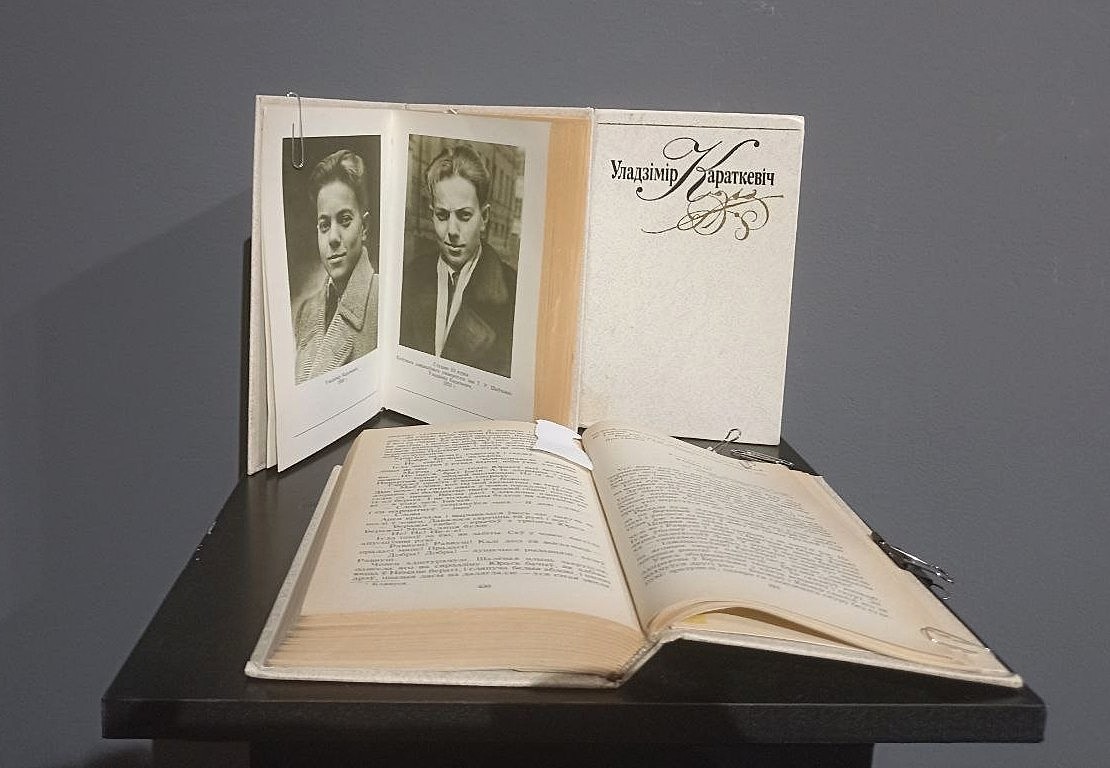
Karatkevich, in particular, turned to the image of the dudar. Dudy appear in “King Stakh’s Wild Hunt,” “The Grey Legend,” and “Kalasy Pad Siarpom Tvaim,” while in the novella “Christ Landed in Hrodna,” the Dudar “Bratachka” is a romantic trickster-fighter, the voice of the people, who during the “Night of White Crosses” plays from the bell tower above the city to support the popular uprising.
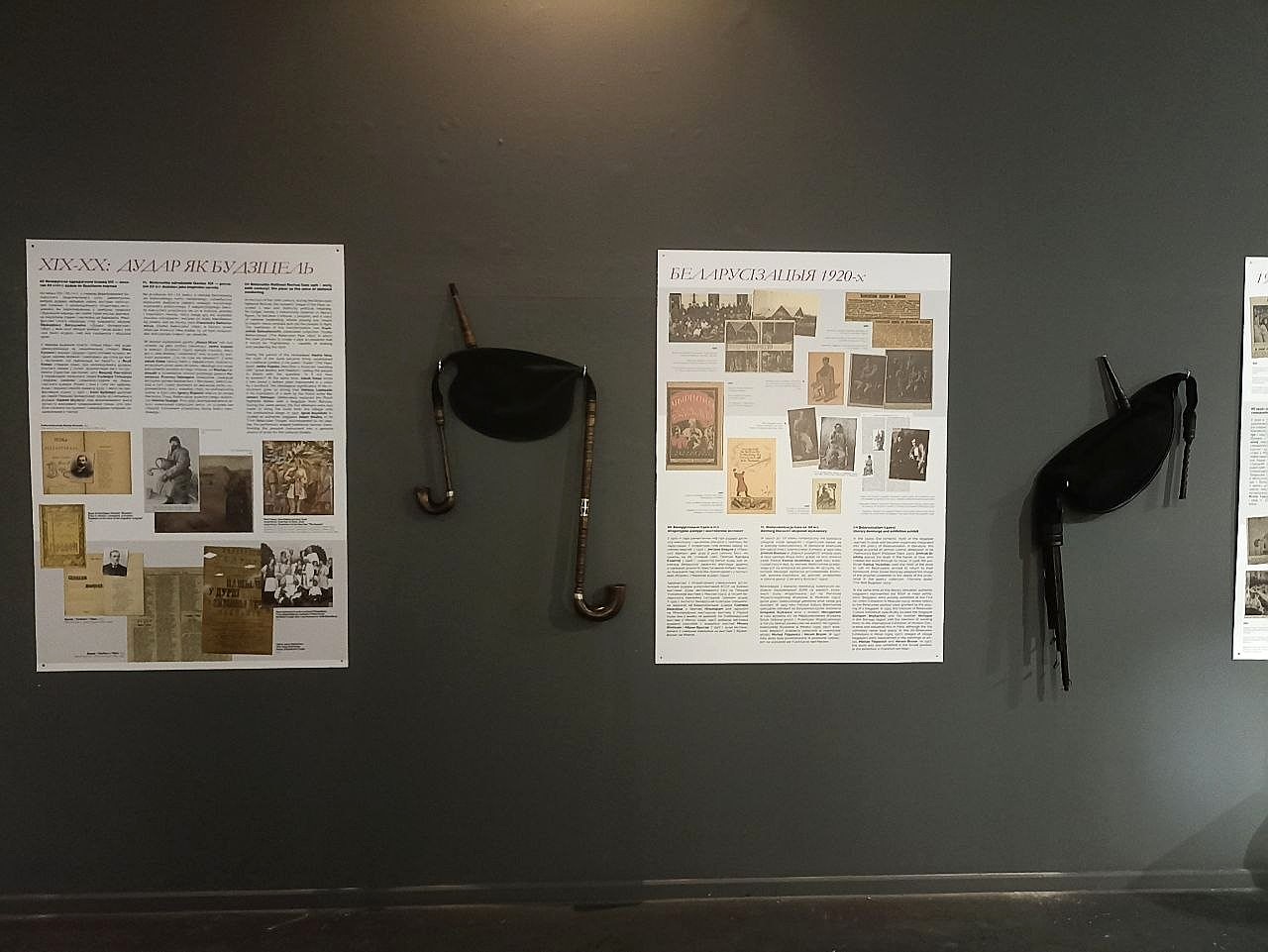
In 1979, Ina Nazina published the monograph “Belarusian Folk Instruments,” which introduced into wide circulation a whole body of ethnographic and historical literature dating back to the 19th century. Thus scientific specificity joined the myth. Instrument makers had to reconstruct practical knowledge from scratch, using ethnographic literature, rare iconography, museum exhibits and examples from neighboring bagpipe traditions.
In the early 1980s, Ales Los, Uladzimir Puzynia, Uladzimir Hrom, and Ales Zhukouski worked on recreating the instrument. In the 1990s they were joined by Todar Kashkurevich, Ales Zhura, Viktar Kulpin, Siarzhuk Vinahradau, and Zmitser Sasnouski. Through a series of mistakes and experiments, the instrument’s construction was eventually restored.
Bands appeared — first “Litviny,” then “Stary Olsa.”
And in the 1990s an international Baltic bagpipe festival took place.
The Duda After 2020: Politics and Ethics
– What is happening with the duda today? On the final exhibition poster we see, on the left, a rally under national flags, and on the right, an official state event. Dudars are present in both places…
– That was a concert dedicated to the All-Belarusian People’s Assembly. It opened with the duda. It turns out that the duda unites people. It has always been that way, because if we go back to the 1920s and 1930s, the duda united both Soviet and non-Soviet Belarus. Both Natalia Arsennieva and Pimen Panchanka wrote about dudy. The duda exists on both sides of the political barricade. In Warsaw, Belarusian marches are led by dudars. A concert at the All-Belarusian People’s Assembly opens with dudy. And here we come to a political issue.
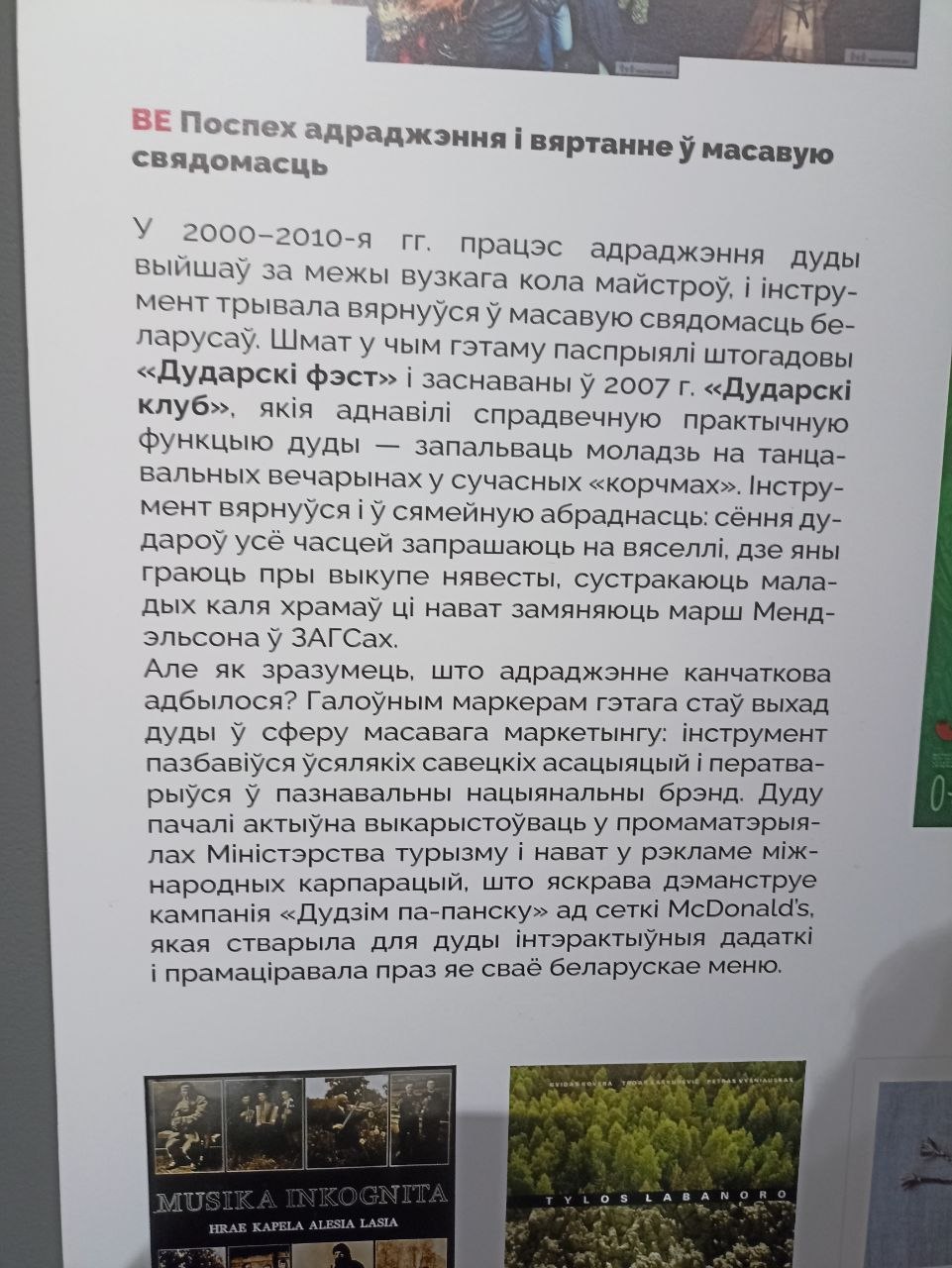
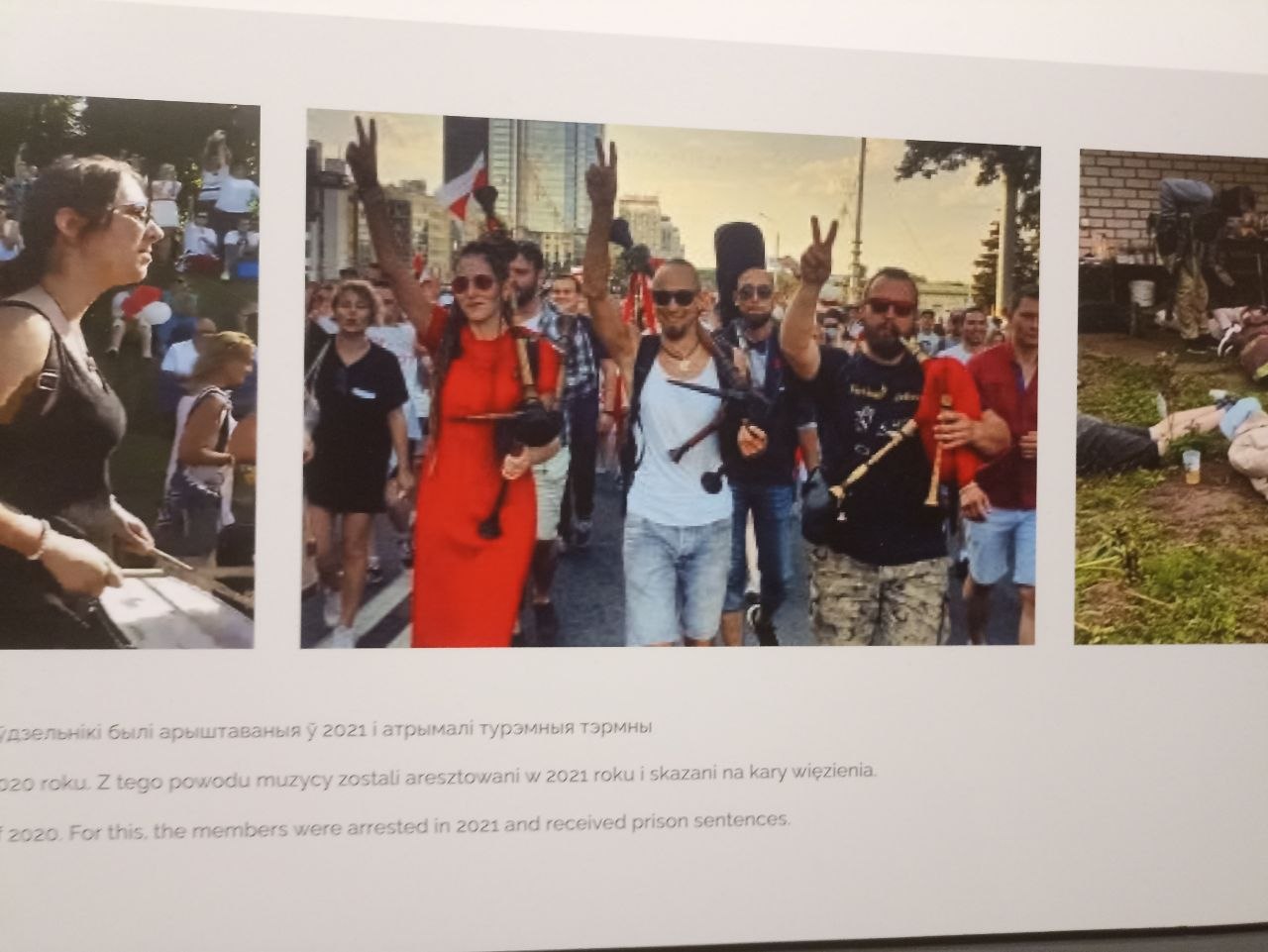
In 2023, the Ministry of Culture granted the duda the status of historical and cultural value, even though some of the people who spent years reviving the instrument are now in exile, while others served prison sentences for playing the duda.
And this creates a very illogical situation.
On the one hand, they imprison people who play the duda, while on the other they declare that the duda is our cultural value. For these registries of historical and cultural value, carriers of the tradition have to be identified. And these “carriers” were appointed from among obscure men from regional cultural centers. There has been a major regression in terms of playing technique, repertoire and research standards, because the real bearers of the tradition are either blacklisted, imprisoned or have left the country.
What is happening is a profanation. It is clear why the ministry needs this: they want to break out of isolation. “Look, dear UNESCO, our culture is developing!”
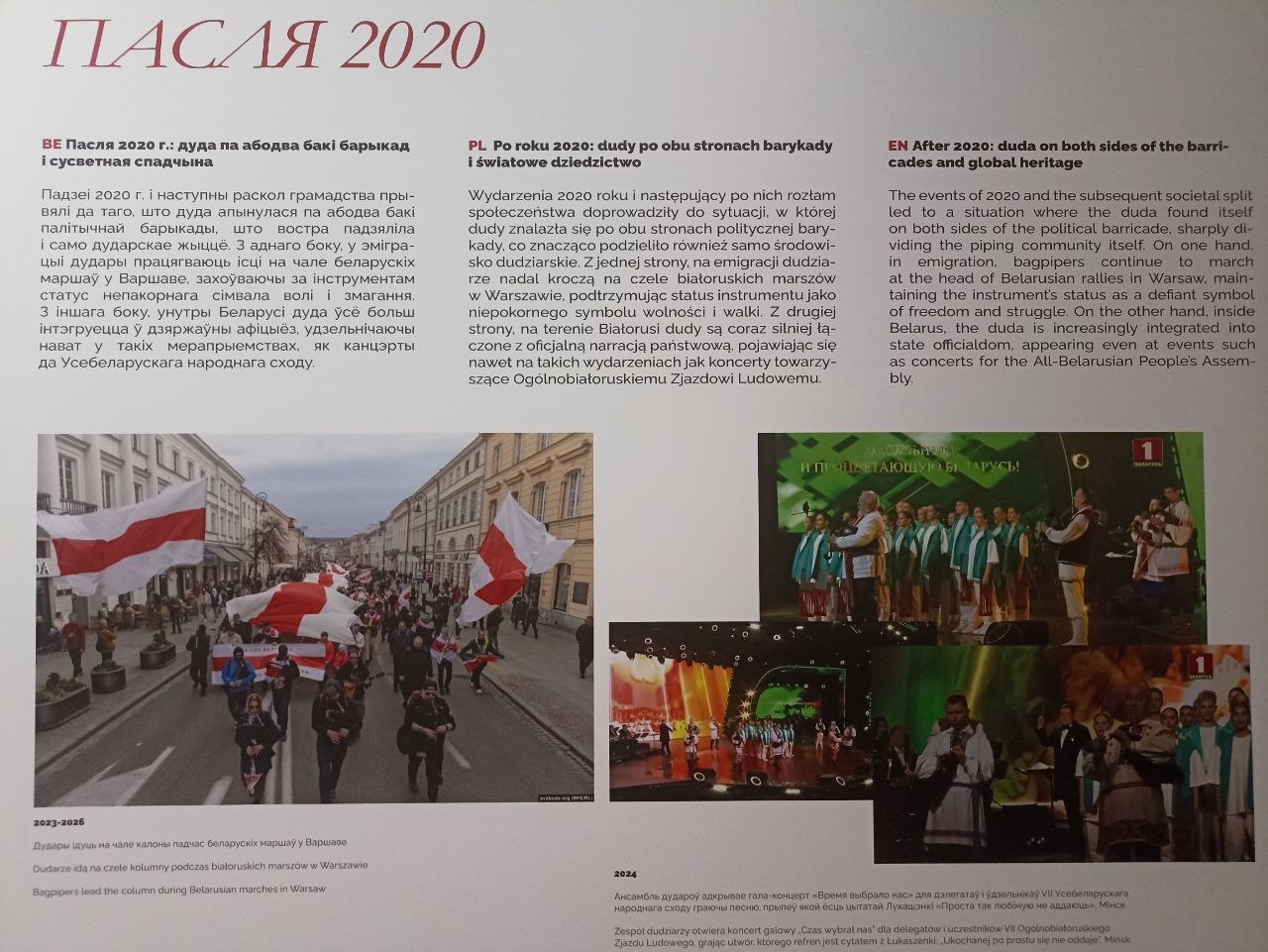
In 2024, the authorities submitted the file “Culture of the Belarusian Duda” for inclusion on the UNESCO list of intangible cultural heritage.
There should have been a broad public discussion, but there was none.
This is an ethical question: no Belarusian dudars are against the duda being included on the UNESCO list. But is now the right time? And does this ministry, with its methods of operation, have the right to submit it?
Should one support it or oppose it? It is a very delicate ethical question.
***
The exhibition “Dudy: Instrument, History, Symbol” opens on May 16 at 4 p.m. The exhibition will present the duda as a cultural symbol and part of Belarusian heritage.
At 6 p.m. and 8 p.m., author-led tours with Yauhen Baryshnikau will take place. Visitors will be able to hear stories about the instrument, its significance and performance traditions. From 7 p.m. to 11 p.m., a “Dudar Workshop” will operate, where visitors can learn about the process of making a duda and try themselves as musicians.
The program will conclude with an open-air bagpipe performance beginning at 11 p.m. and lasting until 2 a.m. Belarusian and Polish dudars will take part. Organizers promise live music and dancing under the open sky.
Subscribe to Reform.news cultural news on Telegram