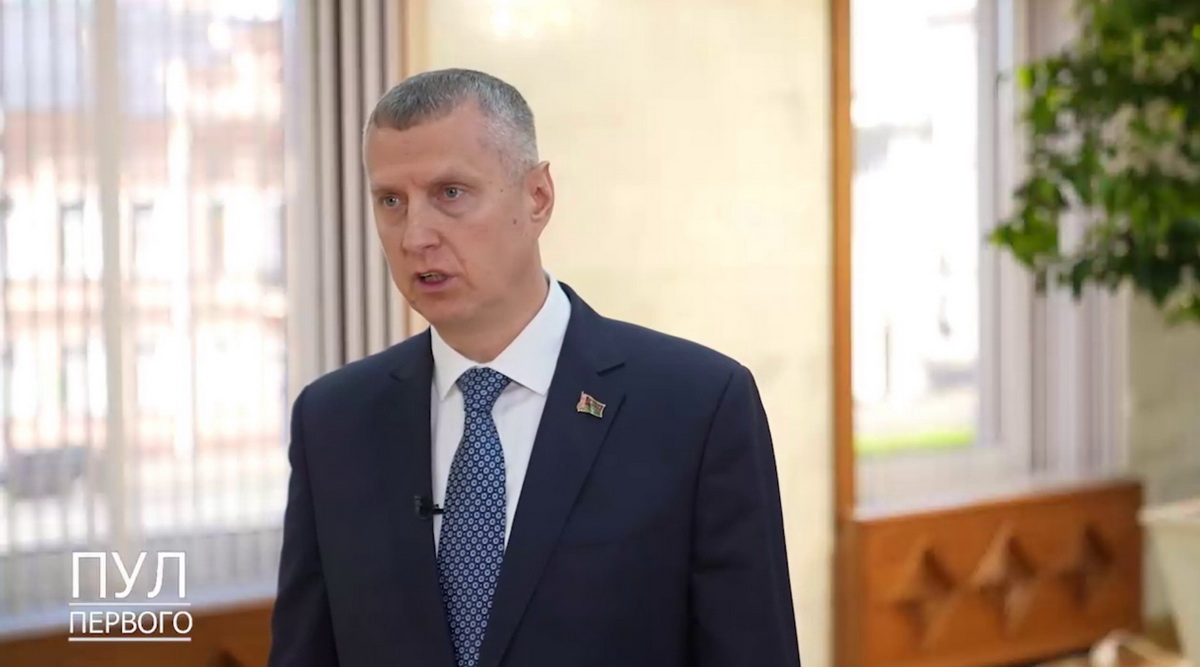
Head of Dzmitry Krutoi, the Administration of Aliaksandr Lukashenka, said that the recruitment of labour migrants from Uzbekistan is linked to the implementation of investment projects and will take place through an organised system. He made the remarks after today’s briefing by Lukashenka while answering a question from one of the state media propagandists.
According to Krutoi, the discussion surrounding labour migration has been “unjustifiably inflated in the information space.”
“Naturally, this is another hot topic for our fugitive opposition. It is exactly the same as it was with Pakistan, if you remember. Nobody talks about the mythical Pakistanis anymore,” he said.
Krutoi said the government updated the procedure for recruiting foreign workers in early June, taking into account proposals from various government agencies.
“The basis or foundation of this system is an application submitted by the heads of our organisations. These applications are prepared. There are specialised recruitment agencies both here and in the country from which these labour migrants are planning to come. There is also a screening process carried out by our embassies, which review these lists and check the individuals against the relevant databases.
First of all, they verify their reliability from the perspective of any offences they may have committed. Only after that do they come to our country. They sign an employment contract with the manager who submitted the application, where all conditions relating to wages, productivity targets and bonuses are clearly set out. Another very important issue is accommodation, because different forms of housing are used, ranging from hotels and dormitories, where available, to rental housing and newly built accommodation,” he said.
The head of the presidential administration also said that foreign workers arriving with their families are provided with housing, employment opportunities for their spouses, and places for their children in schools and kindergartens.
“If these are vacant houses included in the relevant database within districts, which is a separate system, resources are allocated to renovate them. This is a faster way of restoring this housing programme, so to speak. People receive housing if they arrive with their families, while spouses and children are naturally integrated into society accordingly. The spouse is offered a job. The children attend school or kindergarten,” he said.
Commenting on the controversy surrounding the employment of Uzbek citizens, Krutoi said that Aliaksandr Lukashenka and Shavkat Mirziyoyev “were not properly understood.” According to him, the agreements between Minsk and Tashkent primarily concern the implementation of investment projects, including in the agricultural sector. He said the Uzbek side is interested in producing agricultural products in Belarus, including meat, dairy products and potatoes, for subsequent export to Uzbekistan.
“The key point of the latest negotiations and agreements is that the leaders of our countries were talking about investment. Trade with Uzbekistan is already developing quite well. But after seeing that we successfully implemented a number of major projects in their country, including in engineering — BelAZ, MAZ and our other flagship companies — as well as meat processing, Servolux poultry production and the Mark Formelle light industry business, they came forward with new proposals,” he said.
According to the head of the administration, specialists from Uzbekistan will be recruited specifically for such projects. He insisted that this is not “uncontrolled migration” but the recruitment of qualified workers for projects that, he said, will be supervised by the authorities of both countries.
“They realised that we are serious partners, and the President of Uzbekistan put forward what could be described as a reciprocal initiative. Their population is now 39 million, and food security is their number one issue. They would like to implement investment projects in Belarus related primarily to agro-industrial processing and then supply the resulting meat and dairy products back to Uzbekistan.
Our latest discussions also concerned potatoes. It may seem unusual because Belarus itself imports early Uzbek potatoes in March and April, but then the hot season begins there. By September and October they simply do not have late potato varieties, creating shortages on the market. Through these investment projects, they could produce potatoes in Belarus and supply them back to their own country.
Naturally, they would bring in their own labour force for these investment projects. This is absolutely not some form of uncontrolled migration. It is migration that, as the President of Uzbekistan said, will be under his effective personal supervision. The specialists who come to work on these investment projects or develop the investment sites that we provide will have the necessary qualifications and training,” he said.
“This is, in fact, the most important point. Taking words out of context, speculating and claiming that these will be guest workers who come here, earn money and immediately send it back to their relatives in Uzbekistan while nothing remains in our republic is simply not true. The system is being designed in such a way that it benefits both Uzbekistan and the Republic of Belarus,” Krutoi added.
The Belarusian authorities have continued to comment on the issue following reports about problems with the employment conditions offered to the first group of workers from Uzbekistan. On July 13, 255 Uzbek citizens arrived in Vitsyebsk. Earlier reports said they had been promised monthly salaries of $900-1,000, but after arriving they said they were offered around $500, while accommodation and meals were to be paid for separately. The situation caused dissatisfaction among some of the workers, and several said they wanted to return home.
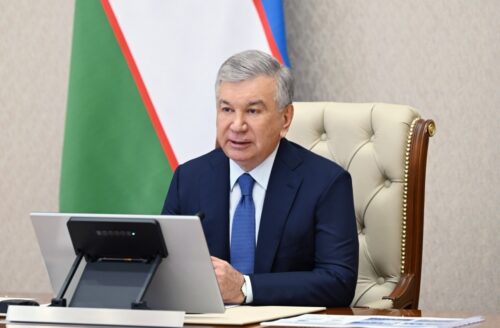
On July 15, Uzbek President Shavkat Mirziyoyev instructed officials during a government meeting to accelerate the implementation of the agreements reached during his recent visit to Belarus, including those related to the organised employment of Uzbek citizens.
On the same day, a new video message from one of the Uzbek workers appeared on social media. He asked people not to circulate the previously published video containing complaints and said that the conditions had changed following negotiations. According to him, workers are now being offered salaries of around $700, as well as free accommodation and meals.