
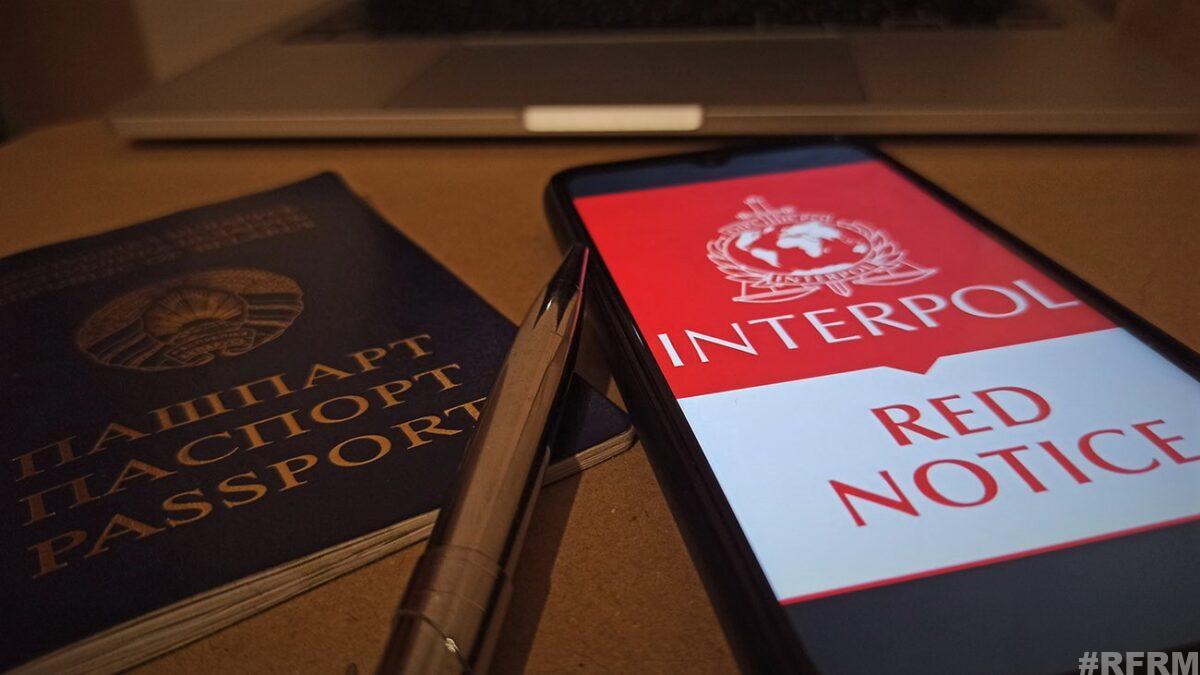
Two Belarusian citizens were detained in European Union countries over the course of two days on so-called Interpol “red notices” initiated by the Belarusian side.
According to the Partyzanka initiative, late in the evening of December 13 a call was received on its information hotline from a Polish police officer. A Belarusian citizen had been detained in Poland after an Interpol notice triggered during a check at the request of the Belarusian authorities. The man recalled the initiative’s contact number and was allowed to speak with its representatives, who in turn explained the context of the situation to the Polish police officer.
It is reported that the man has international protection status. After all checks were carried out and a decision was taken by a prosecutor, he was released the following day.
The next day, after the first detainee was released, another case became known — the detention of a Belarusian citizen in Romania, also via Interpol. It is known that the man left Belarus about four years ago after his release and, having violated supervision conditions, travelled to Poland on a humanitarian visa without applying for international protection. He is currently under arrest. A repeat court hearing has been scheduled for Monday, after which his further fate will become clear.
The initiative stressed that such cases are not isolated. As an example, it cited a situation last year when a Belarusian citizen triggered an Interpol “red notice” initiated by the Belarusian side in 2023 while applying for a new residence permit in one of the EU countries. The man was detained and taken to the police and then to a district prosecutor’s office. Despite the absence of international protection status, he was later released, applied for protection, and six months later a court ruled his transfer to the Belarusian authorities inadmissible due to the risk of political persecution.
As Partyzanka notes, such Interpol requests are one of the instruments of transnational repression used by the regime against Belarusians who have fled persecution abroad. Requests are often filed not under overtly political charges but under the guise of economic or “hooliganism” offences to conceal political motivation. Requests may take the form of a Red Diff — an urgent notice disseminated more quickly through internal channels to specific countries and not displayed in Interpol’s public database. Red Notices are also used, information about which is usually visible on Interpol’s website. In addition, the regime directly sends detention requests to some countries, bypassing Interpol altogether.
According to the initiative, even after a local court rules extradition inadmissible, an Interpol notice — whether a Red Notice or a Red Diff — is not automatically cancelled. It remains in force until the state that initiated the request withdraws it or until Interpol decides to remove it in accordance with its rules. As a result, the risk of repeat detentions in other countries persists. To minimise such risks, it is necessary to separately apply to Interpol with a request to delete the relevant data.
Partyzanka draws attention to the fact that Belarusian citizens who left the country for political reasons and have not obtained international protection are advised not to delay submitting the relevant applications. According to human rights defenders, an Interpol notice may appear unexpectedly — even several years after leaving the country — and lead to detention outside Belarus.