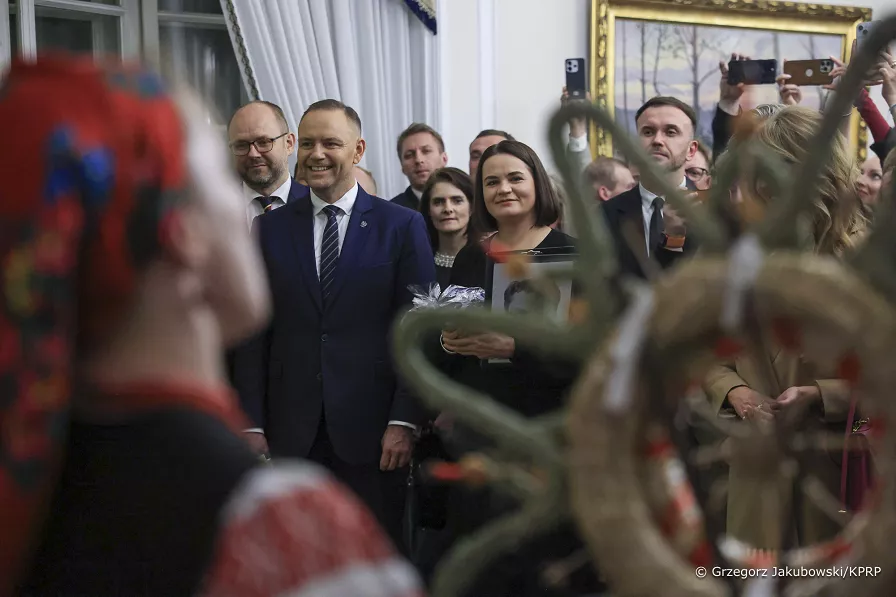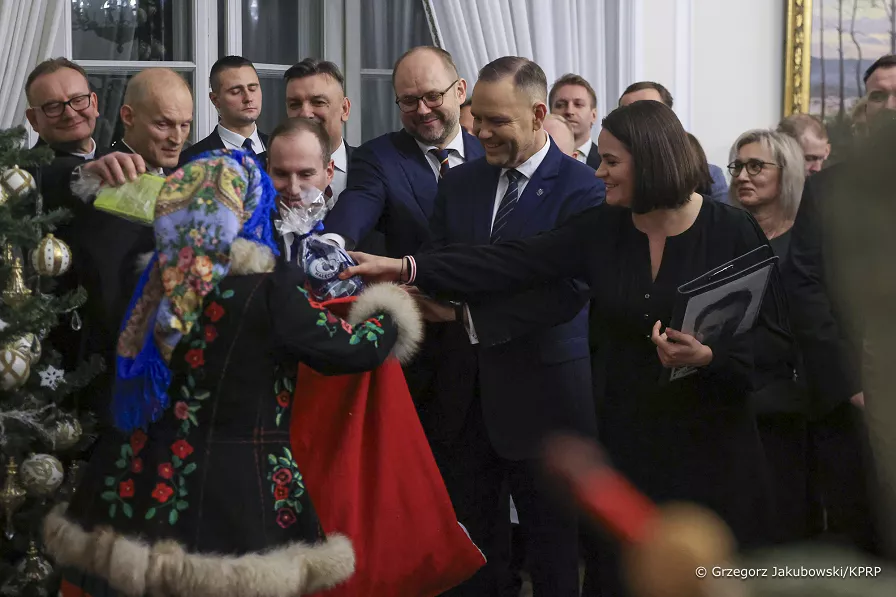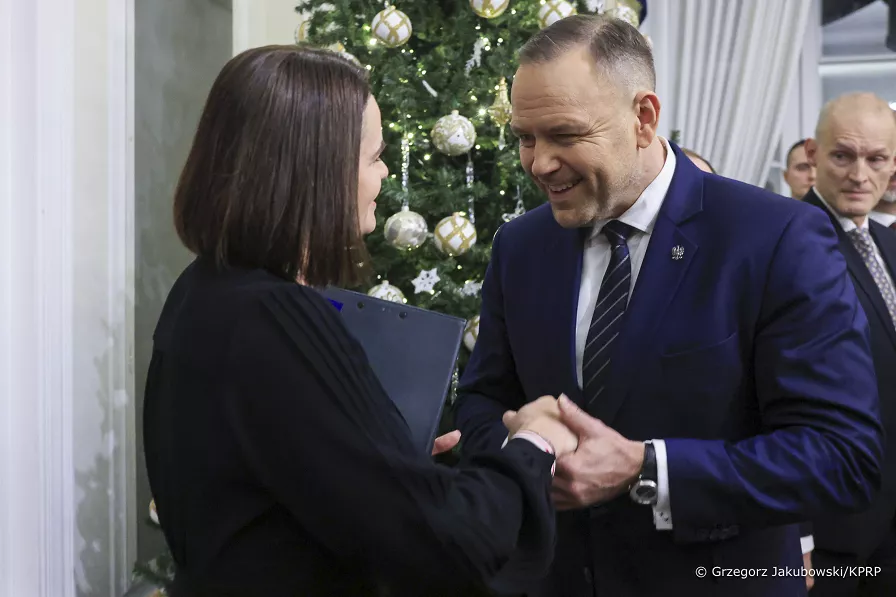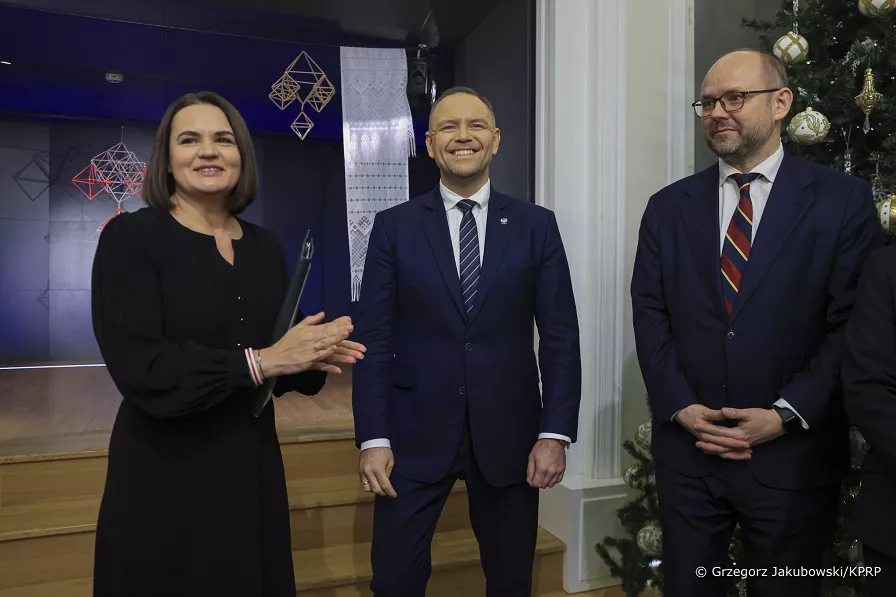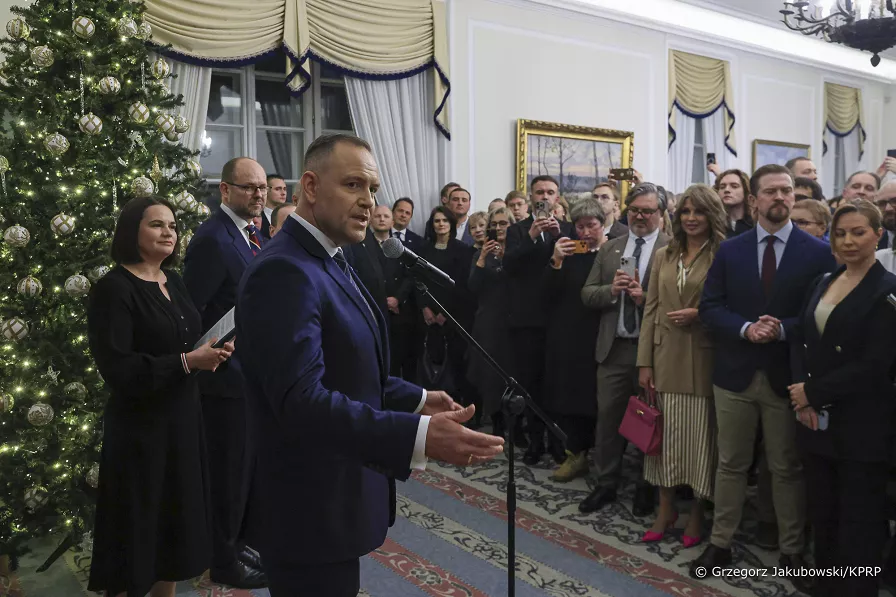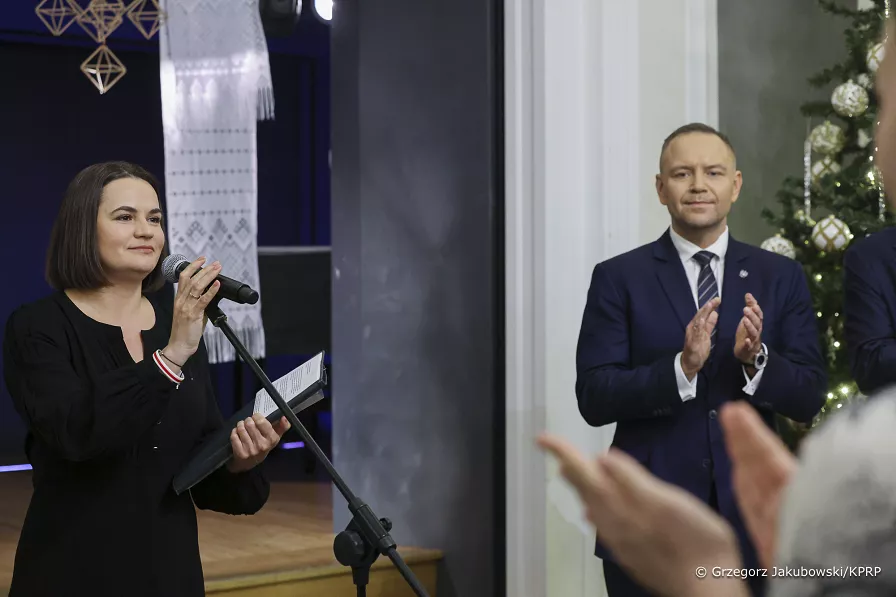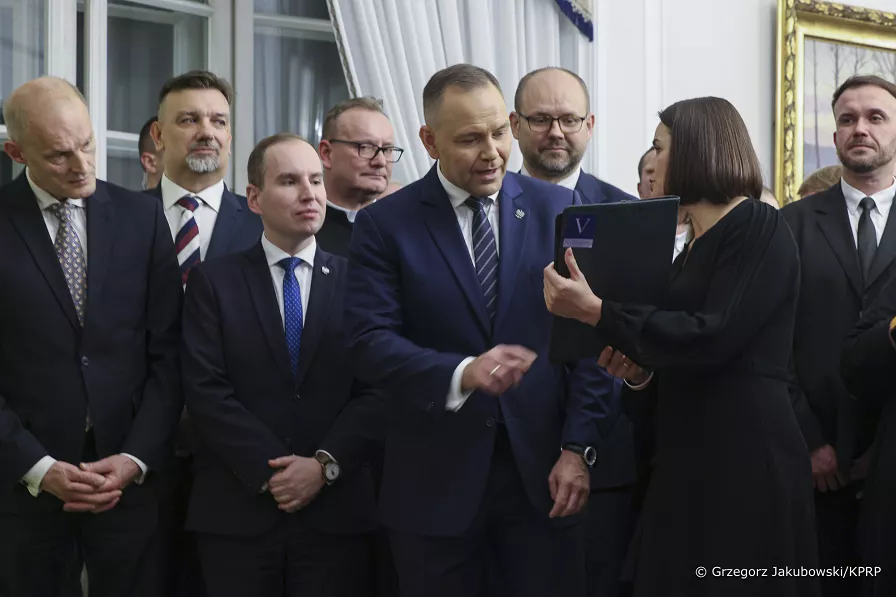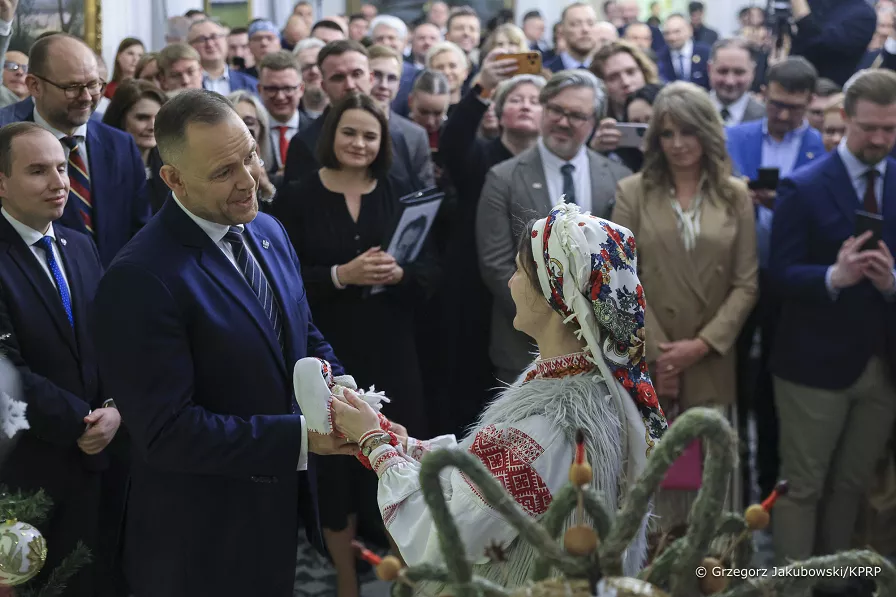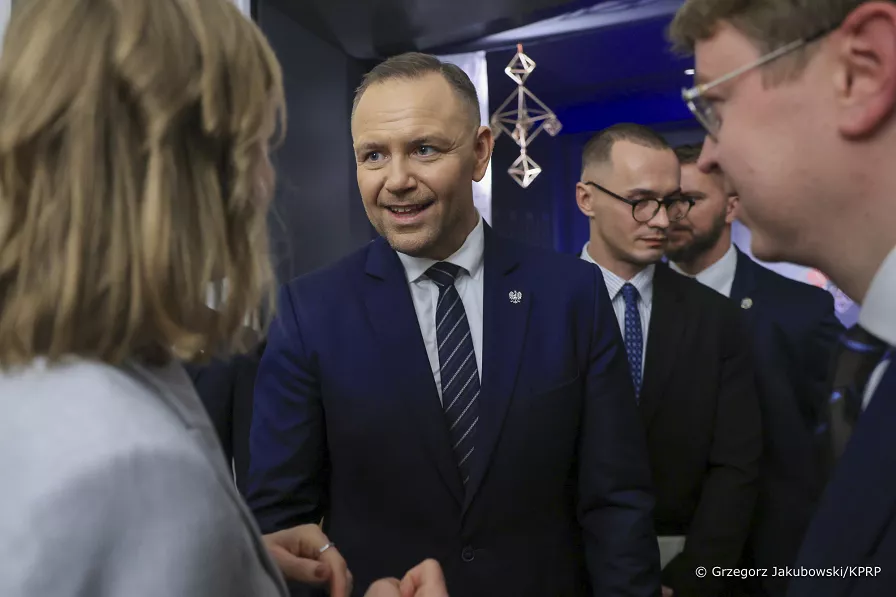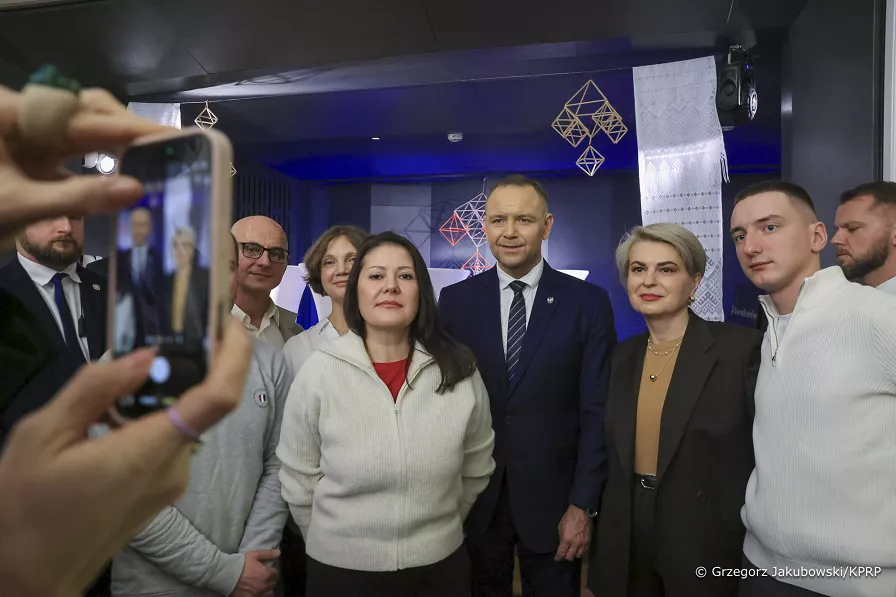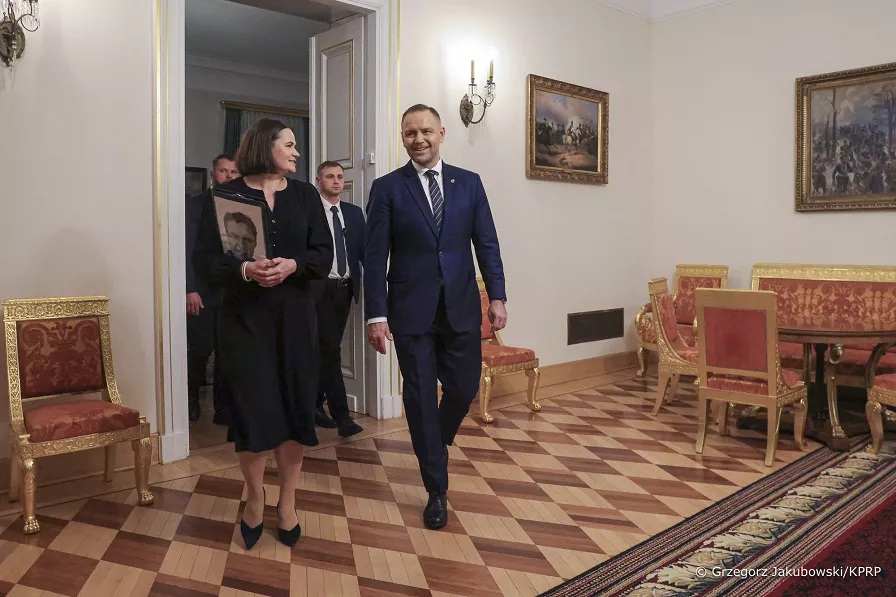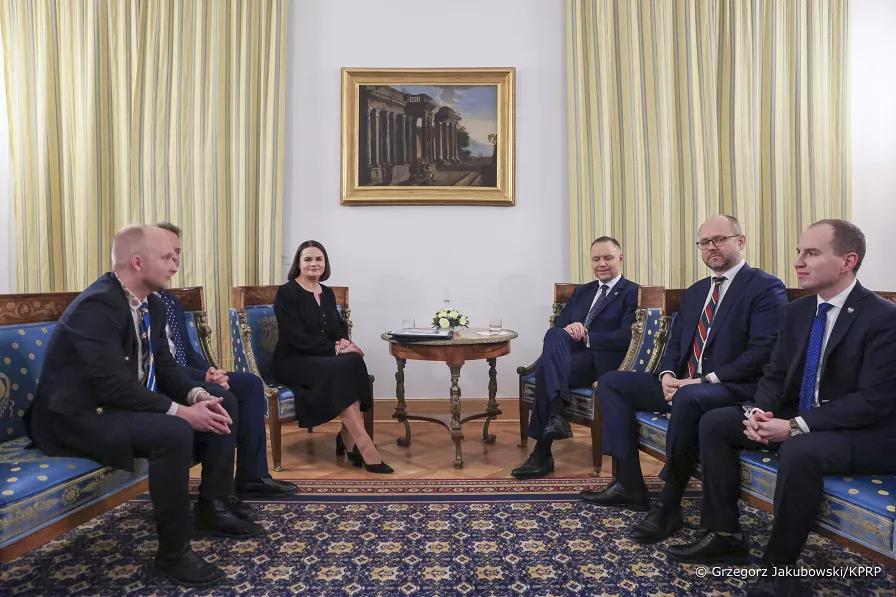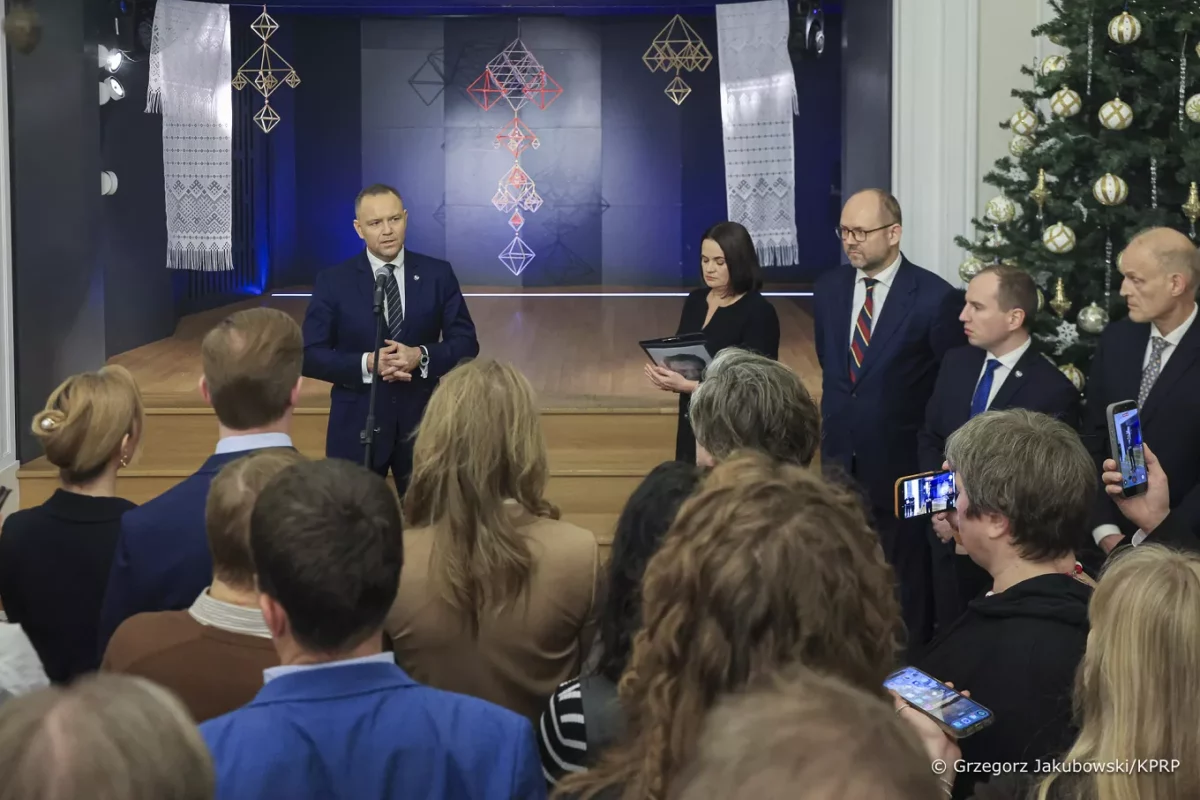
President of Poland Karol Nawrocki expressed support for Belarusians during a traditional meeting with Sviatlana Tsikhanouskaya and representatives of the Belarusian community, which took place on Tuesday at the Belweder Palace. This is the fifth such meeting, and the first during Nawrocki’s presidency.
“From this place, as President of the Republic of Poland, I would like to thank all free Belarusians for your difficult path, which has required so many sacrifices, many of which included imprisonment under the Lukashenka regime. And on this path Poland will never leave you,” Nawrocki assured.
In his view, such meetings with Belarusians in Poland, democratic leaders and former political prisoners mark progress toward relations between two sovereign and independent states. Nawrocki stressed that Poland has reached a consensus on its position — shared by Polish society, the president and the government — regarding Belarusian independence and sovereign aspirations. He emphasised that during international talks he advocates for the release of Belarusian political prisoners.
Nawrocki noted that awarding Andrzej Poczobut Poland’s highest honour — the Order of the White Eagle — is symbolic.
“Let this be a symbol that free, independent, sovereign Poland and its president will never forget the Poles imprisoned in Belarus,” he stressed.
Sviatlana Tsikhanouskaya described the reception as a strong symbol of support for Belarusians.
“This is a very strong symbol of support for Belarusians. And it has already become a good tradition to meet with Belarusians. You cannot imagine how many people would like to attend this reception and meet you personally and express words of gratitude and support. Here in Poland the Belarusian issue is one of those that unites both the right and the left, the government and the opposition. And this reception is an example that Poland will continue supporting Belarus and Belarusians,” she said.
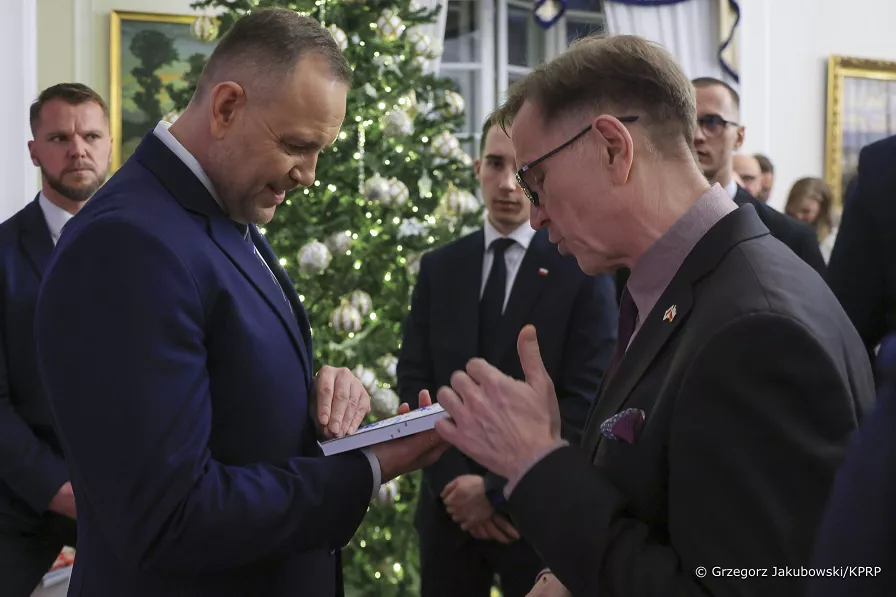
Tsikhanouskaya presented Karol Nawrocki with several books by Sergiusz Piasecki translated into Belarusian. Piasecki was born on the territory of Belarus but wrote in Polish.
“Belarusians were never strangers to Poles. Just as Poland has always stood beside Belarusians. And in general, Belarusians as a nation were formed within the Grand Duchy of Lithuania and the Polish–Lithuanian Commonwealth. Together with Poles, we fought for independence from Russia. We learned a lot from Polish solidarity. And we are united by Kościuszko and Kalinoŭski, Mickiewicz and Orzeszkowa, Orda and Oginski. And of course by Sw@da x Niczos, who almost made it to Eurovision to represent Poland. And in general, the Belarusians of Podlasie are a living example of how two cultures can coexist and enrich one another,” she added.
Tsikhanouskaya stressed that Poland serves as an example for Belarusians: a strong, sovereign country that cares for its citizens rather than serving a foreign empire. She expressed confidence that Belarusians in exile will be able to return home.
“Despite all the regime’s attempts to destroy us, we continue our work, because our media are reaching new audiences. Belsat produces new programmes. The Kalinouski Programme recruits talented Belarusians and trains specialists for the new Belarus. Our human rights defenders take care of freed people. Our entrepreneurs develop globally recognised companies. We preserve our language and our culture,” she said, also noting the achievements of Belarusian athletes.
“I am sure that we, Belarusians, will complete our path to freedom. Just as Poland once did. Of course, it may seem to us that this path is long and difficult. But look: today among us are so many former political prisoners. This means that everything is possible. It means we must continue our struggle and fight for the release of each and every one — for Katsyaryna Andreeva, Andrei Aliaksandrau, for Mikalai Statkevich. And of course, for Andrzej Poczobut. As Andrzej once said, you simply must not give up. So let that be the motto of our struggle,” she told the assembled Belarusians.