
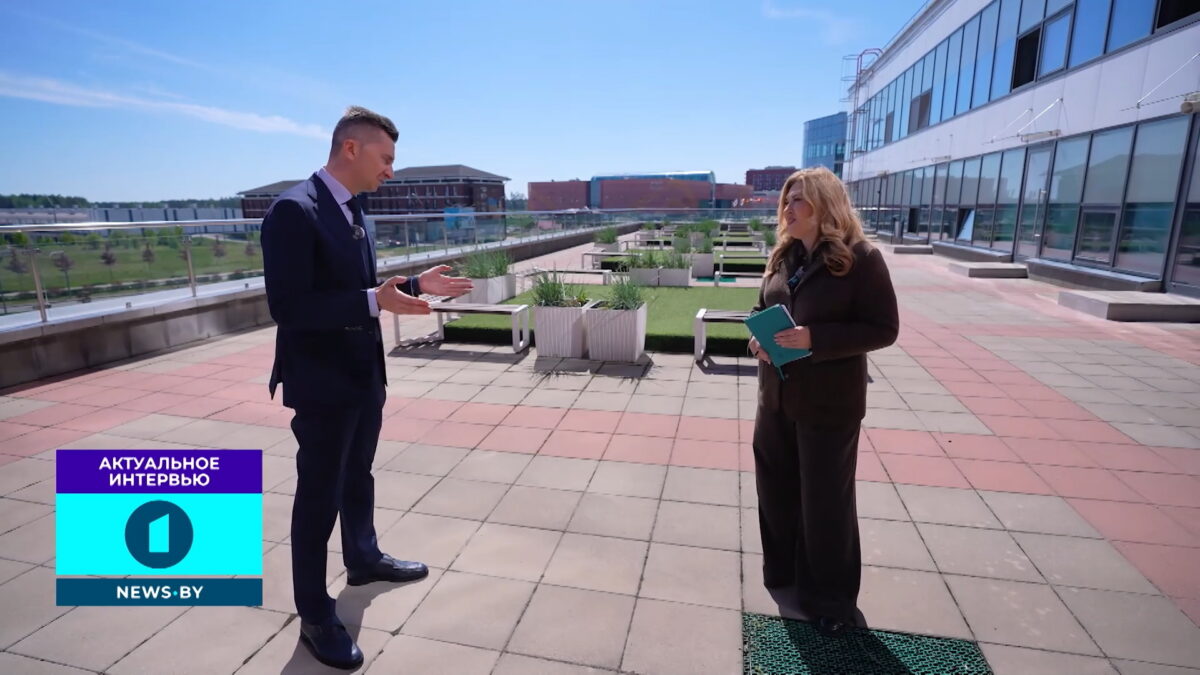
The Great Stone industrial park has reduced the number of its resident companies. This was stated in an interview with Belarusian television by Kiryl Karatseyeu, First Deputy Director General of the China-Belarus Industrial Park Development Company.

“If we speak about the average business profile in the park, the average resident is a company investing around $5–6 million and employing about 30 people. This is the average profile of those who have joined to date.
And by the way, speaking about geography and general trends and approaches, literally recently we conducted a review of all our projects and even reduced the number of residents. This is probably the first time in the park’s entire history. It is minus 18 residents. These are companies which, for one reason or another, could not continue, and there are no longer prospects for the development of these projects. Most of them are from China, foreign companies, though there are also some Belarusian residents.
Therefore, today the geographical profile has changed somewhat. Belarusian companies are now in first place. After all, this is import substitution, this is the development of our own brands so that capital remains in the country and entrepreneurial talent also remains in the country. Therefore, we view this very calmly and positively.
Second place is again occupied by Chinese partners. Even the enterprises that left simply could not reorient themselves because, as we said, due to sanctions policy they were initially very closely tied to the European market. There are also several foreign companies from other countries, so today residents from 15 countries are represented in the park,” he said.
According to him, the largest cluster in the park is currently mechanical engineering, focused in part on the localization of BelGee production. The second-largest cluster is medical products and pharmaceuticals. Karatseyeu noted that this sector suffers less from sanctions. The third area is electronics.
“The third direction we developed is electronics — components, servers, even the production of printed circuit boards and microchips for various household and specialized equipment and more. A cluster has also formed here, and this is a response to today’s challenge of technological independence. Of course, we have not achieved any super localization here either. Nevertheless, we are beginning to move along this path, and our manufacturers are already achieving localization of certain components based on the country’s current capabilities as a whole,” Karatseyeu added.