Aliaksandr Lukashenka has ordered that anyone unwilling to work during the harvest campaign be sent to the army. The politician has long and consistently relied on coercive methods to boost labour productivity. They have never produced results, however, which is why new “creative” solutions keep being devised.
In reality, there is little that is new about them. The politician’s proposed toolkit can only be described as novel from the perspective of the second quarter of the 21st century. Otherwise, it is merely a revival of old practices: landlords once sent troublesome serfs into military service. They also had them flogged.
The essence of the problems facing the regime is clear. The workforce is shrinking, labour productivity must increase, yet economic instruments have failed to achieve that. Aliaksandr Lukashenka, however, has his own understanding of how productivity should be improved — people simply need to work harder. Hence the slogan, repeated across the country for years: “Strip down and work.”
But a catchy slogan is not a solution. The idea behind it still has to be put into practice. There are only two options: the carrot or the stick. There are not enough carrots to go around, however; those are reserved for loyal insiders and valuable security personnel. Everyone else gets the cheaper option — the whip.
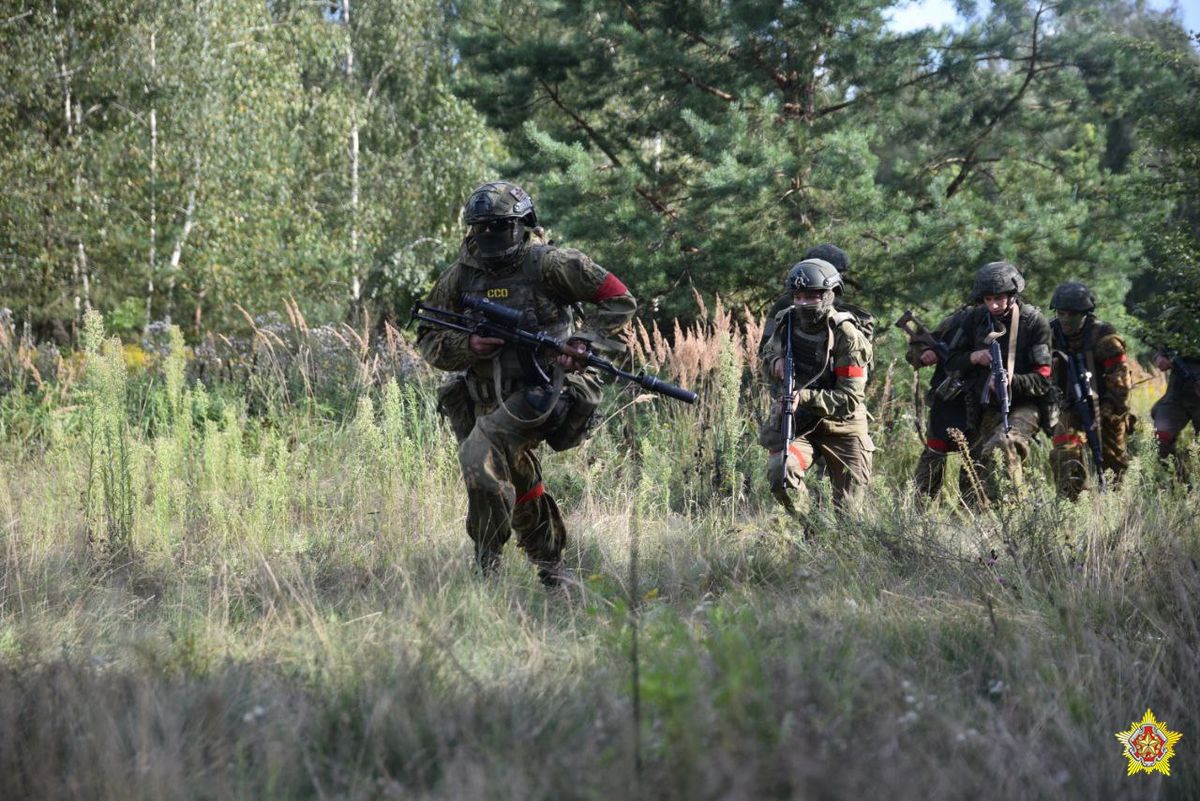
Aliaksandr Lukashenka continues to produce innovations in applying it across various spheres. His latest proposal for increasing labour productivity and improving discipline is that anyone unwilling to work in Stakhanovite fashion during the harvest should be forcibly sent to serve with the Special Operations Forces on the Belarusian-Ukrainian border.
“Send all of them there if they fail to carry out the instructions. That is my order. … Any failure to comply — into the army,” the politician said. And there, as he put it, they would get the full experience: “mosquitoes, flies, midges and everything else.” Negligent officials, incidentally, will also be subject to the measure.
According to Defence Minister Viktar Khrenin, military commissars have already been tasked with implementing the measure.
As the head of Lukashenka’s administration, Dzmitry Krutoi, explained, lists of allegedly negligent workers will be compiled by the heads of organisations, district executive committee chairpersons and military commissars. They will include “careless workers, repeat offenders, thieves, drunkards, idlers and slackers.”
The period of service will last two to three months. There will be no age restrictions. Health status will not matter.
This is where a glaring contradiction in Lukashenka’s initiative becomes apparent. It runs counter to the regime’s own policy of promoting patriotism, the prestige of military service, respect for the defenders of the homeland and everything else its proponents have been actively championing in recent years.
On the one hand, they have been cultivating military-patriotic activities and a cult of the uniform almost from kindergarten. On the other, they themselves are turning the army into something resembling a corrective labour institution. So why should a young BRSM member now dream of military service? To end up in the same barracks as thieves, drunks, idlers and layabouts? That is hardly much of an incentive. If I were a member of the Special Operations Forces whose ranks were to be “reinforced” with such a contingent, I would not be particularly pleased either. It hardly looks like recognition of their elite status. Instead, Lukashenka has casually tarnished his own guard.
There are also questions about whether the proposal would increase labour productivity. Previously, such workers were effectively drunk captives. Now they would simply become sober captives. That is the only difference. There is little reason to believe that the threat of being sent into the forests among mosquitoes will suddenly make them work harder. The only effective incentive is wages. Moreover, no reasonably competent manager will send all of their underperforming workers into the army. Production targets still have to be met, and there are no replacement workers available. There is nowhere to get them. Every underperforming worker understands this perfectly well. As long as the system functions this way, coercive methods of boosting productivity are doomed to fail.
What the proposal does offer, however, is a convenient way to banish truth-tellers, people defending their rights and anyone considered too outspoken. It would be easy enough to label them negligent layabouts. As yet another instrument for repressing undesirable people, it is highly convenient. Perhaps that is the real genius behind the latest idea of Belarus’s chief creative mind. It is difficult to see any other practical benefit. Even so, the packaging has been chosen poorly. The prized uniforms of the Special Operations Forces have already lost some of their shine.
The opinions and assessments expressed by the author may not coincide with the editorial position of Reform.news.