
State Control Committee Chairman Vasiliy Herasimau said the key task of his agency is to monitor the implementation of instructions issued by Aliaksandr Lukashenka.
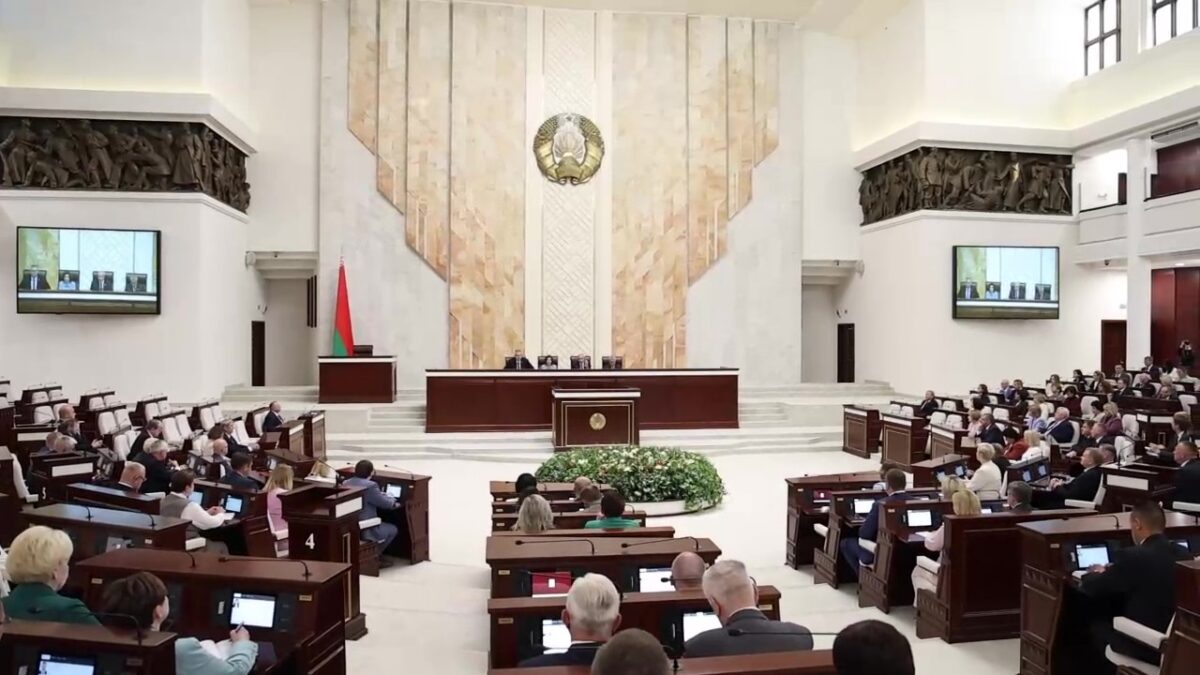
“Our common goal is to ensure the timely and high-quality implementation of the tasks set by the head of state. Every official must feel personal responsibility for the final result before the president,” Herasimau said while addressing both chambers of the National Assembly.
According to him, executive discipline in carrying out Lukashenka’s instructions has improved. Herasimau said enhanced oversight has been established over virtually every presidential order. This includes measures aimed at ensuring the personal accountability of managers.
The State Control Committee chairman also presented findings from inspections of the agricultural sector. As a result of oversight activities, more than 3,000 supervisory orders were issued, while over 9,000 individuals were held accountable for violations, including 26 district executive committee chairpersons. Measures were taken to recover more than 3.8 million Belarusian rubles in damages linked to livestock deaths.
The committee continues to monitor the construction and occupancy of dairy farming complexes. At the beginning of 2026, approximately 12,500 livestock places at 53 modern farms remained unused.
“A vivid example is a recent criminal case in the Slutsk District involving a contractor who used more than 3 million rubles allocated for farm construction for personal needs,” Vasiliy Herasimau said.
Technological violations that led to significant losses in crop production were identified in one-third of the farms inspected.
Herasimau also noted that part of the reclaimed agricultural land is being used inefficiently in half of the farms that were inspected.
As a result of inspections in 2025, 41 entities were removed from the register of meat processing companies for serious violations of legislation. The activities of another 27 entities were suspended.
“Various measures are applied to dishonest processors. The main goal is to trade not in raw materials but in products with a high degree of processing and significant added value,” Herasimau stressed.
Violations were also identified in the forestry sector.
“A record stockpile of unsold timber, amounting to around 6 million cubic metres, has accumulated across the country. Cases of timber deterioration continue to be recorded. Based on identified incidents alone, more than 32,000 cubic metres of harvested timber became unusable. There are also many questions regarding the accounting of harvested timber. Only after the intervention of the State Control Committee were more than 58,000 cubic metres of timber that had previously not appeared in official records properly registered,” the committee head said.