The average salary rose by 67.9 rubles in July to 3,172 rubles before income tax, Belstat reported.

In real terms, adjusted for inflation, the average salary nationwide increased by 9.1% compared with July last year.
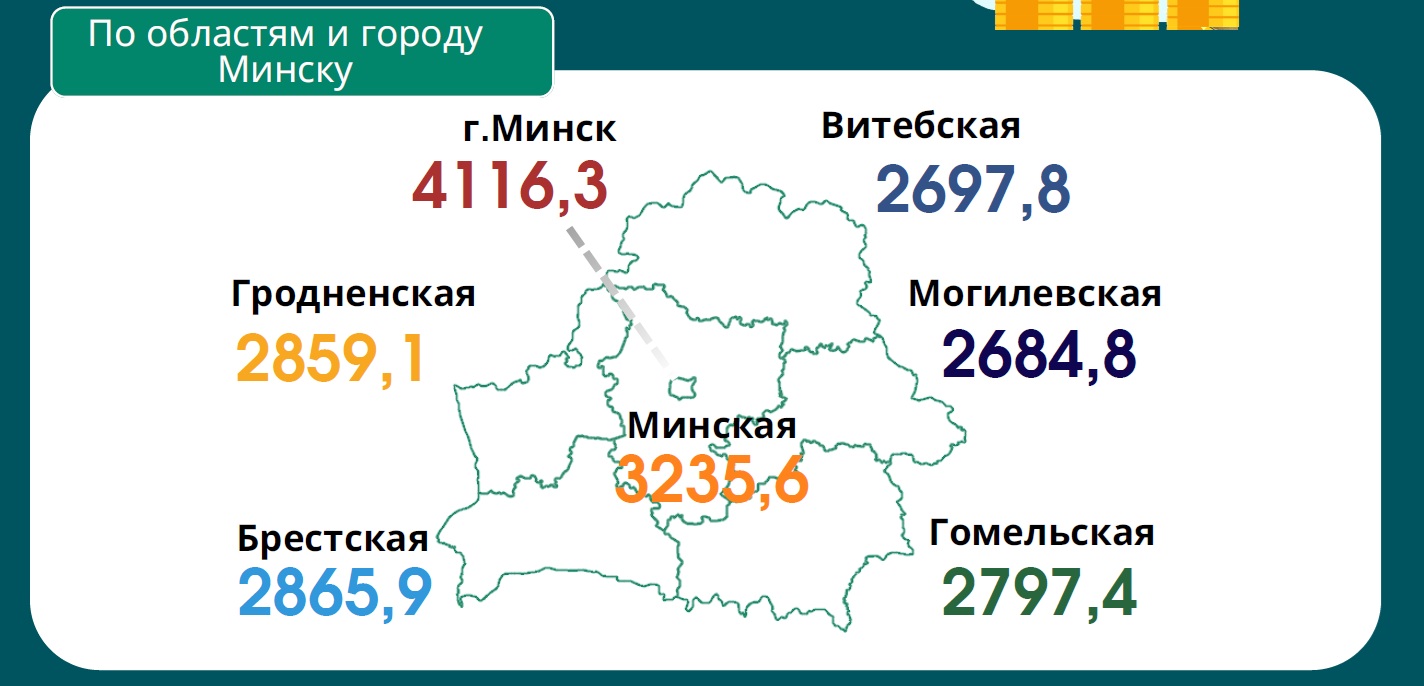
In Minsk, the average salary in July was 4,116.3 rubles, up 61.9 rubles over the month. In real terms, the capital’s average salary increased by 6.1% over the year. In Minsk region, the average salary in July exceeded 3,200 rubles. In Hrodna and Brest regions, it was above 2,800 rubles. The lowest average salary was recorded in Mahiliou region, at 2,684.8 rubles, representing a 10.2% real increase over the year.
Passenger air transport workers topped the salary rankings in July, with an average salary of 10,427.5 rubles. They were followed by workers in ancillary activities related to financial services and insurance, with 8,186 rubles, and IT workers, with 7,666 rubles.
According to Belstat, the lowest salary among sectors in July was recorded among workers at hairdressing and beauty salons, at 1,836.3 rubles. Museum, library and archive workers earned 1,916.2 rubles, while social workers earned 2,007.8 rubles.
Average earnings in crop production amounted to 3,002.8 rubles in July, while those in livestock farming stood at 2,628.9 rubles. The average salary in manufacturing was 3,238 rubles, while in mining it was 5,298.8 rubles.
In construction, workers received an average of 4,054.7 rubles before taxes, while the average in retail trade was 2,541.2 rubles.
The average salary in healthcare was 2,621.7 rubles, while in education it was 2,176 rubles.