
The Stockholm International Peace Research Institute (SIPRI) has published its annual report on international arms transfers, assessing trends for the period 2021–2025.
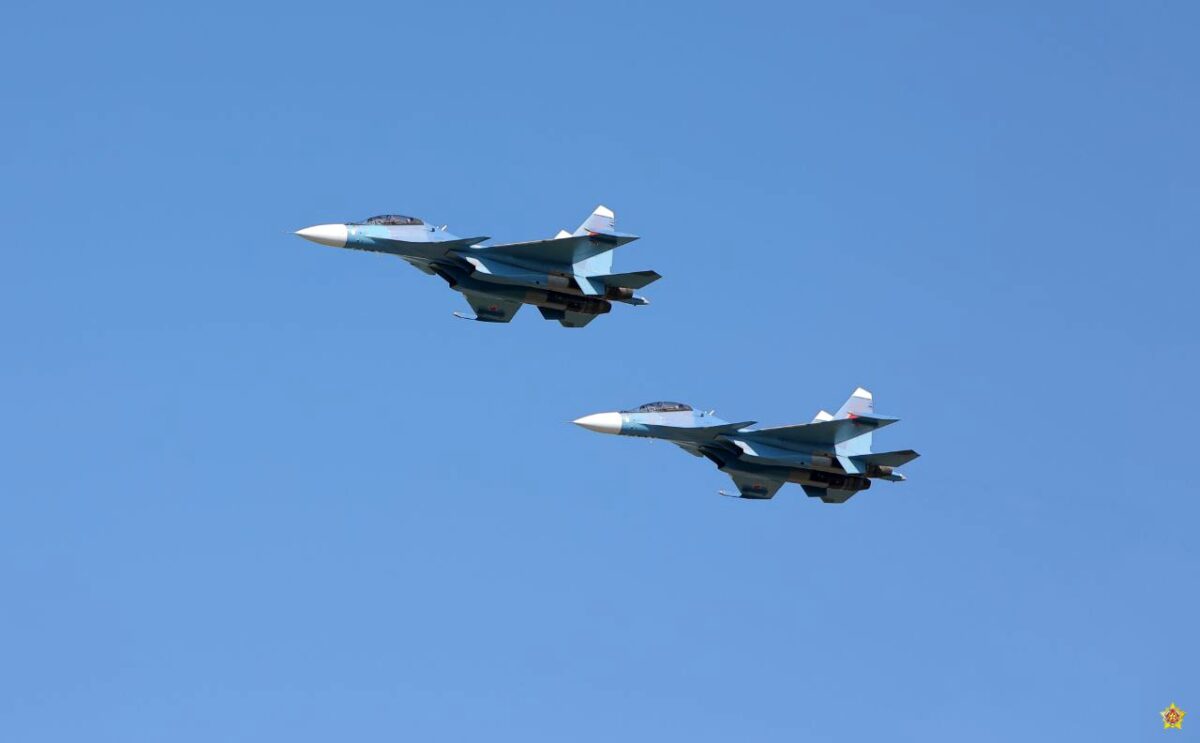
According to SIPRI data, Belarus accounted for 0.9% of global arms imports in 2021–2025. Compared with the previous assessed period of 2016–2020, the country’s share increased by 73%. Almost all weapons imported by Belarus came from Russia, while Iran accounted for 0.1% of imports and China for less than 0.05%. In recent years Belarus has received Russian Su-30SM2 fighter jets, Mi-35M helicopters, BTR-82A armored personnel carriers, surface-to-air missile systems and other equipment.
Belarus was also the third-largest client of Russia, accounting for 6.8% of global Russian arms exports in 2021–2025. According to SIPRI, 48% of Russian exports went to India, 13% to China and 13% to Belarus. Russia’s share in global arms exports declined by 64%. In 2016–2020 Russia accounted for 21% of global arms exports.
Belarus did not rank among the world’s 25 largest arms exporters.
The volume of arms transferred between countries in 2021–2025 increased by 9.7% compared with the previous period of 2016–2020.
SIPRI identifies the growth of arms supplies to Ukraine as the main trend. Ukraine accounted for 9.7% of global arms imports, making it the largest arms recipient. In Ukraine’s arms import structure the United States ranked first with 41%, followed by Germany with 14% and Poland with 9.4%. The report also notes growing demand in Europe.
The United States remains the world’s largest arms exporter, providing 42% of all deliveries. In 2021–2025 the United States supplied weapons to 99 countries. The largest recipients of American arms were Saudi Arabia (12%), Ukraine (9.4%) and Japan (8.9%).
France ranked second among exporters with a 9.8% share. The main recipients of French weapons were India (24%), Egypt (11%) and Greece (10%). Russia ranked third.
The three largest arms importers are Ukraine, India (8.2%) and Saudi Arabia (6.8%).