
Lithuania sees no preconditions for improving relations with Minsk, according to a report by LRT.

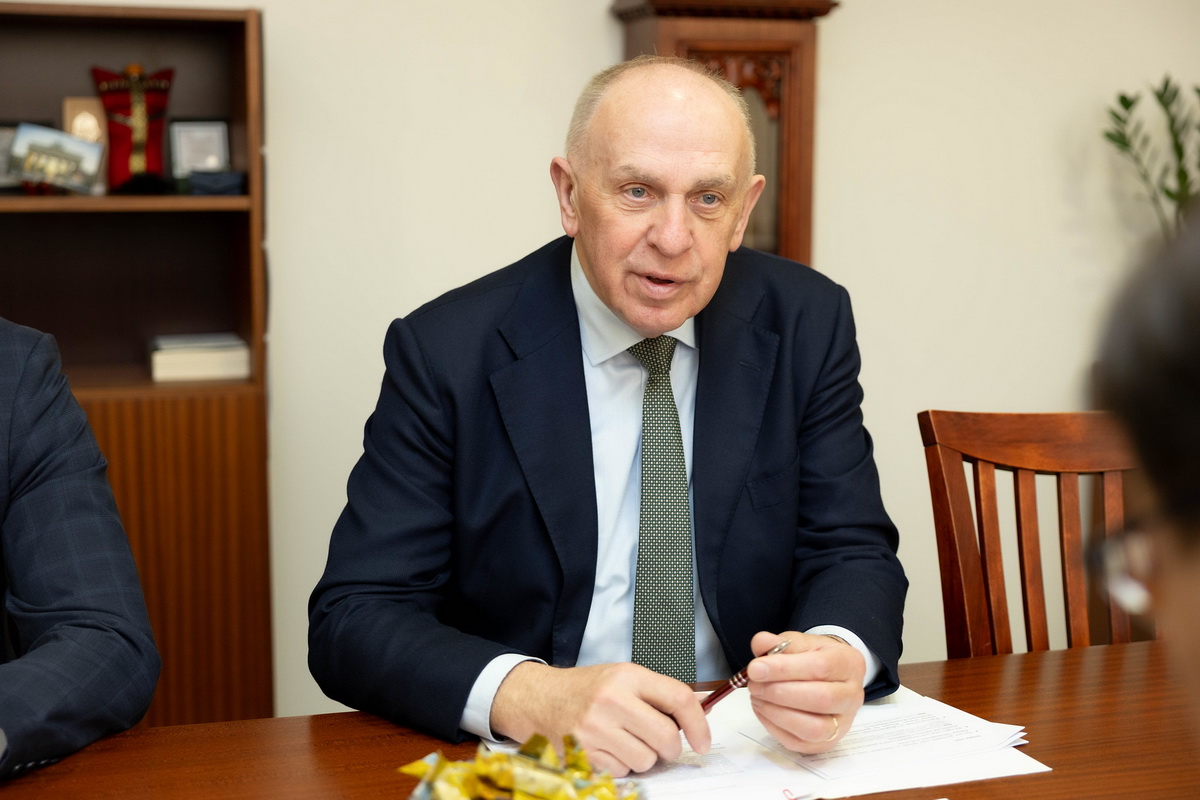
Chairman of the Seimas Committee on Foreign Affairs Remigijus Motuzas explained that when US presidential special envoy John Coale was in Vilnius for meetings with the Lithuanian leadership, the main topic was relations with Belarus. The Lithuanian side pointed to ongoing hybrid attacks, including migration pressure and other issues.
“After Coale’s visit, as we can see, on Friday evening migrants appeared again, balloons appeared, which disrupted the operation of our airport. We do not see any prospects,” he said.
Motuzas also expressed skepticism about the decision by Alyaksandr Lukashenka to release Lithuanian trucks after payment for “parking services.” He referred to the opinion of carriers, who believe the amounts may be so high that retrieving the trucks is not worthwhile.
“In our view, these trucks were illegally detained and kept on the territory of Belarus, and now payment is being demanded. If there were goodwill and normal relations, they would have simply been released,” Motuzas said.
“We do not yet see any prospects, because what is there for us to discuss on the agenda? All these problems remain, and the situation in Belarus has not changed,” he added.
The politician also recalled that close ties between Minsk and Moscow remain. Motuzas believes the United States could play a mediating role.
“They are acting as a kind of peacemaker. The Trump administration hopes it can encourage Lukashenka to engage in dialogue with Lithuania and other countries,” he noted.
According to Motuzas, Lithuania positively assesses US efforts to secure the release of political prisoners. However, despite diplomatic activity, Lithuania intends to maintain its current sanctions policy.
“Lithuania will adhere to the sanctions policy, as these measures were adopted jointly with the countries of the European Union. We do not see an opportunity to negotiate or maintain contacts with the Belarusian side at the political level,” he said.
The head of the parliamentary committee was also asked about potential risks related to the expulsion of Belarusian political prisoners to Lithuania. According to him, there is a certain risk.
“They are visited by representatives of various structures, including the KGB, who exert pressure and issue threats. Some of them may indeed be recruited,” he replied, adding that the very practice of releasing prisoners who are “deliberately pushed out of the country” also raises questions.
Another figure featured in the report, Member of the European Parliament Petras Auštrevičius, expressed a similar view regarding contacts with Minsk.
“I view this as a partly commercial project for implementing certain agreements that may be significant for specific individuals and companies, but for the Lithuanian state or, so to speak, for Lithuania’s national interests, it is of lesser importance,” he said.
“As the saying goes, one should not trade a road for a path. Therefore, it is necessary to see the bigger picture — first and foremost the geopolitical one, rather than focusing on the interests of individual enterprises,” the MEP added.
He also pointed to the high degree of Minsk’s dependence on Moscow.