

Latvian Border Guard Chief Convinced Belarusian Services Were Involved in Tunnel Construction
Reform.news Editorial Team · 27 August 2026, 18:13
https://reform.news/en/latvian-border-guard-chief-convinced-belarusian-services-were-involved-in-tunnel-construction/Head of the Latvian State Border Guard Guntis Pujāts believes that both underground tunnels discovered on the Latvia-Belarus border and used for illegal border crossings were built with the knowledge of Belarusian services. He expressed this view on Latvian Radio, LSM reports.
He noted that 12 tunnels used by migrants have so far been discovered in Lithuania and two in Latvia. According to him, Latvian border guards expect more tunnels to appear. He said the border guard service has information about the possible construction of another tunnel, but no signs have yet been found indicating where the next tunnel might be built.
“I would say that we are waiting for the next tunnel. There are reports that they are digging. It is only a matter of time,” he said.
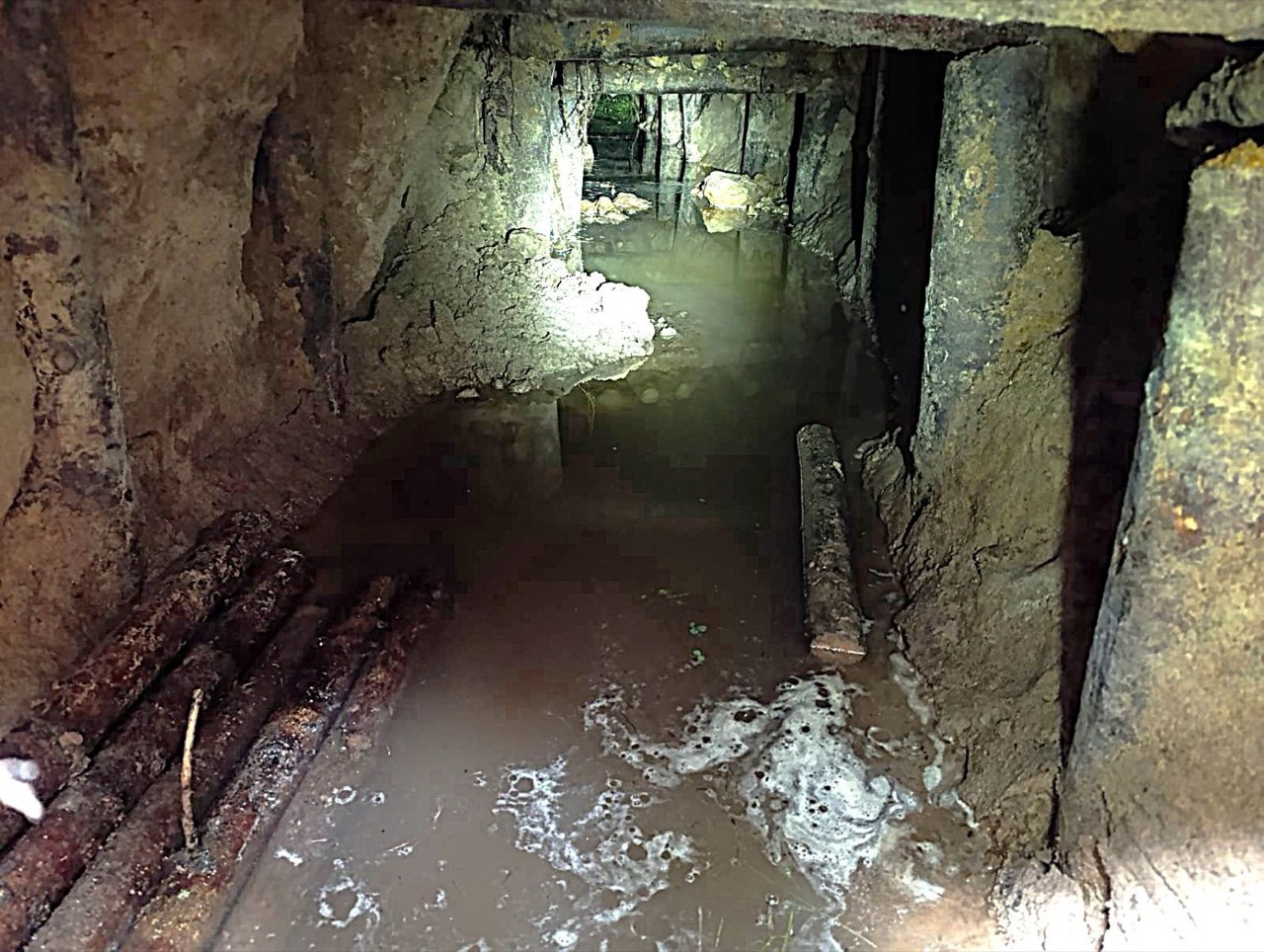
He described the tunnel discovered at the end of August. Its entrance was located more than 10 meters inside Belarusian territory, in woodland and undergrowth. It was at least 30 meters long, with a height and width of about 0.8 meters.
“Of course, I am sure that [on the Belarusian side] there were observers who reported it, and the work was suspended when a border patrol was approaching. Observers or technical means [were used to monitor the situation]. There is no way such a tunnel could have been built without the knowledge of the Belarusian border guards. Especially this second one. Its height and width were 0.8 meters, and its length was at least 30 meters. Outside, 28 cubic meters of soil were removed, fairly substantial supports were installed, and a plywood roof was also laid. The construction there was quite extensive. So the services were definitely aware of it and ensured that its excavation would not be noticed by the Latvian border guards,” he said.
Pujāts suggested that Belarusian border guards could have used thermal imaging cameras to monitor Latvian border guards approaching the tunnel site.
The head of the Latvian border guard service also said that no one had managed to cross the border undetected through either of the two tunnels discovered. All violators were detained during their first attempt to use the tunnels. According to him, both sites were detected quickly enough.
The aftermath of the construction of the second tunnel will require major road repairs. The State Border Guard has already contacted the state-owned company State Real Estate, which is expected to participate in the restoration work. The cost of the repairs has not yet been calculated.
According to Pujāts, the number of people detained for border violations this year may be lower than last year.
“I think I cannot say that 95% [of border violators were detained] for the whole year as a whole. It should be 90%, because Latvia is clearly a target country this year, and serious support from the armed forces began this month. Before that, there was less,” he said.
Earlier, the European Border and Coast Guard Agency Frontex also concluded that Belarusian state structures may be involved in the construction of tunnels through which migrants enter EU countries. WDR and NDR reported this, citing an internal agency analysis that they had obtained.
“Such tunnels would not be built on the Belarusian side of the border without the knowledge and support of the Belarusian special services,” the document says in an excerpt.
It was also not ruled out that Belarusian authorities could involve both specialists and migrants themselves in the construction.