
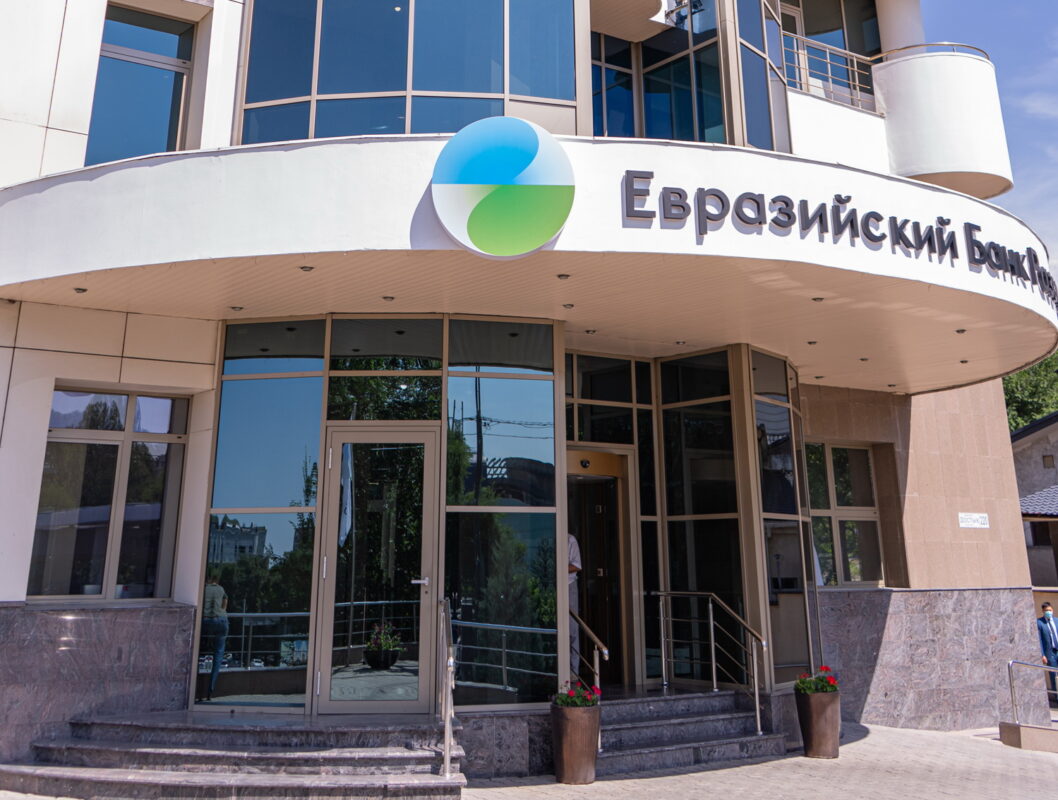
The Eurasian Development Bank (EDB) has published the summer edition of its macroeconomic forecast covering the period from 2026 to 2028.

The EDB expects Belarus’s economy to grow by 1.3% this year. The forecast has been revised downward by 0.5 percentage points compared with the December forecast. GDP growth is projected at 1.6% in 2027 and 1.9% in 2028.
The Belarusian authorities’ official forecast envisages economic growth of 2.8% in 2026. The EBRD also expects the Belarusian economy to grow by 1.3% this year, while MacroBy analysts have estimated growth at around 1%. The IMF forecasts Belarusian economic growth of 1.2% this year.
The EDB forecasts inflation of 5.8% by the end of this year, slowing to 5.5% in 2027 and 5% in 2028.
The average annual exchange rate of the U.S. dollar against the Belarusian ruble is projected at 3 rubles per dollar this year, 3.1 rubles in 2027 and 3.3 rubles in 2028.
“We forecast Belarus’s economy to grow by 1.3% in 2026. Consumer and investment activity will support domestic demand growth. In our assessment, inflation will continue to slow and will remain below the 7% target level in 2026. We expect the refinancing rate to be around 9.25% at the end of 2026, while monetary conditions will continue to be regulated through macroprudential measures,” the report states.
EDB analysts note that signs of cooling business activity were observed in Belarus at the beginning of the year.
“The key factor behind the slowdown was a 2.5% year-on-year decline in industrial production amid cooling demand in the market of Belarus’s main trading partner, Russia. Additional pressure came from unusually low temperatures in January and February, which constrained construction activity and led to a 2.8% year-on-year decline in contracted construction work overall in January–April,” the EDB said.
At the same time, the IT sector and transport contributed positively to GDP growth. Consumer activity continued to support the economy. Additional support could come from tourist flows from Russia. Exports of tourism services increased by 13.6% in the first quarter.
The EDB expects GDP growth to accelerate in the second half of the year amid rising real household incomes, positive investment dynamics, gradual easing of credit conditions and expanding services exports.
“Growth in household incomes will support consumer demand. Wage indexation of more than 14%, combined with lower inflation, will support real income growth among public-sector employees. In the private sector, wages will continue to rise amid labour shortages. Improved external trade conditions will contribute to a recovery in economic growth. Higher global prices will help increase the value of Belarus’s commodity exports,” the forecast says.
The EDB also expects investment growth to remain positive.
“The slowdown in inflation reflects a combination of a strong Belarusian ruble and administrative price controls. At the same time, wage growth continues to create pro-inflationary risks. Administrative regulation will continue to limit price growth. However, such measures may create deferred price pressures and affect the financial performance of certain sectors. A strong Belarusian ruble in 2026 will help contain price growth for non-food goods and reduce inflation expectations,” the EDB added.
The authors of the forecast identify two main risks for Belarus. The first is linked to slower growth in the Russian economy.
“The synchronisation of the business cycle with Russia determines the Belarusian economy’s high dependence on Russia. A sharp cooling of consumer and investment demand in the key partner country could lead to lower demand for Belarusian products and reduced industrial output due to limited opportunities to redirect exports to other markets. Lower incomes in Russia could also weaken demand for tourism and hospitality services in Belarus. Taken together, these factors could restrain domestic demand and limit GDP growth,” the forecast says.
The second risk is linked to accelerating inflation.
“Higher global prices for fertilisers and fuel could lead to rising food prices on external markets. For Belarus, this creates a risk of faster food inflation and stronger overall price pressures, which could slow growth in real incomes and consumption. An additional constraint could be the need to tighten monetary conditions: raising the refinancing rate would restrain consumer and investment activity,” the EDB concluded.
In its baseline scenario, the Eurasian Development Bank forecasts global economic growth to slow to 2.5%. Against this backdrop, the combined growth of EDB member-state economies is expected to reach 2% this year.
Armenia’s economy is projected to grow by 6%, Kazakhstan’s by 5.5%, Kyrgyzstan’s by 10.2%, Tajikistan’s by 8.3%, Uzbekistan’s by 7.9%, and Russia’s by 1%.
In 2027, combined economic growth across EDB member states is expected to accelerate to 2.4%.