
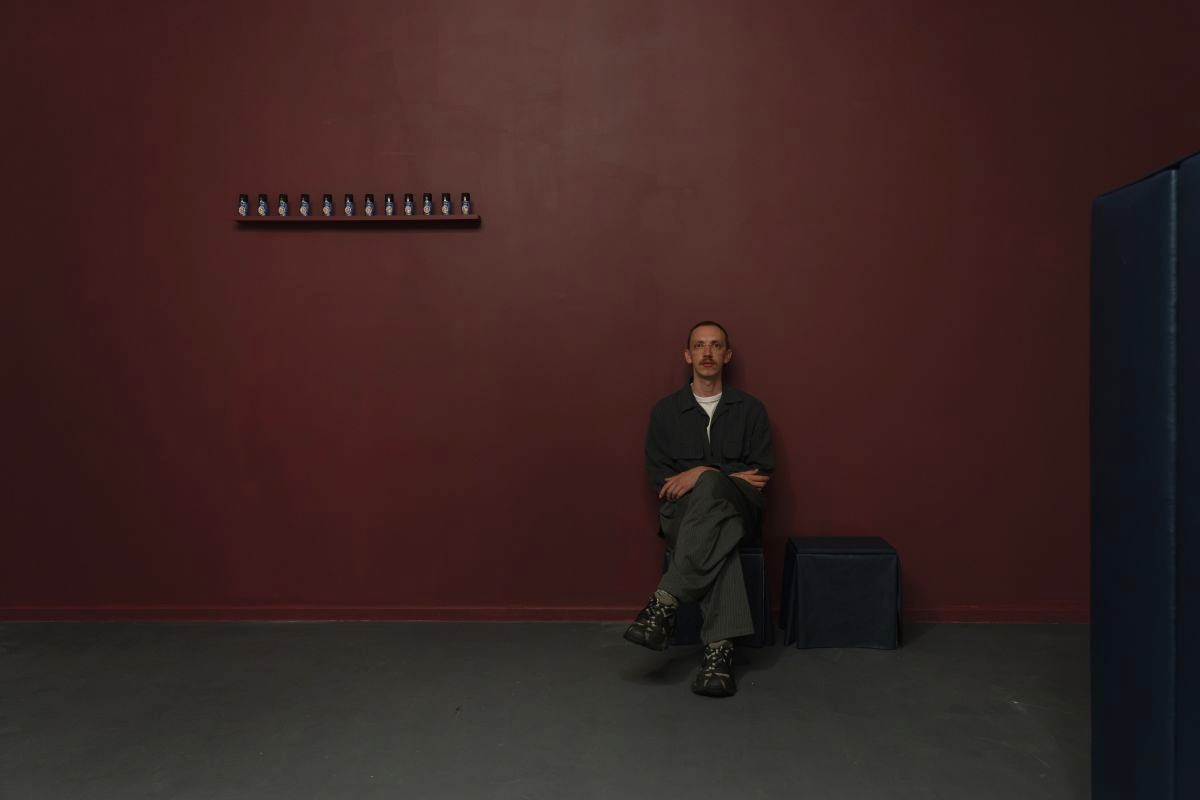

“Once Everything Becomes Clear To Me, I Leave”: Artist Aliaksandr Adamau On An Unwanted Sanatorium And His Exhibition In Warsaw
Reform.news Editorial Team · 19 September 2026, 12:08
https://reform.news/en/once-everything-becomes-clear-to-me-i-leave-artist-aliaksandr-adamau-on-an-unwanted-sanatorium-and-his-exhibition-in-warsaw/A solo exhibition by Belarusian artist Aliaksandr (Alexander) Adamau, hyperMother. Shared Breathing, has opened at the Museum of Free Belarus in Warsaw. It is part of the Warsaw Gallery Weekend program and continues the hyperMother project, which the artist has been working on for several years.
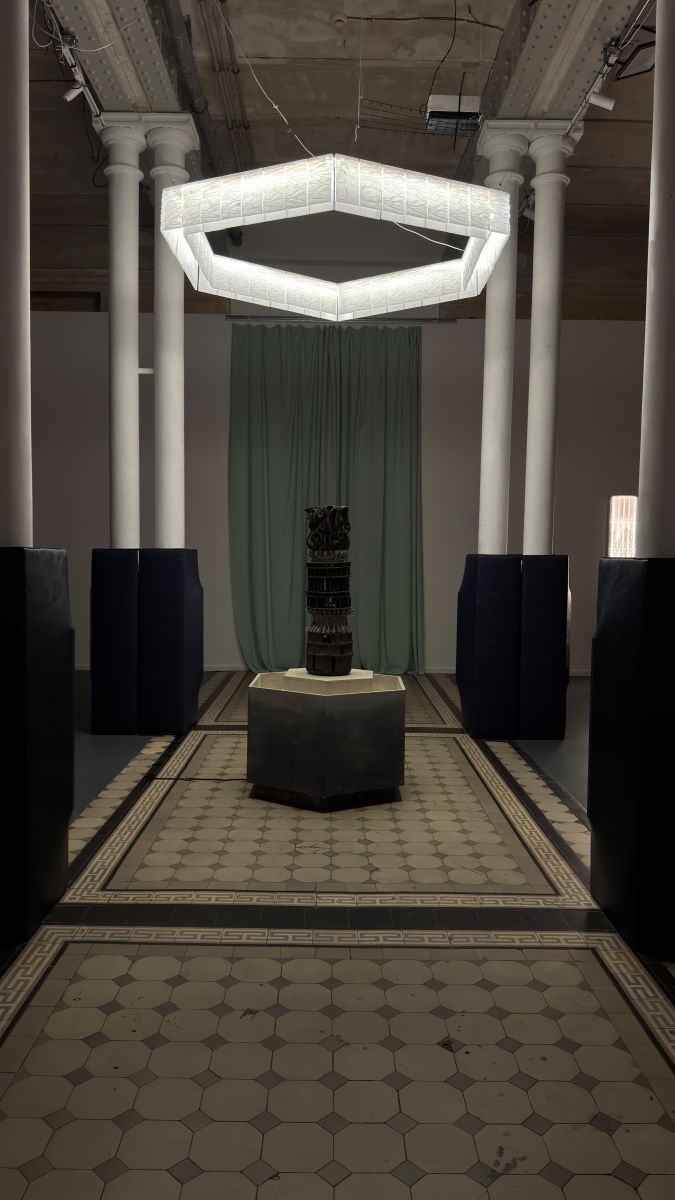
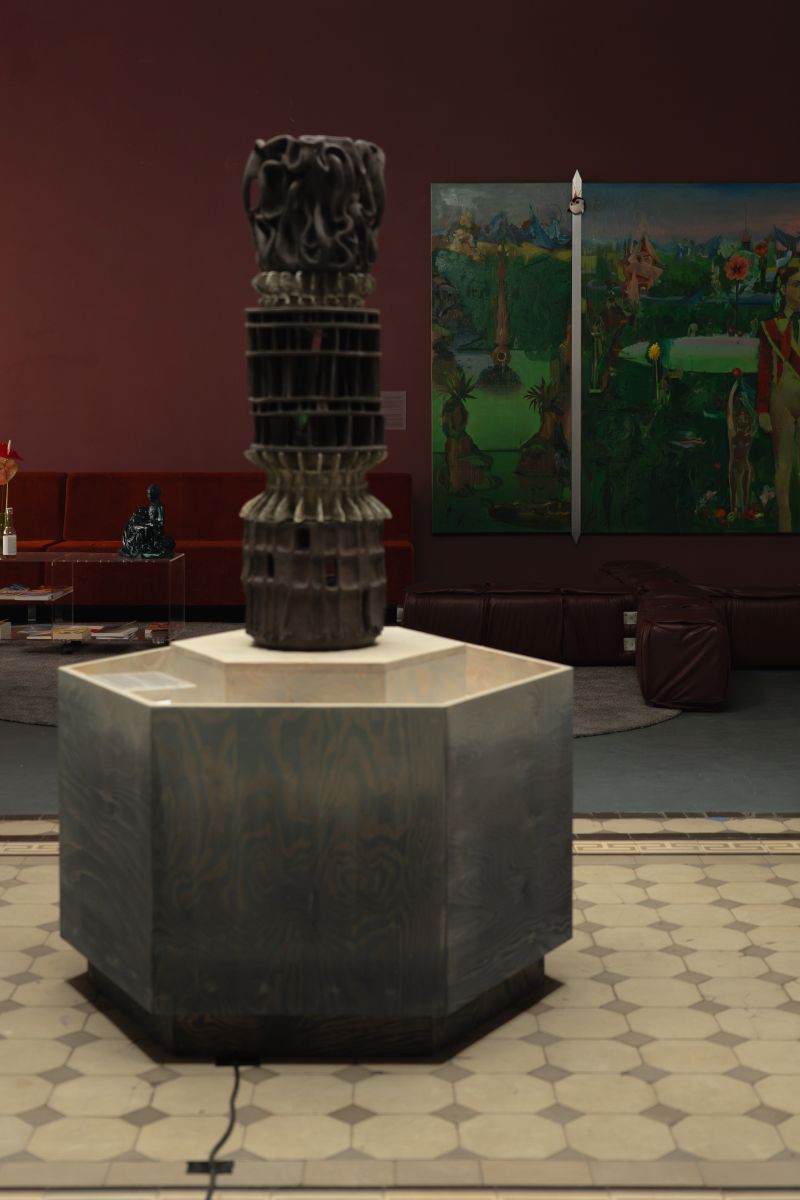
In the new exhibition, Adamau has assembled in the museum hall a fragment of a fictional institution resembling a sanatorium, with a waiting room, special lighting, sound, vibrations and its own procedures. Its purpose seems straightforward — to take care of an exhausted person and temporarily free them from the need to monitor their own condition.
But the more functions the system takes upon itself, the harder it becomes to determine when care turns into control.
Ahead of the opening, reform.news spoke with Aliaksandr Adamau about why the idea behind hyperMother did not end with a single exhibition, where the name came from and why the artist turns a gallery into a fragment of a nonexistent institution.
The Question Remains Unanswered
According to Adamau, hyperMother was not originally conceived as a large-scale series. The artist arrived at it through several separate experiments over the past few years, in which similar themes kept recurring.
“The main task I set myself as an artist is to have an experiment that remains incomprehensible to me at every stage. If it remains incomprehensible, but I feel that there is something there, I go there. When everything becomes clear to me, when I feel that I have answered the question, I lose interest, and I leave,” Adamau says.
When the artist looked back at his work of the past five years, it became clear that several of his projects had in one way or another revolved around the same issue: care and hyper-care, supervision and control, and whether it is possible to distinguish one from the other at all.
These themes were later brought together under the name hyperMother.
The Name Itself Emerged More By Chance
“Exactly a year ago, I was walking my dog and came up with the phrase ‘hyperrealistic mother.’ I said it to myself and realized: it sounds mega-cool. I am generally a fan of mega-cool names and words,” the artist says with a laugh.
At first, it was simply the title of an exhibition. But for Adamau, the combination of the two words proved more meaningful than a single project.
“There is ‘mother,’ ‘mama’ — one of the very first and most popular words. And there is hyper — something that keeps slipping into everything connected with technology and the digital world. As if they were two massive blocks: one very internal and soft, the other cold and modern.
“At the same time, both are all-encompassing, just in different ways.”
The first exhibition was titled HYPERREALISTIC MOTHER. It opened in December 2025 at Galeria Szczur in Poznań.
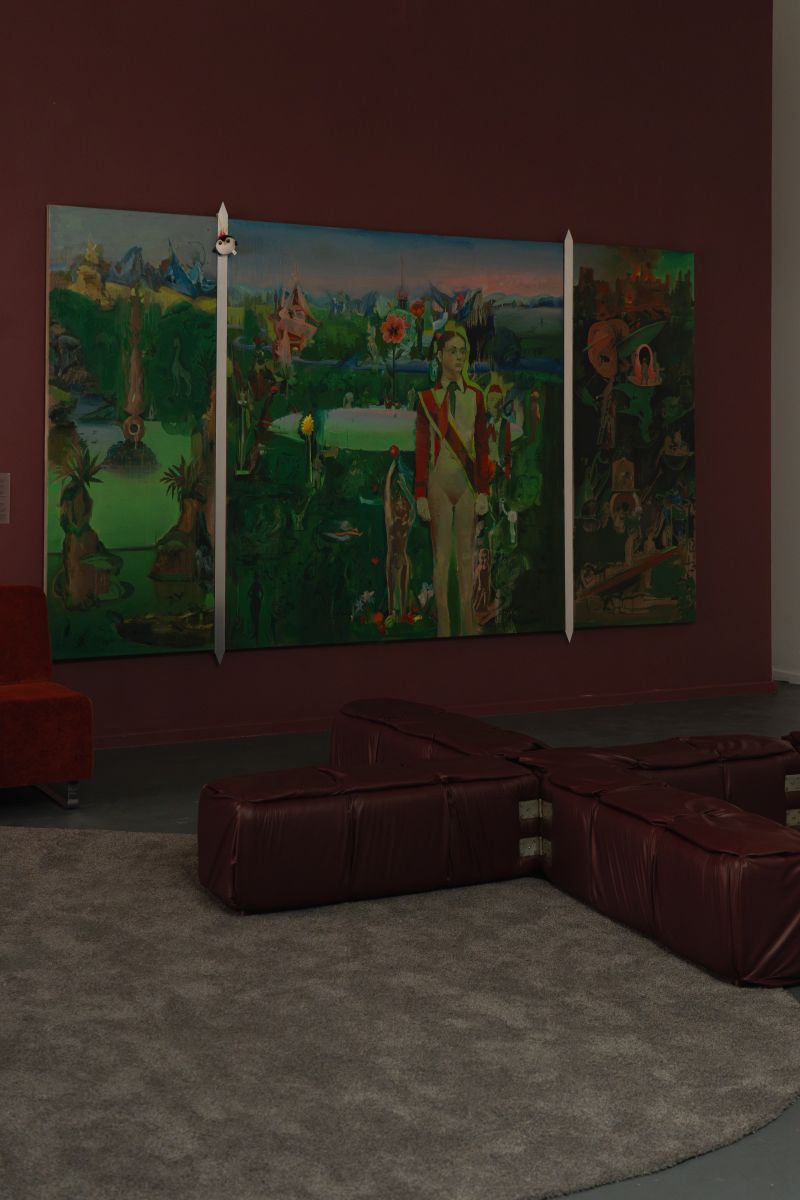
The centerpiece of that exhibition was a children’s interrogation room — a specially designed space where conversations with children are supposed to take place in the safest and calmest possible atmosphere, while observation and recording are carried out at the same time.
The artist worked with the contrast between the soft interior and its function of control. The space included objects from the “Non-Toys” series, as well as pepper spray with a teardrop-shaped keychain featuring an image of the Virgin Mary and other objects.
After the exhibition, it became clear that the theme was not over.
“I realized: okay, this doesn’t end with the exhibition. I’m interested in seeing how it continues to exist, how it is refracted through my other ideas. I realized that this story is definitely a long one.”
The word “realistic” was subsequently dropped from the name.
“I shortened the term and created hyperMother as an institution. For now, it is being built through exhibition projects. But I don’t know, perhaps one day it will be built as something real and permanent.”
Rooms That “Get Stuck” In Galleries
In Shared Breathing, Adamau continues not so much the previous exhibition as the very logic of hyperMother.
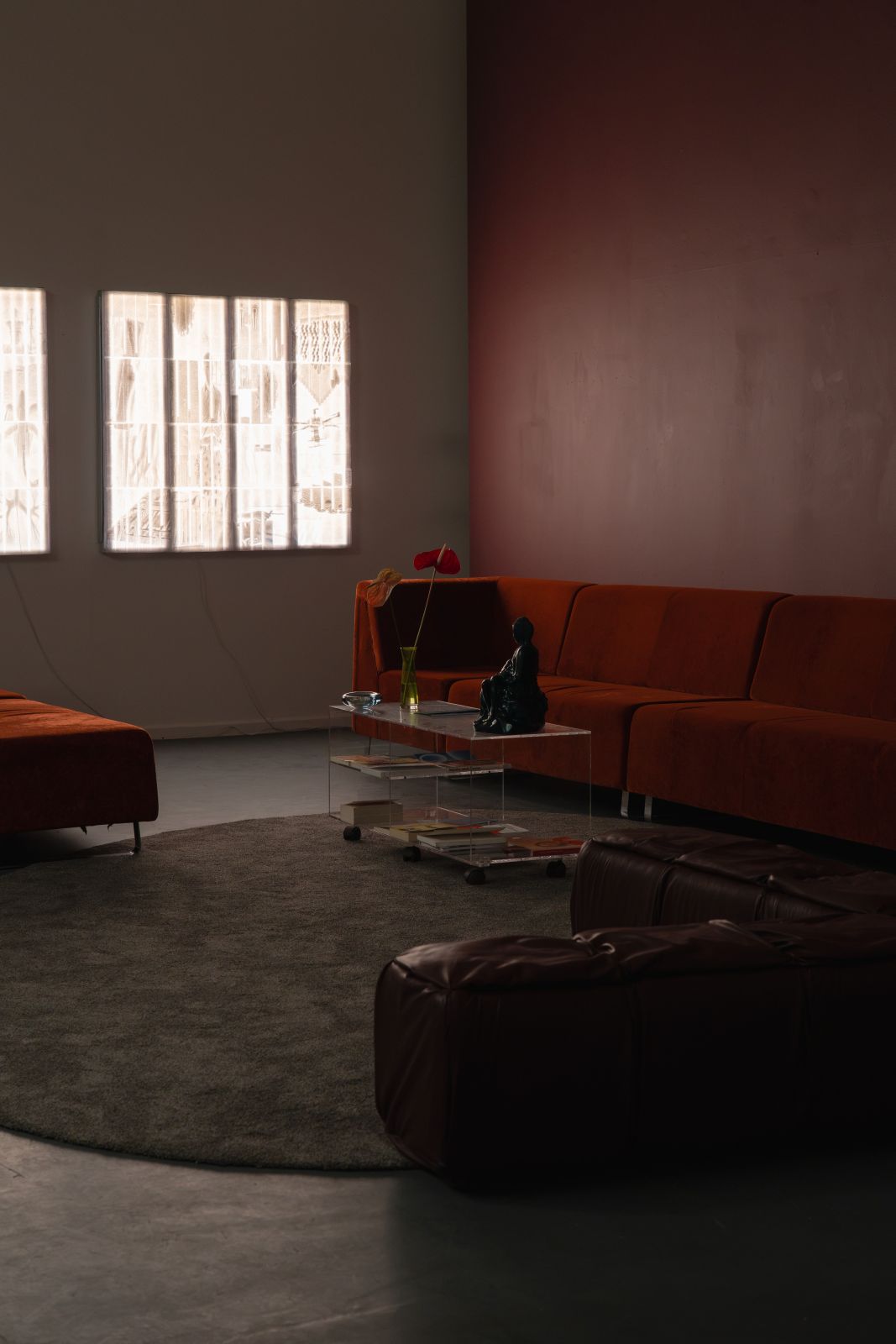
While in Poznań visitors entered a children’s interrogation room, in Warsaw they will find themselves in another part of the institution. It can be imagined as the foyer, hall or waiting room of a sanatorium.
For the artist, it is important that the exhibition is created directly within the Museum’s space; he does not try to disguise it as a neutral white room.
“I want to work more with spaces. This will not be an exhibition in the sense of a white cube, where I bring objects, put them, excuse me, on a pedestal or hang and illuminate them. For me, the white cube is already an outdated idea of a neutral context. There is no neutral context.”
Adamau says he has also grown tired of the distance between the viewer and the art object itself.
“I want objects to encounter objects, for there to be a network and connection between them, so that this veil of untouchability falls away.”
Some of his works can be touched. Others are better left untouched.
The artist gives the example of real gas cylinders that he uses in his works: the gas inside them is also real.
“If you press it, you can actually get gas in your own eyes or someone else’s. I do not hide the fact that some things are dangerous, because that is life. I don’t want the exhibition space to differ too much from real life.”
At the Museum of Free Belarus, the artist is working with a room of about 100 square meters, with high ceilings and the architecture of the historic building itself.
At the same time, he does not want to completely rebuild the space.
Instead, the project introduces a principle that Adamau calls “getting stuck”: rooms from the fictional hyperMother institution seemingly accidentally enter real museums and galleries and temporarily remain there.
“When we talk about the children’s interrogation room, last year it got stuck in Poznań, this year it is getting stuck in Słupsk. And in our case, the waiting room — something between a hall and a foyer — has gotten stuck in the Museum of Free Belarus.”
For Adamau, this kind of “getting stuck” makes it possible to avoid building a complete set.
“It does not require me to create a total arrangement, but it opens up the possibility of reassembling fragments of this nonexistent foyer, the foyer of a sanatorium or its hall.”
Shared Breathing
In the Warsaw exhibition, hyperMother already looks like an institution with its own branches.
One of them deals with “shared breathing” — Shared Breathing.
According to the project description, sound and vibrations are used here as a calibration tool, while breathing sets the common rhythm.
The procedure is not called treatment. Its purpose is to stabilize a person’s condition and reduce excessive tension.
In this world, people are encouraged not to work on themselves even more, but, on the contrary, to temporarily stop doing so.
The system itself knows when to slow down. It determines the appropriate rhythm itself and offers rest itself.
This is where the question explored by the project comes from: what happens when a system created for human comfort begins to decide for itself what is good for a person?
There will be no single central work in the room around which everything else is arranged.
“We will enter the space and see a fragment of some institution called hyperMother, or rather, its branch dealing with Shared Breathing. We will be able to stay there, interact with the objects, experience specially calibrated healing light and read images. I want a person to feel as if they are at the beginning of the construction of some very, very large institution.”
Adamau describes the future space as cozy, although coziness in hyperMother always remains somewhat suspicious.
Still, he reminds us that above all, he is making an exhibition.
“There is something to look at, something to listen to, something to read.”
Performance
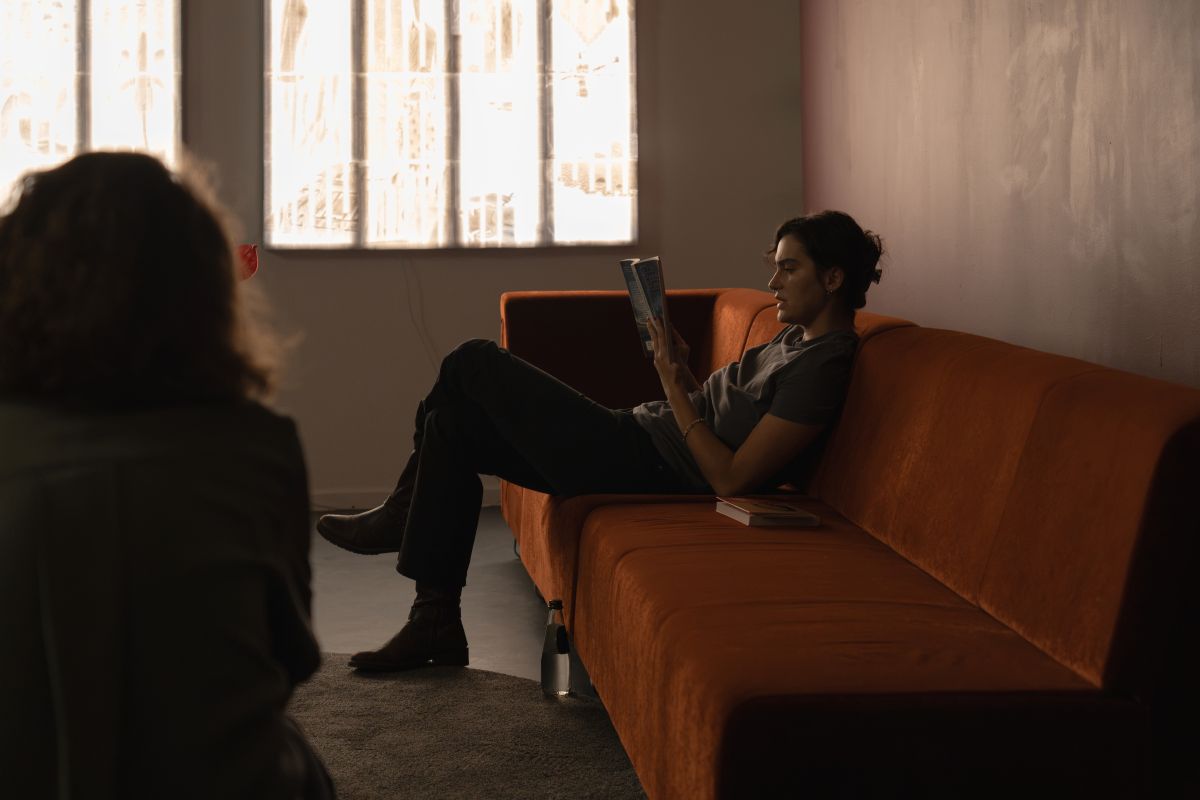
The exhibition opened with the performance “Initial Calibration,” structured as a parallel reading of three books, each of which offers its own model for responding to what is happening around us: the Polish Poradnik bezpieczeństwa structures a response to external threats, Szczęścia można się nauczyć suggests turning to self-control and inner balance, while a guide to painless accompaniment becomes the most radical form of withdrawal from reality.
Performer Zuza Szczepańska works successively with these three registers, appearing at times as a visitor and at others as a hypothetical employee of the institution, creating a space for shared meanings between the different texts. The audience is not required to do anything: visitors can come and leave, skip part of the reading or not stay at all. Thus, incomplete presence, loss of information and a fragmented perception of what is happening also become part of the performance.
***
The exhibition will run until October 4.