

Average Age 44, More Likely To Seek Additional Work: Belstat Presents Statistical Portrait Of Belarusian Woman
Reform.news Editorial Team · 5 March 2026, 10:42
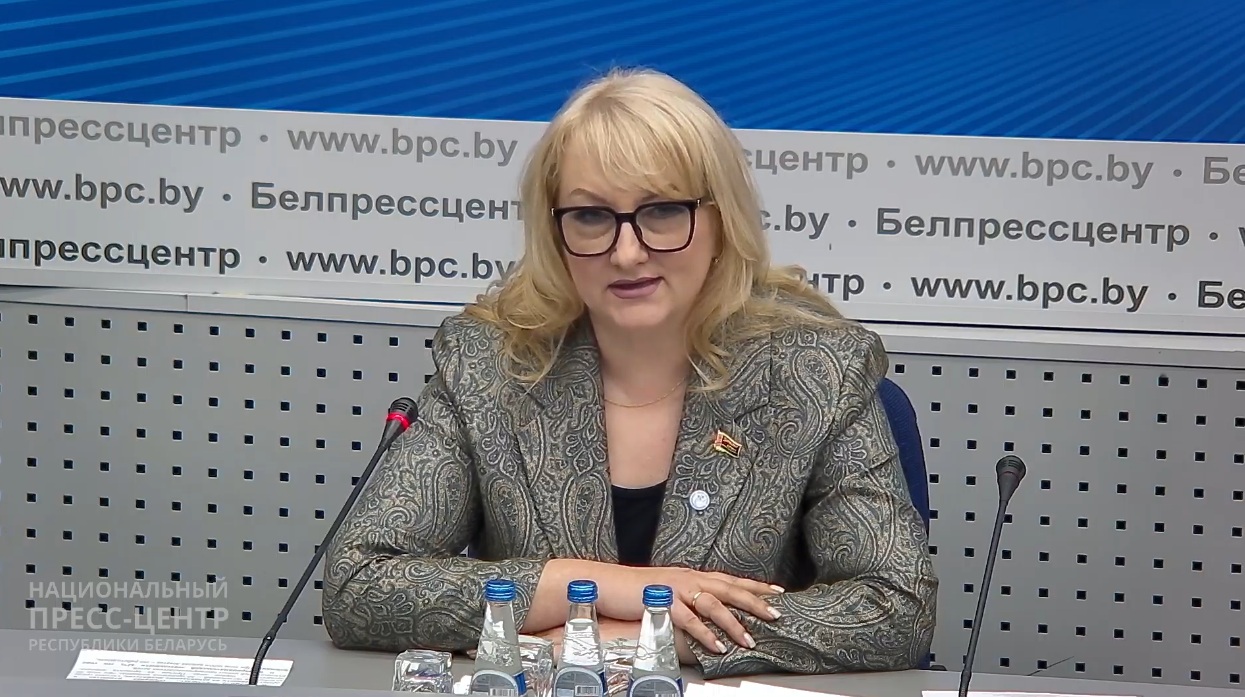
https://reform.news/en/average-age-44-more-likely-to-seek-additional-work-belstat-presents-statistical-portrait-of-belarusian-woman/The average age of Belarusian women is 44, and they are more likely than men to seek additional work. The National Statistical Committee presented a statistical portrait of the Belarusian woman at a press conference at the National Press Center.
“This is a Belarusian woman. She lives in a city. She is on average 44 years old. She is well educated and has either higher or secondary education. She marries for the first time at the age of 27 and about a year later gives birth to a child. Overall, by the end of 2024 there were 4.9 million women living in our country, or 54% of the total population. The overwhelming majority of them lived in urban areas — almost 80%,” said Natallia Tarasyuk, Deputy Chair of the National Statistical Committee.
On average there are 1,167 women for every 1,000 men in the country. However, the gender balance differs significantly by age group. Among younger people there are 957 girls for every 1,000 boys, but in older age groups women outnumber men by about two to one.
“In 2025, 52,000 marriages were registered in the republic. The average age of women entering their first marriage was, as I already mentioned, 27 years. However, age is not an obstacle to forming a family union, and in recent years an interesting trend has emerged. Women aged 65 and older are increasingly entering marriages. In 2025, 713 women in this age group married, which is almost 13% more than the previous year. Among them, 44 women married for the first time,” Tarasyuk added.
According to her, the employment rate among women in Belarus is higher than among men. It stands at 65%, and among the working-age population it reaches 86%.
“In the structure of employment, women and men are represented almost equally. However, as in the overall population, there is a gender imbalance. Among employed youth under 30, there are 91 women for every 100 men. But in the 45–54 age group the situation changes: there are 115 employed women for every 100 men. I would also like to note that women in our country are more educated. Forty-two percent of working women have higher education, whereas among men this figure is only 30%. Traditionally, women are mostly employed in the service sector. As before, the most ‘female’ fields are healthcare and education, where women account for more than 80% of workers. Slightly fewer women work in accommodation and food services, finance and insurance, professional and scientific activities, and trade,” she said.
In the IT sector, women account for 34% of employees.
“Women more often than men look for additional jobs. Among people who have a second job in addition to their main one, more than 60% are women,” the Belstat representative noted.
“Today, 42% of entrepreneurs in Belarus are women. I would also like to note that every ninth of them is an employer, meaning a person who hires workers. More than half of them are directors or managers of shops, as well as individual entrepreneurs in the service sector,” she said.
Women make up 33% of members of parliament, 48% of local self-government bodies, 72% of heads and deputy heads of rural, settlement and city executive committees, and 67% of judges.
Among female managers, 44% have underage children, while about 60% of employed women overall have children.
Tarasyuk also shared results of a time-use survey conducted among Belarusian women aged 10 and older.
“The largest share of daily time is spent on personal care. This includes sleep, eating and other personal needs. Women spend almost half of their daily time on this. Sleep accounts for 77% of that category, nearly nine hours. Three hours and fifteen minutes are spent on work and work-related activities. Household management and care for family members take three hours and twelve minutes. Slightly more than four hours are free time. Education accounts for 35 minutes, and the remaining 20 minutes go to other activities,” she said.
According to the study, over the course of an average lifetime of almost 80 years, women spend nearly 10 years working. They spend about four years cooking and roughly the same amount of time eating. Shopping and obtaining services take a little more than one year of a woman’s life.
Household chores such as cleaning and washing take almost five years. Women have just over 13 years of free time during their lives, about six of which are spent watching television and videos.
Almost one and a half years are spent on sports, walks and other physical activities. Women spend nearly 30 years sleeping. In addition, about four years of life are spent on travel related to various purposes, meaning time spent on the road.