

Lukashenka Urges EAEU Partners Not to Leave the Common Market
Reform.news Editorial Team · 2 October 2026, 13:20
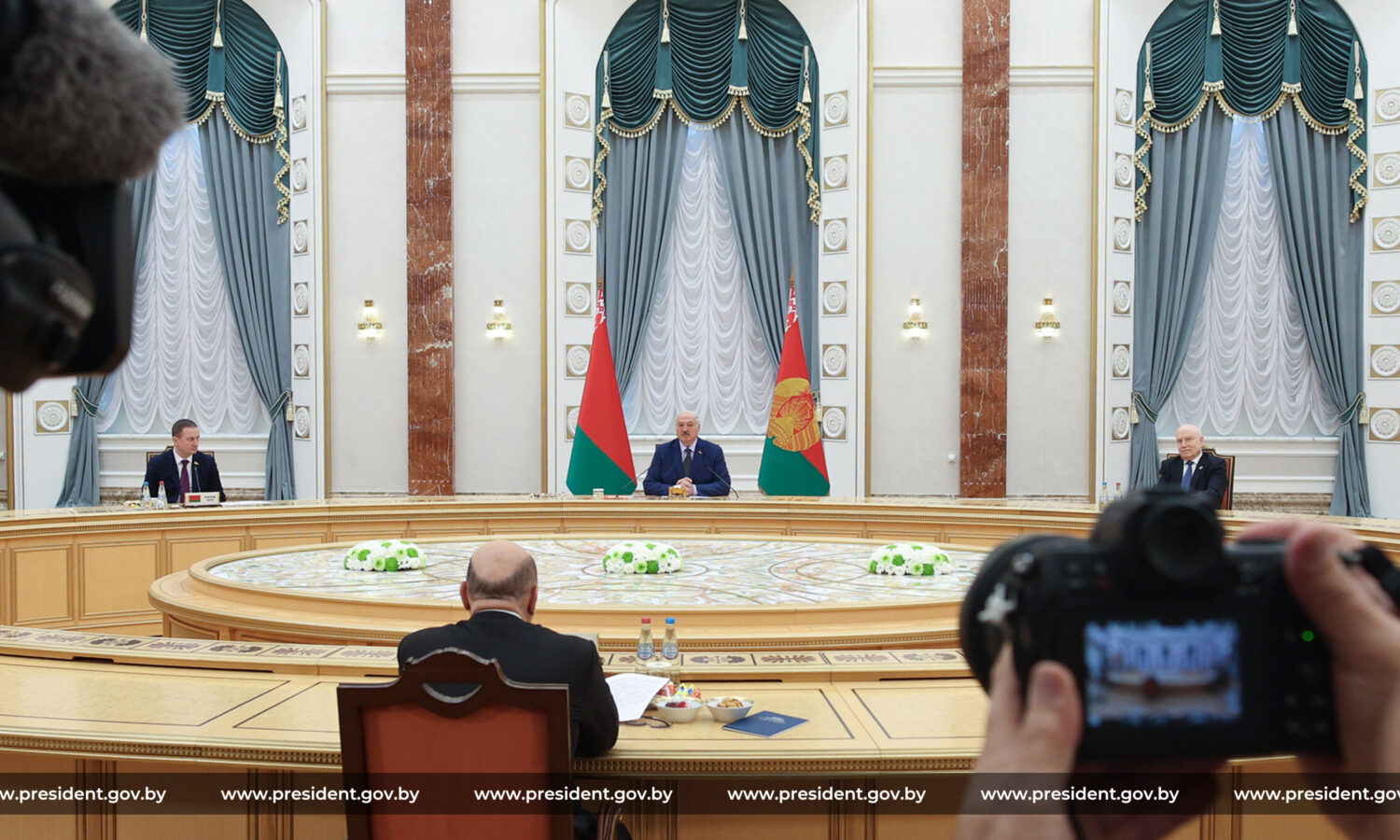
https://reform.news/en/lukashenka-urges-eaeu-partners-not-to-leave-the-common-market/Aliaksandr Lukashenka urged his partners not to abandon the common market at a meeting with the heads of government of EAEU member states. He backed his appeal with an argument he often uses: nobody is waiting for us elsewhere.
“The main thing I want to ask you today is about the Russian market and your countries. This is the foundation. We conduct 80% of our trade with you. So I ask you, do not rush to leave it. Believe me, nobody is waiting for us anywhere else. So there is no need to rush to throw away what benefits you today. Do not leave this common market,” he said, according to his press service.
Lukashenka also cited another argument: gas supplies.
“Who did the Uzbeks turn to? Russia. And they found a solution to the problem. Through Kazakhstan. They provided Kazakhstan with the capacity it was losing, and Uzbekistan with supplies. Where in the West could they treat us this way? Nowhere. So do not lose what you have. As someone who has worked for many years, I advise you: it is your business which course to follow, but do not throw away what is producing results today. And the result is our common market. If you find happiness somewhere else (if you do, you will see for yourself), then make your decision. But so far, we have found no such happiness elsewhere,” he said.
It should be noted that Armenia has recently been considering the possibility of joining the European Union. In the spring, the leaders of the EAEU’s four other member states urged Yerevan to hold a referendum on the EU and the EAEU at a summit. Armenian Prime Minister Nikol Pashinyan replied that, as long as no application to join the EU had been submitted, holding such a plebiscite made no sense.
Lukashenka also stressed that cooperation between Belarus and Russia had helped them withstand sanctions.
Lukashenka did not miss the opportunity to comment on this issue today.
“If you have decided to join the European Union, why are you in such a hurry? Find out exactly where your cognac will be sold, where your vegetables and fruit will go, and in what quantities. Will you be able to replace what you sell to us today? If you are sure that France will buy your cognac (it has nowhere to put its own, but will buy yours), fine—go ahead. Why are you rushing? Why are you putting the cart before the horse? There is no need to rush to throw away what benefits you today. Do not leave this common market,” he said.
Nikol Pashinyan continued to honor his pledge not to visit Belarus while Lukashenka remains in power. He did not travel to the Eurasian Intergovernmental Council meeting and took part in its sessions by video link.
“Everything you have seen is not only because we have preserved something from Soviet times. Half of these products—tractors and other things—are Russian. That includes the metal and individual components and assemblies that we buy in Russia and your countries. We have the technology, and you have the resources. We do not have enough resources to produce all this. That is what integration means. And when the West imposed sanctions, it was moved to tears. Somehow, we endured them. Even under these wartime conditions,” he said.
“Think about what I have said. Do not throw away what benefits you today. In time, something will be resolved, something will happen as a result of the global tectonic shifts taking place on the international stage,” Lukashenka added.
He stressed that Belarus had preserved many areas of expertise from the Soviet era.
“We know how to do a great deal. And all of it comes from Soviet times. Our economy is not the most powerful, but the technologies we possess are needed by most countries in the world today. And we offer these technologies. We also train people, not just provide technology.
We did not sever our roots from the time when the foundations of our economy were laid. That is why we have achieved some things in mechanical engineering, and there are no problems in construction—we produce everything we need, from cement and bricks to the latest technologies. And agriculture. This year, we plan to sell $10 billion worth of agricultural products. For Belarus, these are substantial volumes,” he continued.
Lukashenka acknowledged that Belarus was developing relations with the Muslim world and major countries in Southeast Asia and Africa.
“However difficult it may be, we are gradually trying to make inroads there. Our economy is not gigantic, like the Russian Federation’s, for example. As I say, we do not need much,” he said, assuring that Belarus remained committed to the “post-Soviet market.”