

Sikorski’s Meeting with Ryzhankou: Encouraging an Unreasonable Neighbor
Reform.news Editorial Team · 23 September 2026, 19:37
https://reform.news/en/sikorski-s-meeting-with-ryzhankou-encouraging-an-unreasonable-neighbor/On the sidelines of the 81st session of the UN General Assembly in New York, Polish Foreign Minister Radosław Sikorski met with Belarusian Foreign Minister Maksim Ryzhankou. What might the Polish minister have left unsaid when discussing the conversation, and does it signal a thaw in relations between Minsk and Warsaw?
For the First Time Since…
Radosław Sikorski noted that meetings at this level had not taken place for a full 10 years, since 2016.
In fact, the Polish minister’s memory appears to have failed him somewhat. In November 2018, then-Belarusian Foreign Minister Uladzimir Makey met with his Polish counterpart Jacek Czaputowicz.
In May 2020, the foreign ministers of Belarus and Poland discussed the Eastern Partnership and the COVID-19 pandemic by phone. On July 31, 2020, Makey and Czaputowicz held another telephone conversation, with the election campaign under way in Belarus as the main topic. The Belarusian Foreign Ministry said the conversation had taken place at the initiative of the Polish side.
But after the so-called “election” and the suppression of protests in 2020, there were indeed no contacts at this level with Poland. Nor were there such contacts with foreign ministers of EU countries in general, apart from Hungary’s former foreign minister under Prime Minister Viktor Orbán, Péter Szijjártó, who visited Minsk several times. In addition, in November 2021, at the height of the migration crisis, Uladzimir Makey held two telephone conversations with EU High Representative for Foreign Affairs and Security Policy Josep Borrell.
So, can Sikorski’s meeting with Ryzhankou signal a thaw in relations between Minsk and Warsaw?
When a Neighbor Wants It
According to Sikorski, the UN is a neutral venue, allowing meetings with representatives of countries with which relations are strained.
This wording can be viewed as a statement of fact: relations between the two countries remain difficult. What is needed to improve them? Sikorski pointed to positive developments, such as the release of some Belarusian political prisoners, including journalist and Polish minority activist in Belarus Andrzej Poczobut.
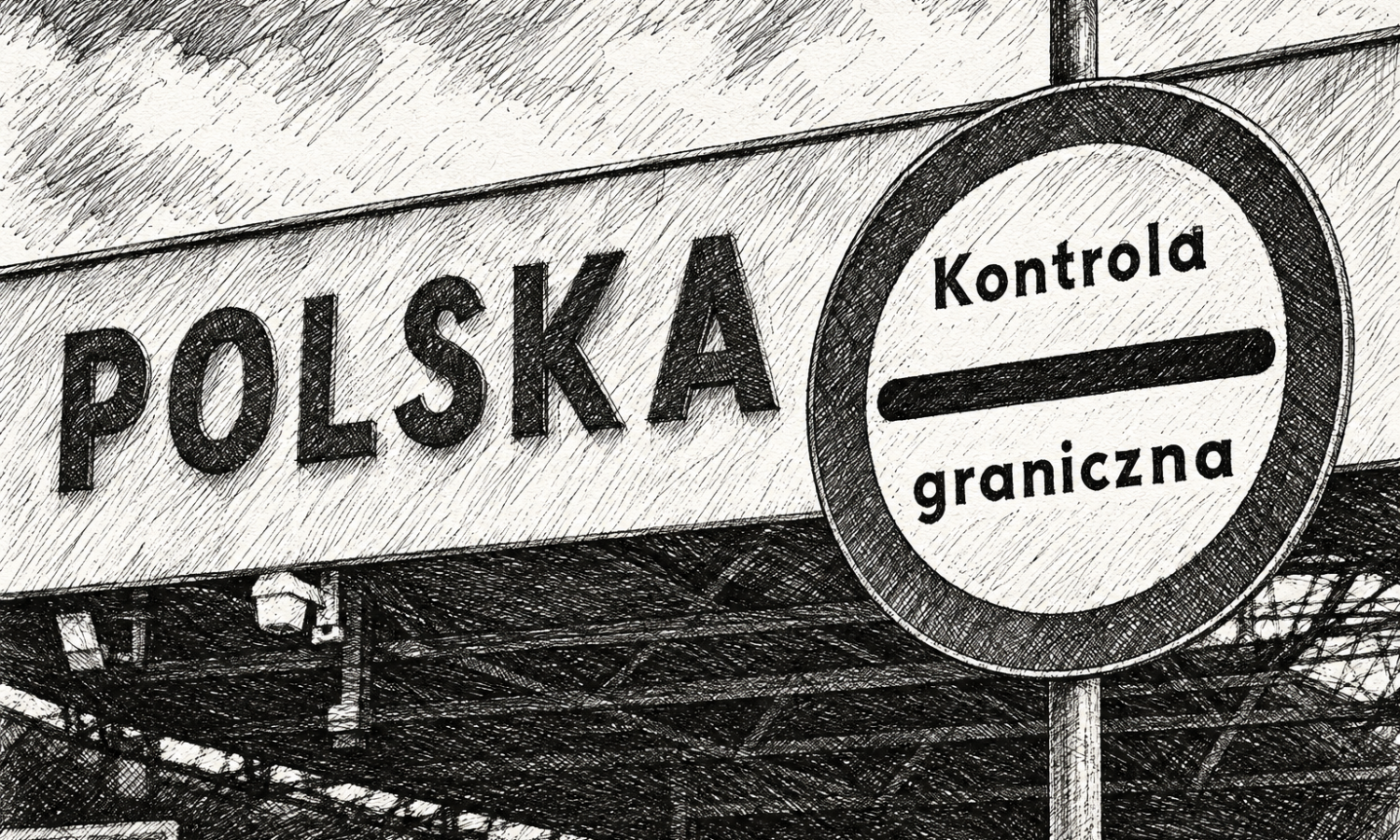
Sikorski also said that the situation at the border had been normalized. However, the minister was quick to clarify that this had been achieved, among other things, through the border barrier erected by Poland. This likely contains a hint: Warsaw expects Minsk to take more decisive action to end migration pressure. The fact that the border situation was discussed during the meeting with Ryzhankou also points in this direction.
Clearly, Poland has a number of interests related to Belarus. These include security, the border and transit. One of the most important issues is the rights of the Polish minority in Belarus. Naturally, Warsaw would like to see an adequate and predictable neighbor on its eastern borders, one that does not pose permanent threats or engage in provocations. In return, relations could improve on a number of issues. But only in return. Sikorski appears to have sought to convey precisely this straightforward message to the official Minsk.
The following words from Sikorski can be seen as an important message: “When a neighbor wants to thaw and improve relations, Poland is always the first to seek an agreement.” The prospects have been outlined with the utmost clarity: Warsaw is ready if there are grounds for it. The grounds that currently exist are not enough.
What Is Not Usually Publicized
At the end of August, Polish Prime Minister Donald Tusk said that Russia is preparing for an escalation not only on the fronts in Ukraine but in the region as a whole. U.S. intelligence agencies, The Wall Street Journal reported, anticipate a “limited attack” by Russia on a NATO country. The Guardian, citing the heads of the intelligence services of the Czech Republic, Latvia and Sweden, reported on plans by the Kremlin to step up its sabotage campaign in Europe in the coming months. Judging by Prime Minister Tusk’s reaction, these threats are being taken seriously in Poland. Especially given that there have already been precedents.
If these concerns are well-founded, Russia could well enlist its ally — the Lukashenka regime — to carry out its intentions. And this significantly increases the risks for countries that share a common and fairly lengthy border with Belarus. The migration pressure on Latvia originating from Belarusian territory in recent months is a vivid example. And there is no guarantee that Moscow and Minsk will stop there.
Radosław Sikorski said that regional security was discussed during his conversation with the head of the Belarusian Foreign Ministry. “Among other things,” he said, the issue of Russian drones and missiles flying over our country was also raised. Diplomats, however, do not usually publicize other details.
But can it be assumed that during his conversation with Ryzhankou, Minister Sikorski warned the Belarusian regime against taking part in possible provocations? This hypothesis does not seem far-fetched.
Nothing to Boast About?
The fact that the meeting of the ministers did not open up broad horizons for official Minsk is indirectly indicated by the fact that the Belarusian Foreign Ministry lumped information about Ryzhankou’s meeting with Sikorski together with other contacts held on the sidelines of the UN General Assembly. The head of Polish diplomacy is listed alongside the foreign ministers of Nicaragua, Botswana and the Republic of Sudan.
If the conversation had actually produced some kind of breakthrough, Minsk would presumably have tried to present the fact in the most favorable light possible. As it is, there seems to be little to boast about.
So for now, what is happening looks less like a thaw than an attempt to encourage an unreasonable neighbor to behave in a more or less decent manner. At least, to start with, not to create problems for those around it.
Asked whether the meeting with Ryzhankou meant normalization of relations with Belarus, Sikorski resorted to a metaphor. “It’s like a snowdrop that may bloom if the weather is favorable,” he said.
In other words, until a genuinely warm wind blows from Belarus, there is little reason to expect any flowering.
***
The views and assessments expressed by the author may not coincide with those of the Reform.news editorial board.