

Polish President’s Office Comments on Letter From Former Political Prisoners
Reform.news Editorial Team · 27 October 2026, 11:58
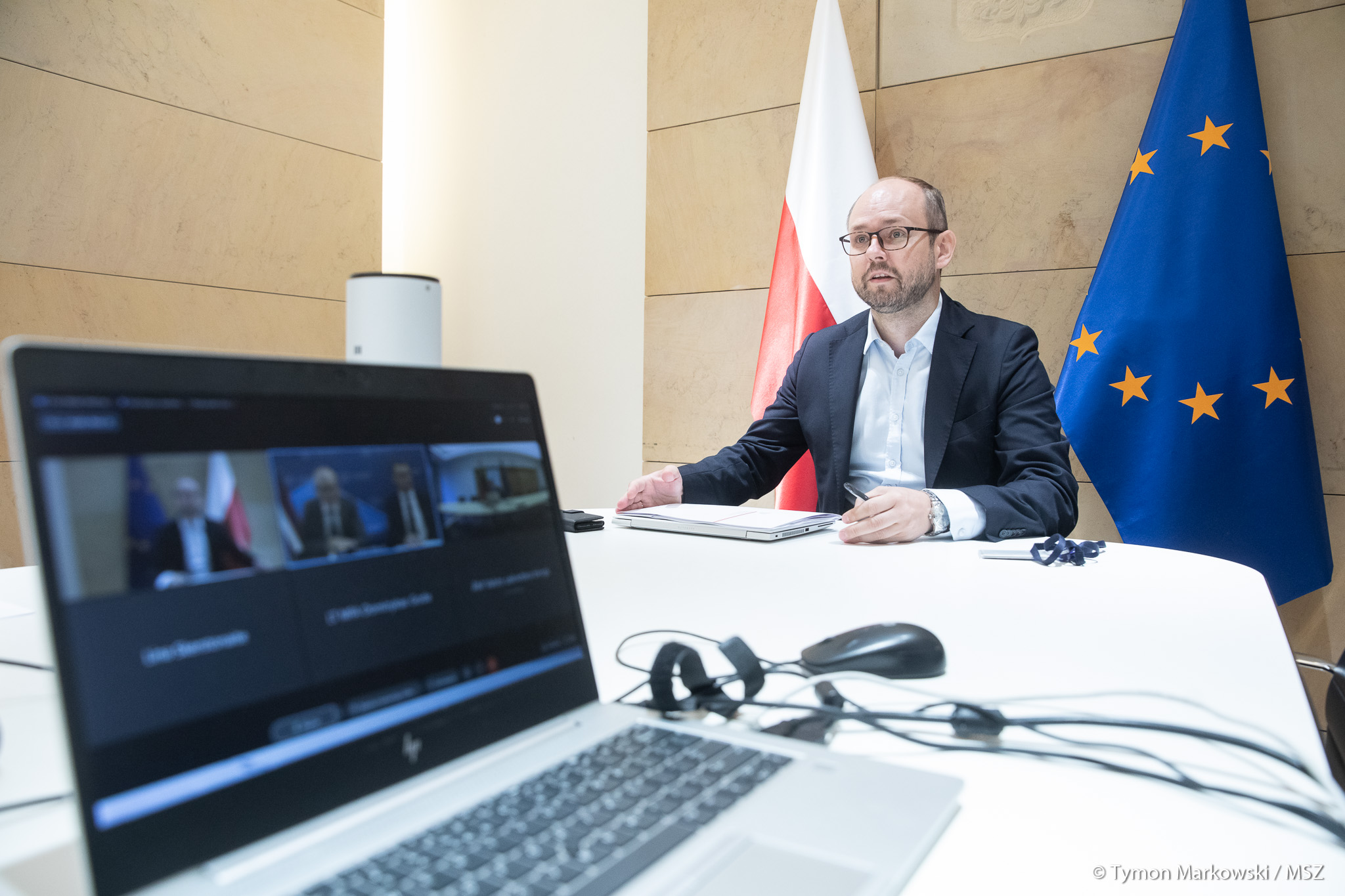
https://reform.news/en/polish-president-s-office-comments-on-letter-from-former-political-prisoners/Marcin Przydacz, head of the International Policy Bureau at the Chancellery of the President of Poland, commented to Radio Svaboda on a letter from a group of former political prisoners calling on European leaders to step up efforts to secure the release of prisoners in Belarus. According to him, the release of political prisoners is important, but there are no grounds for changing sanctions policy.
“Of course, the issue of political prisoners is extremely important, and everything possible must be done through diplomatic channels to secure these people’s release. Poland has done a great deal in this regard, because thanks to our good contacts with the US administration, we managed to persuade the Americans to join efforts in this area and secure the release of, among others, Andrzej Poczobut, as well as many others. Of course, the Americans were also acting in their own interests,” Radio Svaboda quoted Przydacz as saying.
He also believes that European diplomacy could be more active, but sees no reason to change sanctions policy.
“However, today I see no reason to change sanctions policy unless the Belarusian authorities genuinely begin to change their domestic and international policies. At present, I see no such far-reaching willingness on Minsk’s part,” he added.
Przydacz was also asked about the possibility of resuming the transit of Belarusian potash fertilizers through the EU.
“Even if these fertilizers pass through Russia, they generate less profit for the Belarusian regime and are less competitive on international markets. This creates certain difficulties for the authorities in Minsk. Ultimately, sanctions are not an end in themselves. At least, the point is not to impose sanctions simply for the sake of imposing them. Their purpose was to compel Belarus to make certain changes to its policies,” he said.
“If the Americans are planning any changes in the trade sphere, I will criticize them. You cannot change another country’s policies with a single phone call, even one made by the most influential politician, diplomat, official or journalist. Everything must be considered through the lens of one’s own interests, and different arguments must be weighed,” Przydacz added.
He also believes that Poland should not change its policy.
“The price Belarus had to pay for this (normalization) was not particularly high. We expected some very basic things: that the opposition would not be persecuted, that conditions would be created for freedom of speech to be exercised, and that the Polish minority would not be persecuted. Aliaksandr Lukashenka fulfilled none of these conditions. Therefore, Poland has no grounds for changing its policy today,” he said.
He noted that Warsaw had previously pursued a softer policy toward Minsk.
“I personally remember a period when attempts were made to pursue a somewhat softer policy toward Belarus. That brought some positive results. I think Poles living in Belarus had a somewhat easier life then. Polish cemeteries were being restored, and schools were functioning more or less normally. But Aliaksandr Lukashenka chose a different path and began not only to brutally repress his own citizens. Poland responded accordingly by imposing sanctions. I remember this well because, in Warsaw, I was responsible for preparing those sanctions packages. And this was not just about actions against our own citizens — a hybrid operation was launched, effectively an act of aggression against Poland along the Polish-Belarusian border,” Przydacz said.
He recalled that politically motivated arrests continue in Belarus, with new political prisoners taking the place of those who have been released.
“We must remember that all of this is interconnected to some extent. Even if the Americans propose something, Europeans are by no means obliged to follow their instructions. And the situation today is such that even after some sanctions have been lifted, certain things still cannot be done because they depend on Europe, on us, on the European Union, on Poland and on our voice — not just on Washington’s,” he said.
Radio Svaboda also asked the representative of the Polish president’s office whether the United States had exerted any pressure on Poland.
“No, they did not tell us that. The Americans have never put pressure on us over Belarus. The president spoke about Belarus and the Belarusian regime on September 3 last year in the context of the Andrzej Poczobut case. At that time, he asked President Trump to help secure Andrzej Poczobut’s release. We are glad that, thanks to the direct involvement of the US administration and its diplomacy, we managed to secure the release of our hero. I think that is a positive result. There was no pressure on other issues,” he said.
It should be noted that in Poland, the government holds the main powers in the field of foreign policy.