

Overton Window: Why Russia May Be Interested in Attempts to Pull Lukashenka Away From It
Reform.news Editorial Team · 5 October 2026, 23:15
https://reform.news/en/overton-window-why-russia-may-be-interested-in-attempts-to-pull-lukashenka-away-from-it/The ghost of former Foreign Minister Uladzimir Makei’s concept has once again risen from the ashes. But this time, it comes with a “dead horse” thrown in for good measure. Most surprising of all is that there are still people outside Belarus willing to promote, or even acquire, this expired package. And Russia, from which they dream of pulling Aliaksandr Lukashenka away, may be watching the process closely, as it is of some interest to Moscow.
Another Round
Former head of Poland’s Intelligence Agency Piotr Krawczyk discussed in a lengthy Radio Svaboda interview how it would be a good idea to create conditions under which Aliaksandr Lukashenka would have “as much independence and room for maneuver in relations with Russia as possible.”
In Krawczyk’s view, this would ensure that Belarus does not pose “a threat to neighboring countries,” while those countries, in turn, could engage in “constructive and mutually beneficial trade” with it.
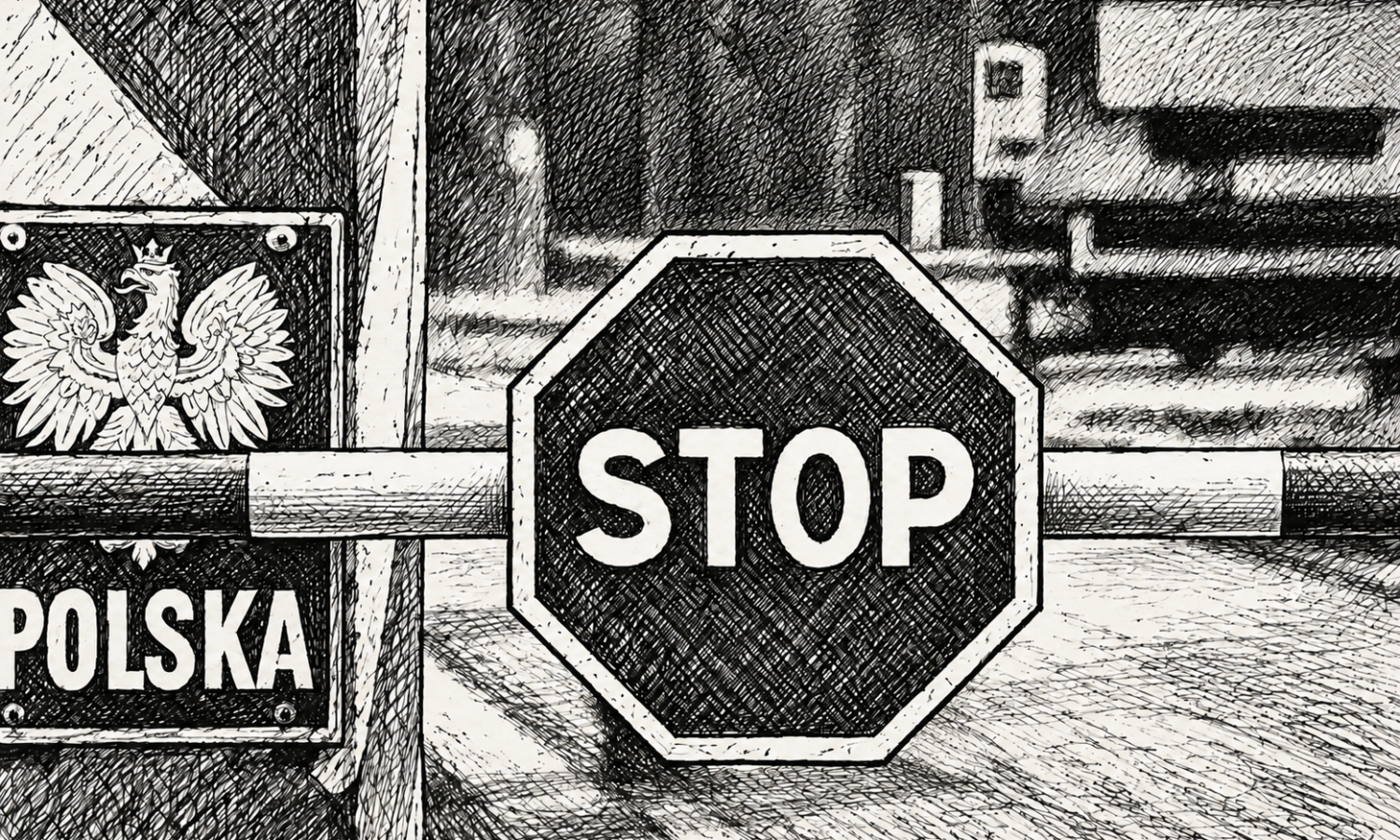
Krawczyk believes various methods could be used to achieve these goals. For example, the port of Gdansk could be opened to Belarusian potash. It would also be worth considering whether to allow “groups that openly and unequivocally declare their intention to overthrow the government of Belarus to operate in the territory of the European Union.” It is perfectly clear whose garden this stone was thrown into. And in general, does Poland need to take “direct part in Belarusian politics”?
There is a strong sense of déjà vu: once again, neighboring countries are being pushed to embark on yet another round — by now, it is hard to keep count of which one — of attempts to appease the Belarusian regime. And to turn it toward themselves, with its back — or at least its side — to Russia.
Piotr Krawczyk resigned in August 2022. Nor was he a specialist on Belarus or Russia during his time in office. Therefore, there are doubts that the opinion of the former head of Poland’s intelligence service fully reflects the position of the current Polish government on Belarus. Nevertheless, it is of interest when viewed alongside the parallel processes underway.
Forgotten Old Ideas
Meanwhile, the Belarusian regime has begun actively reviving the once-forgotten concept of former Foreign Minister Uladzimir Makei, the essence of which was as follows: the West should understand the Belarusian regime’s position, extend a helping hand to it and thereby help preserve the balance in relations with Russia, which is seeking to absorb Belarus.
Polish Foreign Minister Radosław Sikorski, who recently met with his Belarusian counterpart Maksim Ryzhankou in New York, said that “Belarusians are very concerned about the possibility of being drawn into the war.” At the same time, Sikorski did not say directly that he had heard these concerns from Ryzhankou himself. But since the Polish minister made the statement shortly after the meeting, it is reasonable to assume that the Belarusian Foreign Ministry has once again adopted the strategy of the mid-2010s. And it has begun convincing the world of how Lukashenka is seeking a balance.
This is also consistent with a series of remarkably synchronized articles in Western media about the importance of reducing Belarus’s growing dependence on Russia. For example, an article by Balázs Jarábik with the telling headline “Belarus Wants More From the West Than a ‘Massive Deal’ on Potash.’”
And then there is Aliaksandr Lukashenka himself, so passionately assuring Russian governors and officials that he will never betray Russia that an outside observer is bound to become suspicious — something seems off here. Could the Belarusian politician really be planning to distance himself from the Kremlin in some way?
It looks very much like a deliberate, large-scale information campaign. And once again, there seem to be people willing to fall for this tired old story. And now the United States is adding fuel to the fire with its policy of warming relations with Minsk.
The Potash Sticking Point
At the initiative of US President Donald Trump, who lifted sanctions on Belarus’s potash industry, the issue of transit for this key component of Belarusian exports has moved to the forefront. European sanctions restricting transportation remain in place. The Baltic ports are still closed. Shipments are going through Russia — in particular, the vessel carrying a shipment of Belarusian potash bound for the US was loaded in Bronka.
Potash shipments are of interest to many players. The US reportedly asked Lithuania, Poland and Ukraine to lift sanctions on Belarusian potash. Trump’s special envoy John Coale discussed transit through the Baltic states with representatives of the Lithuanian and Latvian authorities. Piotr Krawczyk also calls the US the “main driving force” behind the “normalization of relations between Belarus and Western countries.”
At this stage, it appears that the interests of Minsk and Washington have partially coincided. Naturally, other lobbyists have also joined in, not only politicians but also business representatives. And some European politicians, perhaps less familiar with the Belarusian regime after years of dealing with it, are ready to buy Makei’s concept once again, along with a slight update — the accompanying “dead horse.”
The “horse” in this case is supposedly a guarantee that the Belarusian regime will not risk escalating tensions with its EU neighbors. It is “dead” because Minsk actually has little control over this issue. Lukashenka is not seeking confrontation anyway, so he is selling something that will not happen if it is up to him. On the other hand, if Russia were to decide to escalate, no one would ask Lukashenka, regardless of what individual officials might think about it.
But Minsk apparently decided that the time-tested concept of Makei would be much easier to sell together with the horse’s corpse.
Potash is merely what is visible on the surface. Minsk would like to bargain over more important issues as well. Ideally, it would like to achieve more — for example, the expulsion of Belarusian pro-democracy forces. For the regime, so to speak, that is the maximum objective.
The Overton Window
Another notable aspect of this story is that Moscow may also be watching with interest the successes of its junior ally in warming relations with the West. It may even give the green light to certain reciprocal steps on its part. Because this is how previously taboo ideas and actions become normalized.
For example, discussing the suppression of the 2020 protests, Piotr Krawczyk says: “The blood spilled in Belarus became a dam erected in relations between President Lukashenka and the West.” But what has changed since then? Why was it unacceptable then but acceptable now? Has the blood dried and stopped drawing attention?
The war in Ukraine has also become a wall separating Vladimir Putin and his accomplices from the civilized world. But following the same logic, is it there forever? Or will the sea of Ukrainian blood eventually cease to be an obstacle to the resumption of mutually beneficial deals? If sanctions can be lifted for Belarusian potash, why could the next step not be to lift some sanctions on Russia itself? In exchange, Putin promises to release his political prisoners, whose fate the same Coale is prepared to address. Or he promises not to strike Ukrainian schools with missiles. Would that already turn him into someone acceptable to deal with, almost a respectable person? And, naturally, the Kremlin is also annoyed by its political opponents abroad. It would be good to silence them too.
These are the processes we are witnessing now. What was considered unacceptable just two or three years ago is gradually being introduced into the discourse. But since then, the boundaries have somehow imperceptibly shifted. Now even Lukashenka can be sympathized with — how is the poor man doing under Russian pressure? In reality, he has never truly sought to break free from it, apart from periodically selling dead horses to the West whenever relations with the Kremlin deteriorate. The process has never been reversed once it became advantageous for the politician.
Under the scheme now being implemented, Lukashenka may be assigned the role of “bait,” with Moscow using his example to test what the “big Western fish” is ready to bite on, and how soon. Various lobbyists are helping it along.
Sanctions are not an end in themselves but a tool. Ideally, their removal should be conditioned not on some mythical “distancing from Russia,” but on concrete steps by the Belarusian regime. First the steps, and only then everything else. But lobbyists are not sitting idle. The question is how far those making the decisions are prepared to go along with them.
***
The opinions and assessments of the author may not coincide with those of the Reform.news editorial board.