
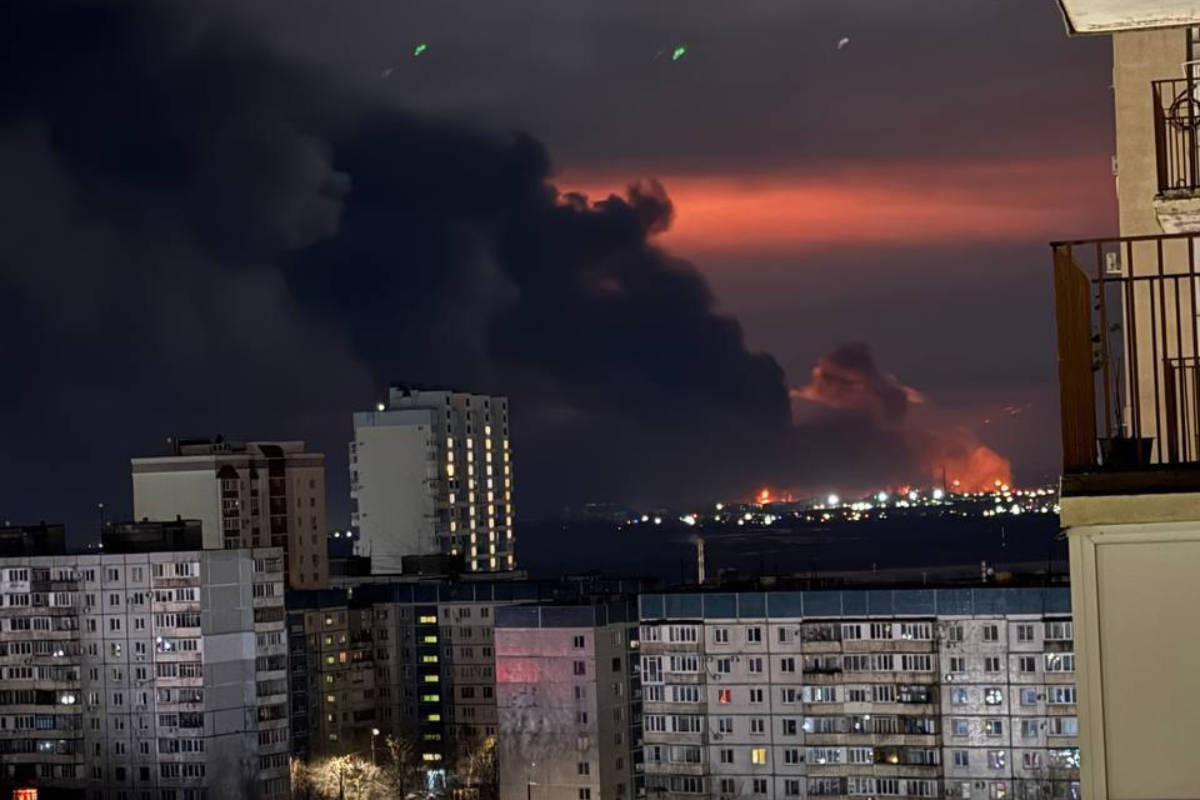

NYT: Ukraine Has Struck 40 Russian Oil and Military-Industrial Facilities in 50 Days
Reform.news Editorial Team · 28 November 2026, 17:59
https://reform.news/en/nyt-ukraine-has-struck-40-russian-oil-and-military-industrial-facilities-in-50-days/Ukraine has significantly expanded the geographical reach and intensity of its long-range strikes against Russian military and industrial targets in an effort to deprive Moscow of the resources needed to continue the war. Over 50 days, Ukrainian forces struck 40 facilities in Russia’s oil industry and military-industrial complex, The New York Times reports.
Kyiv is continuing the campaign despite criticism from the administration of Donald Trump, the article notes.
“Ukraine has been accelerating a deep-strike campaign that now stretches more than 1,500 miles and spans at least five seas, aiming to sever the networks that keep Moscow’s war machine fueled, armed and financed. In doing so, Kyiv is turning Russia’s immense geographic scale and far-flung military and economic assets into a liability,” the outlet writes.
Ukraine is also expanding operations against Russian military targets outside Russia. Last week, Ukrainian drones attacked the Russian military transport vessel Sparta II in the Gulf of Finland. In addition, the Russian warship Merkuriy was sunk in the Libyan port of Benghazi, and a cargo ship that was carrying weapons, according to Ukrainian President Volodymyr Zelenskyy, was hit.
Zelenskyy described strikes against Russian military targets anywhere in the world as an exercise of Ukraine’s sovereign right to self-defence.
Russia’s oil industry remains one of the main targets of Ukraine’s campaign. According to the International Energy Agency, Russian oil refining has fallen by about 30% compared with the same period last year. Gasoline production has dropped by 20%, while diesel output has declined by almost 30%. Against this backdrop, Moscow has restricted fuel exports to secure supplies for the domestic market.
Ukraine is also striking companies involved in weapons production and facilities used in Russian missile attacks. In addition, Ukrainian operations are forcing Moscow to redeploy air defence systems from the front line and commit additional naval forces to protecting its vessels, the authors note.
Kyrylo Budanov, head of Ukraine’s Presidential Office, acknowledges that long-range strikes alone cannot win the war. However, he says, each target hit means repairs are needed, production volumes are lost, logistics must be reorganised and Russia incurs additional costs.
Elbridge Colby, US Deputy Secretary of Defense, said that long-range strikes do not contribute to ending the war. Germany’s and the United Kingdom’s defence ministers, Boris Pistorius and Wes Streeting, disagreed with his assessment. European countries reacted more cautiously to Ukrainian operations in the Baltic and Mediterranean seas. After Ukrainian drones attacked Russian ships in a Libyan port, Italian Prime Minister Giorgia Meloni said the war must not spread to the Mediterranean. Zelenskyy subsequently confirmed that the operation had been carried out without prior coordination with European partners.
“Kyiv’s expanding reach is powered by the rapid growth of its domestic defense industry. Those capabilities have evolved from retrofitting commercial drones to building jet-powered strike systems and heavy cruise missiles capable of carrying a one-ton payload more than 1,800 miles. Ukraine is also racing to produce its own ballistic missiles,” the NYT writes.
“The increase in domestic output has been paired with joint production agreements with Germany for reconnaissance drones and with Britain to build more than 1,000 long-range strike drones. The push is intended to sustain Ukraine’s deep-strike capacity regardless of political shifts in Washington,” the authors conclude.