
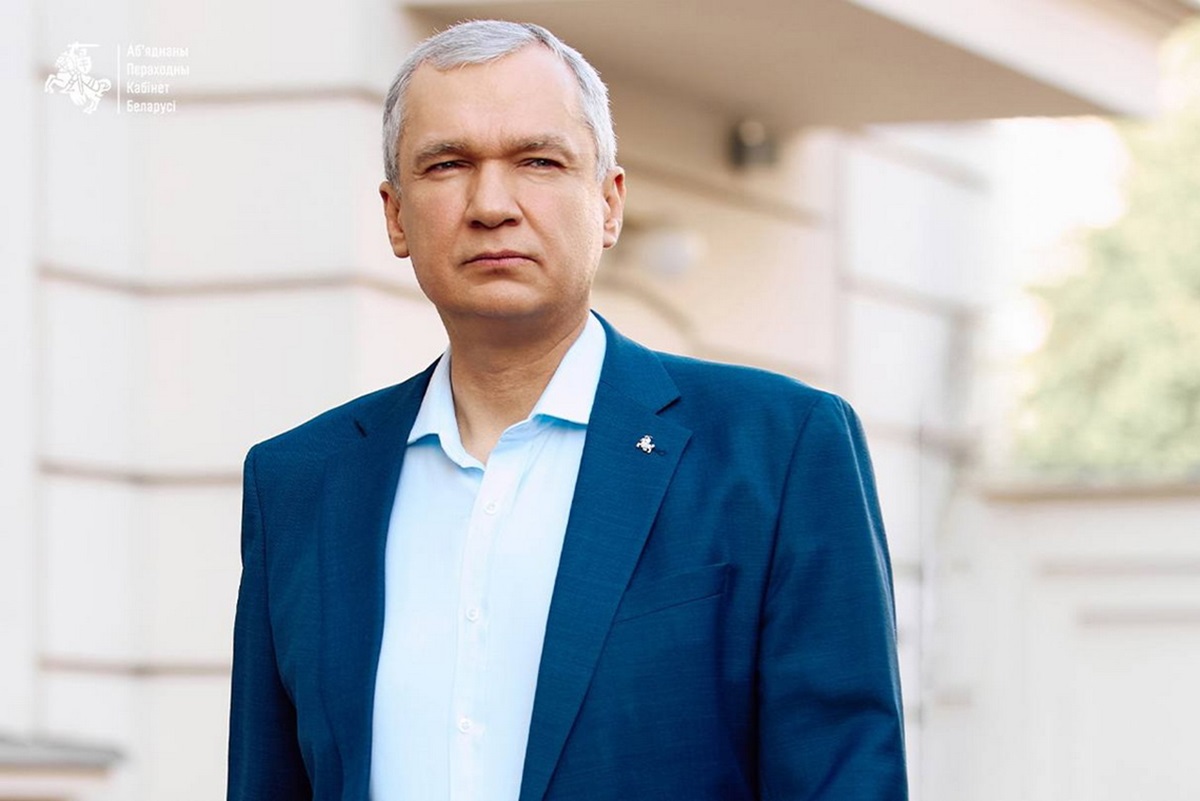

Latushka: We Are Working to Establish a Judicial Precedent in Poland Similar to the Harauski Case in Switzerland
Reform.news Editorial Team · 29 October 2026, 15:53
https://reform.news/en/latushka-we-are-working-to-establish-a-judicial-precedent-in-poland-similar-to-the-harauski-case-in-switzerland/The National Anti-Crisis Management (NAM) is working to establish a judicial precedent in Poland similar to the case of Yuri Harauski, a former member of Belarus’s SOBR special police unit.
As a reminder, the Cantonal Court of St. Gallen overturned a 2023 acquittal on appeal and found Harauski guilty of the enforced disappearance of businessman Anatoly Krasouski in 1999, sentencing him to two years in prison, suspended. Harauski was acquitted in the cases concerning the disappearance of Yury Zakharanka and Viktar Hanchar.
As the United Transitional Cabinet noted, the ruling set an important precedent for the application of universal jurisdiction in cases involving crimes linked to political repression in Belarus.
According to NAM head Pavel Latushka, it is important for other countries to follow the positive example of applying universal jurisdiction.
“Unfortunately, today we can fully count on this mechanism being used in only a few European countries. Nevertheless, the National Anti-Crisis Management continues its efforts to secure the first successful case of this kind in Poland, and we hope that the verdict against Harauski will encourage Polish courts to apply universal jurisdiction,” he said.
The Harauski case was heard under Article 185bis of the Swiss Criminal Code, which establishes liability for enforced disappearance. This provision was introduced into Swiss law as part of the implementation of the International Convention for the Protection of All Persons from Enforced Disappearance.
“Enforced disappearance is not simply kidnapping. Both Article 185bis of the Swiss Criminal Code and Article 2 of the Convention require a state element to the crime: a person must be deprived of their liberty by state agents or by persons acting with the state’s authorisation, support or acquiescence, followed by a refusal to acknowledge the deprivation of liberty or the concealment of information about the missing person’s fate or whereabouts,” Latushka stressed.
According to him, Harauski’s conviction is significant not only for establishing the responsibility of the direct perpetrator. The application of Article 185bis means that the court established the elements of the crime specified in that provision, including the link between the incident and Belarusian state structures.
“This creates an important basis for further investigation into the role of other representatives of the Belarusian authorities, including those who organised the crime and those who issued the orders,” the politician said.
Latushka noted that, for the families of the missing, the ruling represented a step towards justice after 27 years of fighting for the truth. He said justice would remain incomplete until the fate of their loved ones was established and all those responsible were held accountable.
“Justice must not be limited to holding the direct perpetrator accountable. The entire chain of responsibility must be established, including those who planned and organised the crimes, issued the orders and ensured that the fate of the missing remained concealed,” he said.
Latushka also thanked the human rights organisations TRIAL International, FIDH and Viasna, whose work made this outcome possible.