
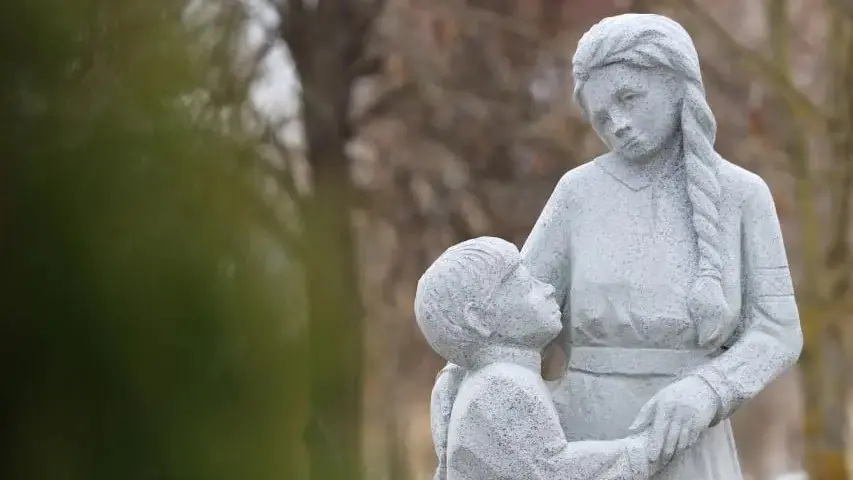

“Anatomy of a Scandal”: How the “Woman-Mother” Sculpture in Bykhau Became a Grassroots Protest Against Cultural Impotence
Reform.news Editorial Team · 11 November 2026, 16:02
https://reform.news/en/anatomy-of-a-scandal-how-the-woman-mother-sculpture-in-bykhau-became-a-grassroots-protest-against-cultural-impotence/Over the past few months, Mahiliou Region has experienced a “monument boom”. Three new works by the same artist have become the talk of the town, sparking a wave of discussion on social media. However, the scandal surrounding the “Woman-Mother” sculpture in Bykhau, with its unnaturally twisted neck, is not dying down. Instead, it has evolved into a serious public demand for aesthetics and respect. We take a closer look at the timeline of events, the bureaucratic promises to “file down the neck” and how a woman from Minsk announced a search for an investor to fund a new monument.
What Happened? (A Monumental Trilogy: The Timeline)
In a short period of time, Mahiliou sculptor Aliaksandr Minkou (a graduate of the Faculty of Arts and Graphics at Vitsyebsk University and a member of the Belarusian Union of Artists) presented three works in different districts of the region to mark regional and national commemorative dates:
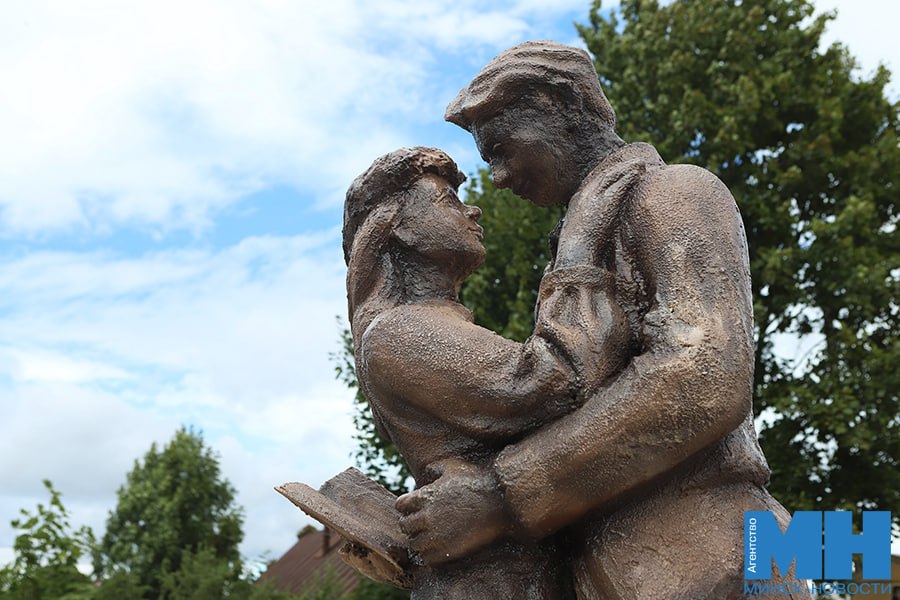
In September, a sculptural composition titled “Ales and Alesia” appeared in Kastsiukovichy to mark the Day of Belarusian Written Language. It immediately prompted comments on social media: “The idea is beautiful, but the execution is terrible.”
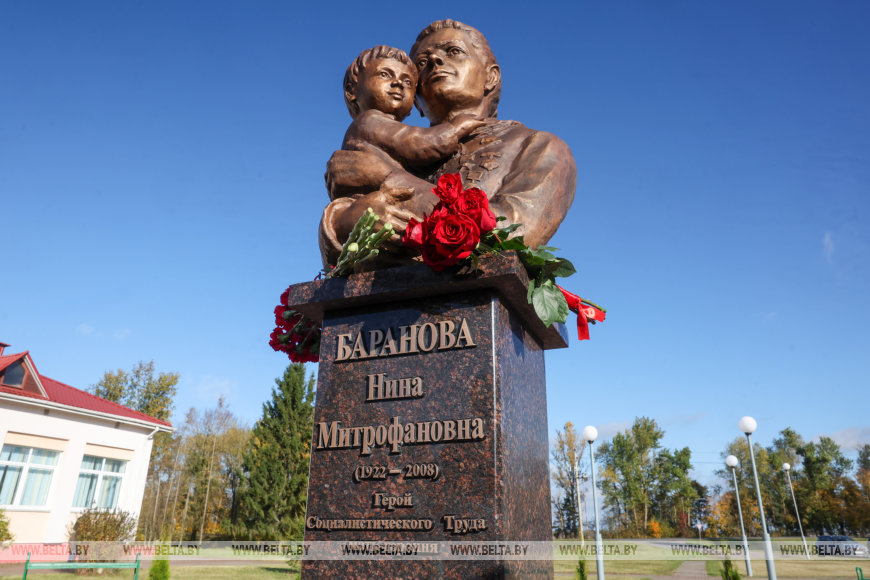
October, Shklou District — a bronze bust titled “Woman, Worker, Mother”, standing more than 2.5 metres tall.
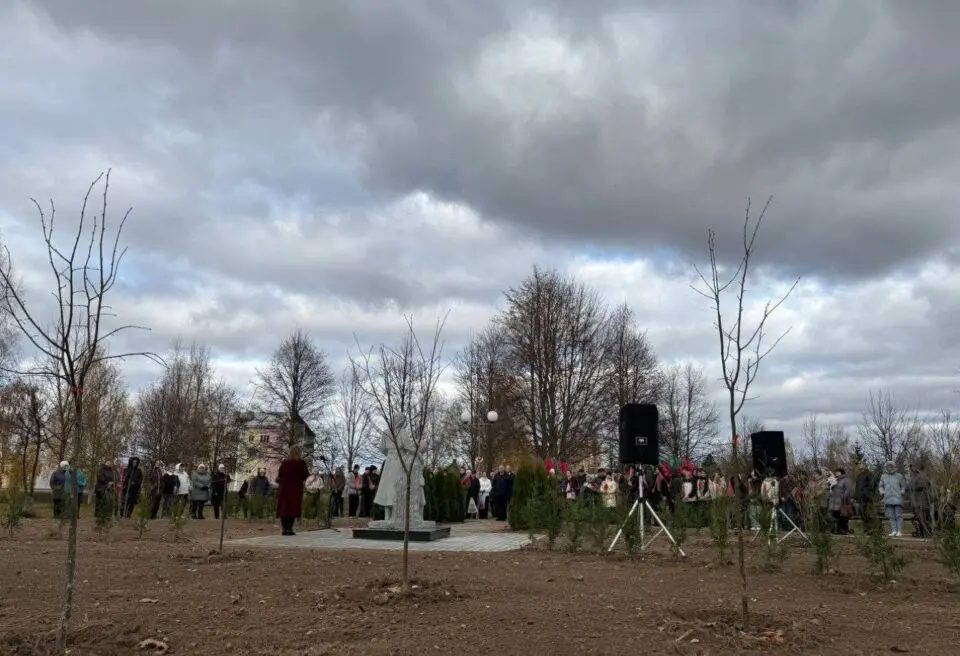
And in November, the series reached its finale in Bykhau with “Woman-Mother”, carved from a single block of stone to mark the Year of the Belarusian Woman. The woman ended up with an unnaturally twisted neck and a distorted face, while the boy at her feet raised numerous questions about the workmanship.
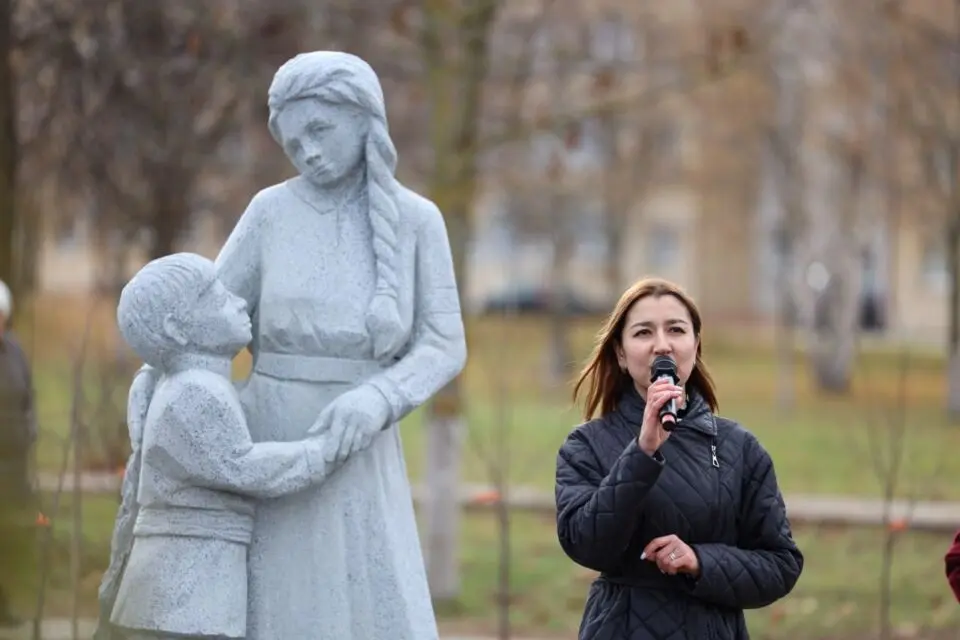
Authorities Respond: “File Down the Neck” and “An Unfortunate Camera Angle”
When photographs from Bykhau went viral, the Bykhau District Executive Committee initially blamed “unfortunate photographs taken from the wrong angle”. Later, however, officials formally promised that the shortcomings would be addressed by the end of the week: the artist would simply “file down the neck” on site and remove the unwanted effects.
Aliaksandr Minkou himself was outraged by the negative reaction and responded emotionally to his critics: “I gave the town a gift. I spent a month working with a sledgehammer and chisel for nothing, and now people are dragging my name through the mud. Try doing it yourselves!”
A New Phase: Demand for Respect and Search for an Alternative Investor
However, the problem turned out to be much deeper than an anatomical mistake. A Threads post by Minsk resident Volha Shut received nearly 100,000 views and sparked a wave of discussion about how women are portrayed in contemporary Belarus:
“It’s not about the camera angle or the tilt of the cheek. It’s about total spiritual poverty and falseness. Why are they so determined to portray us as miserable, faceless peasant women from pre-revolutionary popular prints? This is not a tribute to tradition. It is cultural impotence and an inability to understand the image of a modern woman. Straightening the neck will not turn this monument into a work of art. It will remain a symbol of provincial absurdity,” Volha said.
Seeing the enormous public demand for better aesthetics, the Minsk woman announced that she was looking for a patron, developer or business partner to establish a prize fund for the country’s best artists and install a unique, contemporary artwork dedicated to the “Woman-Mother”.
The Main Diagnosis
This illustrates the point made by cultural scholar Yulia Charniauskaya, who commented on the scandal and analysed Belarusian society’s indulgence towards mediocrity and its habit of mistaking shoddy work for “effort”:
“All my life I have seen these good Belarusians. They give standing ovations to any shameful performance, any talentless concert. Well, people put in the effort, didn’t they? So we have to stand up and applaud… We have grown accustomed to being satisfied with the fact that ‘people tried’, that ‘the person is good and worked for free’. We have blurred, grotesquely blurred, the distinction between talent and lack of talent. We have lost our taste… And this complacency with mediocrity is a serious symptom, not only in art but in life as well.”
Yulia Charniauskaya also points out that this erosion of taste has accelerated recently, as talented sculptors and artists have left the country, while those who remain are forced by repression to create “for the drawer”. As a result, the art scene is increasingly occupied by creators willing to work for next to nothing, on tight deadlines and with whatever cheap materials are available, without necessarily having a proper education in sculpture.
“Woman-Mother” is the result of a cultural policy in which all artistic hierarchies have been dismantled, leaving bureaucracy and indifference in charge. The most interesting thing is that this grassroots revolt could produce an equally “striking” result if the creator of the new sculpture finds themselves under pressure from the demands of the public rather than ideological requirements. And, as we know, every consumer of culture has their own preferences.