
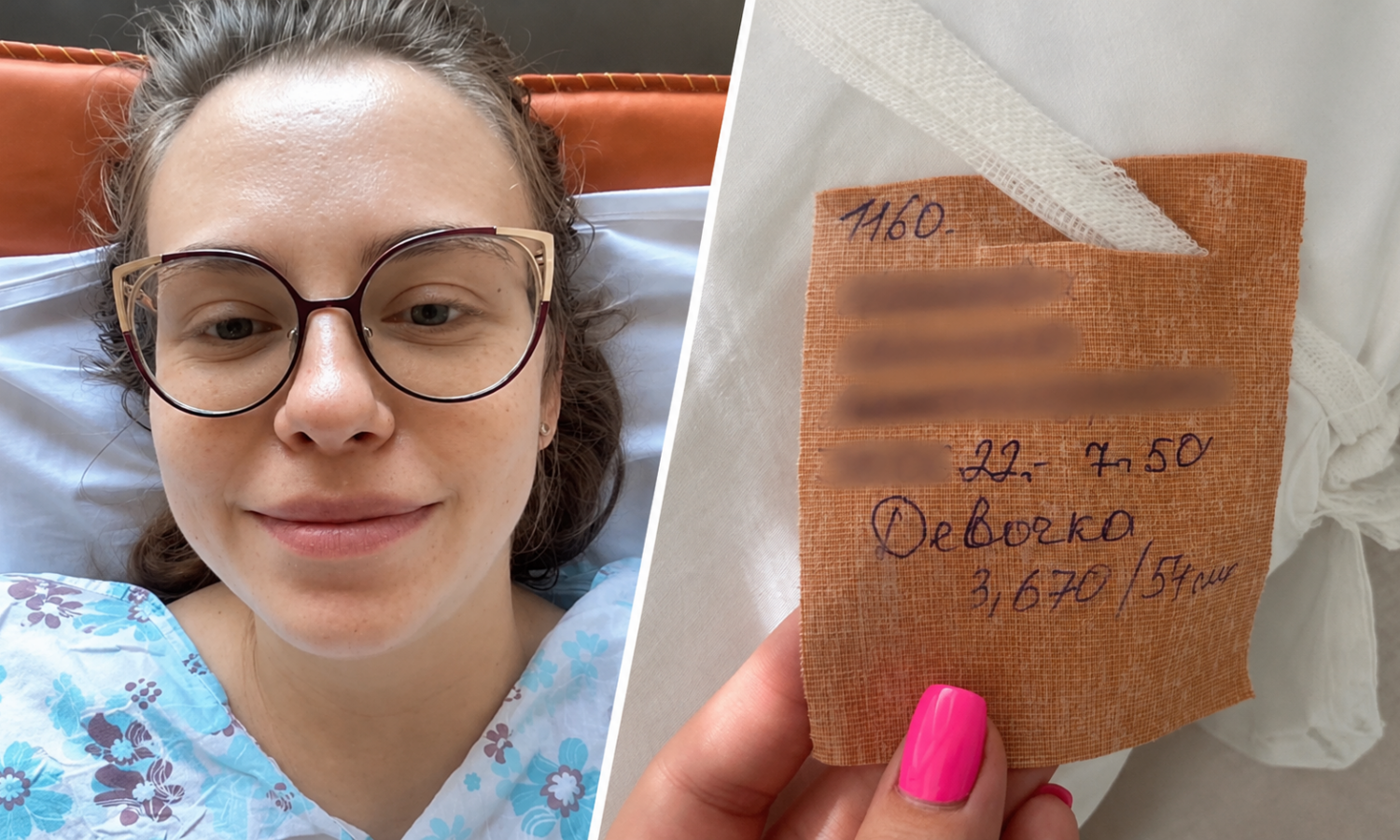

“PTSD and the Risk of Infertility.” Four Years Later, a Woman From Homiel Describes Her Childbirth Experience and Its Aftermath
Reform.news Editorial Team · 28 November 2026, 16:39
https://reform.news/en/ptsd-and-the-risk-of-infertility-four-years-later-a-woman-from-homiel-describes-her-childbirth-experience-and-its-aftermath/Two days of painful contractions that were dismissed as false labour, procedures performed without explanation and emergency uterine curettage: a 29-year-old woman from Homiel has shared her childbirth experience. She says she now faces treatment for PTSD and uterine adhesions that could lead to infertility.
The woman was admitted to the pathology department at 40 weeks and one day of pregnancy. After the first examination, she began experiencing bloody discharge.
“The doctor said my cervix was ‘like a rock’ and performed such an aggressive examination that I started bleeding slightly and felt a pulling sensation in my abdomen afterwards,” the author writes.
On the second and third days, the contractions became regular and very painful. But her cervix remained unchanged, and, according to the woman, medical staff continued to regard the contractions as false labour. She says she was given papaverine and analgin injections to relieve spasms and pain, although she notes that these medications do not even help her during menstruation.
“By the night of the third day, I was so exhausted that I could no longer breathe properly during a contraction. My whole body would tense up from the pain. Contractions came every five to seven minutes. I was ASHAMED to go to the nurse again and bother her with my ‘false labour.’ I spent about an hour sitting in the corridor at night so I wouldn’t wake the other women in the ward with my quiet screams.”
Throughout this time, the woman was trying to gather the courage to ask the nurse for stronger pain relief. Eventually, she began “simply passing out” between contractions. By the time she was transferred to the delivery room, she had gone two days without sleep because of the pain and had no strength left for labour. She says her waters were broken, a cardiotocography (CTG) monitor was attached, and she was left to endure the contractions lying on her back.

“I was nauseous and vomiting from the pain. I still remember those few hours only in fragments,” she writes.
After three to four hours without her waters being broken, a doctor suggested administering oxytocin along with pain relief because the cervix was dilating slowly.
“And I agreed. At that point, all I wanted was for the pain to stop, at least a little.”
After receiving pain relief, the woman was able to breathe normally and stop tensing up. Between contractions, she simply fell asleep. During the pushing stage, she says, medical staff began pressing on her abdomen, but she demanded that they stop and explain how she should push.
“Throughout all those days, I had been unable to stand up for myself. But at that moment, I was able to stand up for my daughter,” she recalls.
After the explanation, the birth proceeded easily, according to the woman. However, she says her perineum was still cut without any prior discussion, and the placenta was manually removed without asking for her consent.
An ultrasound on the fifth day after delivery showed that membranes remained in the uterus, and the woman was told to prepare for a scheduled uterine evacuation. But after an examination with a speculum, bleeding began “right along the fresh stitches from the episiotomy.”
“Even when I started leaving a trail of blood along the corridor, I didn’t immediately realise that something terrible was happening. I was ashamed that I was getting blood on the floor.”
According to the woman, the curettage had to be performed as an emergency procedure, with virtually no anaesthesia:
“They started giving me whatever pain relief they had at hand. They injected something intramuscularly. I wasn’t screaming; I was moaning in pain. At one point, I asked the nurse: ‘Am I moaning too loudly? Am I complaining too much?’ Even then, I didn’t realise how dangerous the bleeding was.”
The woman said she remains grateful to the doctor and midwife who saved her life. She has no such gratitude for the medical staff who attended her delivery:
“They broke me. My body remembers. It is still tense.”
The woman says she is still dealing with the consequences of the birth: painful, heavy periods with blood clots and intrauterine synechiae (adhesions).
“I’m only 29. And, God, how upsetting it is that after all these years, this story still isn’t over for me. Not physically, not psychologically. As a doctor, I understand perfectly well that there are situations when you cannot wait. But if there were medical indications for any of these procedures, they should have been explained to me,” the woman writes.
Which Procedures May Have Been Medically Indicated
The editorial team cannot verify the account: the author has not provided medical records, and the medical staff have had no opportunity to respond. However, some of the procedures described are consistent with standard obstetric practice.
An examination of the cervix upon admission is routine, and bleeding can occur after such an examination at this stage of pregnancy.
Contractions without corresponding changes in the cervix may not be considered the onset of labour. However, severe pain and two days without sleep require medical attention, regardless of the diagnosis.
Medication for pain relief is prescribed by a doctor, so the midwife may not have been authorised to administer it independently.
Breaking the waters and administering oxytocin may be justified when the cervix is dilating slowly, as the author describes.
It is unclear whether there were medical indications for an episiotomy, but the author says none were explained to her.
Manual removal of the placenta is performed in cases of bleeding or when the placenta does not come out on its own, usually no sooner than 30 minutes after delivery. The author felt that it happened almost immediately, but the perception of time during labour can be unreliable. The discovery of retained membranes later may indirectly indicate that the placenta was difficult to deliver.