

Trump’s “Potash Publicity” and the Maximum Goal of the Negotiating Track With the US
Reform.news Editorial Team · 22 October 2026, 19:45
https://reform.news/en/trump-s-potash-publicity-and-the-maximum-goal-of-the-negotiating-track-with-the-us/The negotiating track with Washington is moving more slowly than official Minsk would like. It appears that the range of issues of interest to the US administration is fairly narrow. For his part, Aliaksandr Lukashenka intends to get more out of his American lobbyists. But for now, judging by all appearances, there has been no change on this front.
Everything Is Going According to Plan
Prime Minister Aliaksandr Turchyn, Prosecutor General Dzmitry Hora, KGB Chairman Ivan Tertel and Belarus’s Permanent Representative to the UN Valiantsin Rybakou, who has been tasked with conducting the negotiations, were invited to today’s meeting on the progress of talks with the US. Foreign Minister Maksim Ryzhankou also attended such a meeting for the first time.
Judging by Lukashenka’s remarks, the meeting was part of the regular schedule. As the politician noted, it had been decided to hold it “a little over a month ago, during the last talks with the American delegation.” He was apparently referring to the September visit to Minsk by US presidential special envoy John Coale. In other words, today’s meeting was in no way connected with negotiations to end the Russian-Ukrainian war or Russian President Vladimir Putin’s contacts with Donald Trump’s special envoy, Steve Witkoff, in St. Petersburg. The discussions focused specifically on the Belarus-US negotiating track.
“Progress on Many Issues”
Aliaksandr Lukashenka praised the US at the meeting. “I must say that the US administration has a lot on its plate today. But I greatly appreciate the attention that Donald Trump and his team are paying to our contacts. There has been progress on many issues,” the politician said.
As for concrete results, there have been few.
The money frozen at Citibank, the return of which Lukashenka had demanded, has still not been returned to Belarus.
Another noteworthy detail was the presence of Foreign Minister Maksim Ryzhankou at the meeting with Lukashenka. He had not previously taken part in similar meetings. During the meeting, the politician also mentioned “issues related to embassies.” This suggests that the resumption of embassy operations is at least under discussion. The process may even be close to completion. As a result, the Foreign Ministry, which is directly responsible for organizing their work, has become indispensable.
“All the issues that were identified are being resolved,” said Valiantsin Rybakou, who oversees the US negotiating track.
However, according to Rybakou, in the month since Coale’s visit, only one issue has been fully resolved: personal sanctions have been lifted against the head of Belaruskali. On Wednesday, the US Treasury Department’s Office of Foreign Assets Control (OFAC) removed Andrei Rybakou, CEO of Belaruskali, from the Specially Designated Nationals (SDN) list.
The Overlooked Rybakou
The thing is, however, that lifting sanctions on the CEO of Belaruskali is primarily in the interests of the United States itself.
Someone in Washington has probably managed to “sell” Trump on the idea that supplies of “cheap Belarusian potash” would boost his popularity among American voters — farmers — amid the trade tariff dispute with Canada, one of the key suppliers of potash fertilizers to the US. Winning over voters has become even more important for Trump ahead of the midterm elections, which are crucial for the Republican Party. This is much the same as the “diesel deal” with the Kremlin, which analysts believe will have virtually no impact on reducing fuel prices. As a PR move, however, it could pay dividends for Trump among voters who are not well-versed in economic issues.
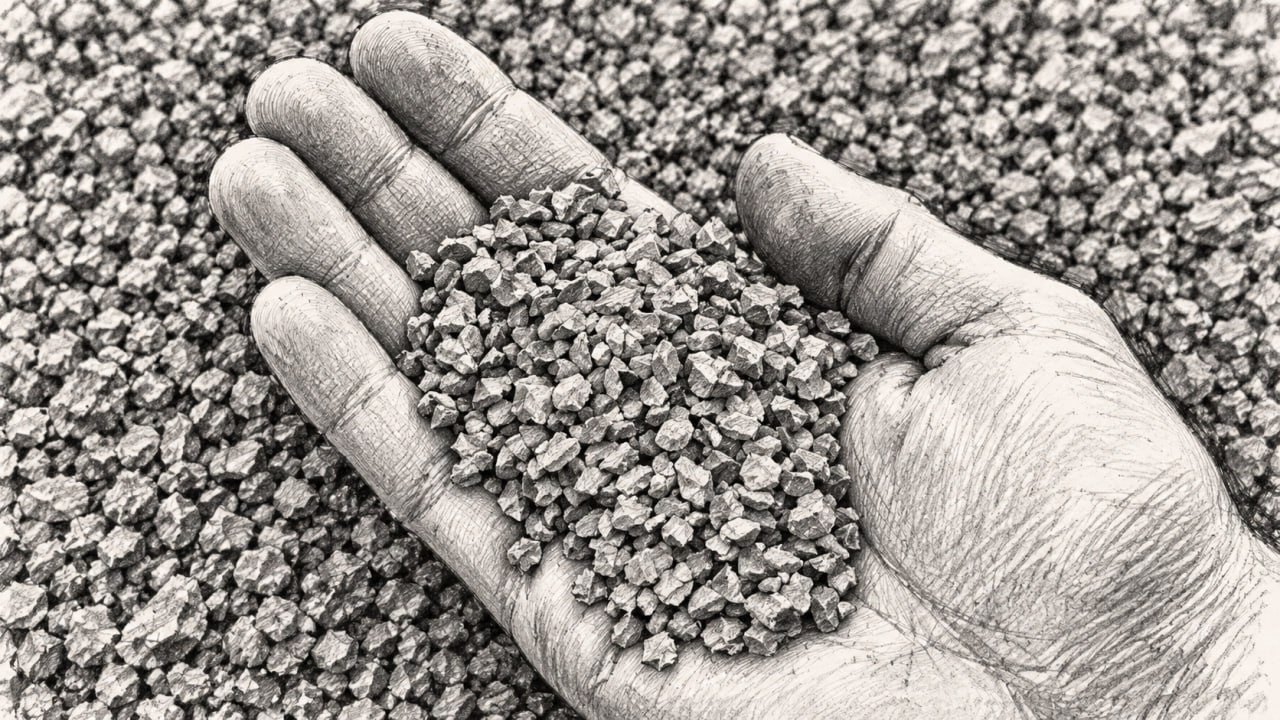
According to Valiantsin Rybakou, Belarus’s representative to the UN, the first bulk carrier carrying 30,000 tonnes of Belarusian potash fertilizers has already arrived in New Orleans. Preparations are underway to ship another batch. This is where the need to lift sanctions on Belaruskali’s CEO arose. Otherwise, who would the Americans sign a contract with? A company head who is subject to personal sanctions imposed by the US itself?
It appears that Andrei Rybakou was simply overlooked during the potash deal process. He was placed under US sanctions in August 2021, when he headed the Belneftekhim concern. At the time, Belaruskali was still run by Ivan Halavatу. Rybakou became Belaruskali’s CEO in November 2024. This fact appears to have slipped from view. When it came time to sign contracts, the problem became obvious. Washington therefore removed an obstacle to potash shipments.
The fact that the US has not lifted personal sanctions on any Belarusian officials until now also supports this interpretation. The only exception related to Belarus is Serbian businessman Nebojša Karić, who is linked to Dana Holdings Limited, a company registered in Cyprus.
Thus, the lifting of personal sanctions on Belaruskali’s CEO has nothing to do with the achievements of Belarusian negotiators.
The fact that this was the only issue resolved may reflect both the level of interest the US administration has in Lukashenka, who clearly ranks at the very bottom of a long list of priorities, and the limited influence of the Belarusian politician’s American lobbyists, who have evidently failed to move him significantly higher up that list.
Mutual Interest
All the other issues, as was stated at the meeting, remain “in the process of being resolved.” “The negotiating process is complicated,” Valiantsin Rybakou said of the US track.
According to Belarus’s permanent representative to the UN, “for a number of reasons that everyone is aware of, Belarus is of interest to the United States. This is precisely why our process of engagement continues,” Rybakou said.
During his report, Lukashenka also mentioned that the negotiating track with the US includes relations between Belarus and the European Union, as these “also concern the United States of America.”
Both statements evidently refer to potash fertilizer supplies to the US and the lifting of EU sanctions on Belarus that prohibit potash transit. The potash issue is the axis around which the Belarus-US negotiating track has revolved. Moscow has probably played a role as well. Trump needs PR, while Lukashenka is seeking to use the opportunity to gain as much as possible.
The main goal is not even being concealed. “It is no secret that the US has a special relationship with the EU. It has a certain degree of authority and the ability to influence decisions made by EU member states in a way that would benefit us,” Valiantsin Rybakou said.
But the Belarusian politician has yet to achieve his cherished goal. It is difficult to say how much pressure the US is actually putting on the EU over transit. John Coale’s attempts to discuss the issue with Europeans have been unsuccessful. Clearly, if it wanted to, the US could bring in the heavy artillery — provided, of course, that it considered this necessary. This is presumably what Lukashenka’s lobbyists in the US are trying to secure. They have already achieved some results, but these are nowhere near enough to meet the maximum goal of restoring transit.
The issue of potash transit has been and remains the main stumbling block in the US track. This is because Lukashenka has little else to offer Washington. Nor will the current “mutual interest” last forever. It is unclear how long Trump will need “potash publicity” involving the Belarusian regime.
For now, however, Minsk still hopes for success and is eagerly awaiting February 2027, when the EU sanctions on Belarusian potash are due to expire. Minsk hopes Washington will persuade the European Union not to extend the restrictions. It is unlikely that concessions can be secured any earlier. The situation will therefore probably remain unresolved until February. That winter month may well become the deadline for the Belarus-US negotiating track. If the effort fails — or, indeed, if the outcome is favorable to Lukashenka — the negotiating track will come to an end, since there is a strong likelihood that both sides will simply lose all interest in it.
A December visit to Belarus by John Coale is therefore also a possibility, as is the release of some political prisoners. Unfortunately, it is unlikely that many will be freed. They are the last bargaining chip Lukashenka will hold on to until the end as he waits to see whether American pressure on the EU delivers results.
***
The views and assessments expressed by the author may not reflect those of the Reform.news editorial team.