

Yahorau: Our Goal Is Not Short-Term Speculative Growth, but to Lay the Foundation for Decades to Come
Reform.news Editorial Team · 13 October 2026, 14:07
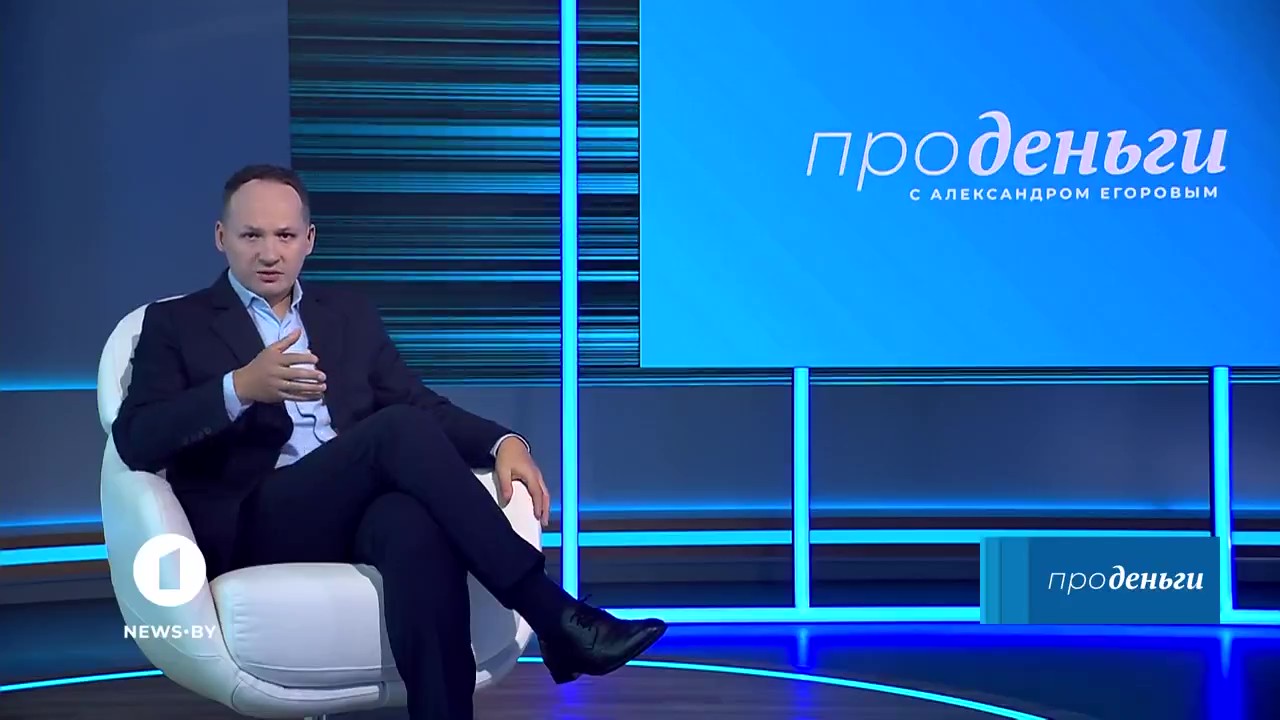
https://reform.news/en/yahorau-our-goal-is-not-short-term-speculative-growth-but-to-lay-the-foundation-for-decades-to-come/The government’s and the National Bank’s stimulus policy is not aimed at short-term speculative growth but at laying the foundation for decades to come. First Deputy Chairman of the Board of the National Bank Aliaksandr Yahorau said this in a programme on Belarusian television. According to him, Belarus has taken into account the experience of excessive focus on housing construction and the crisis 15 years ago.
“In this regard, it is necessary to objectively assess the macroeconomic risks of excessive focus on housing construction. In 2009, the country felt the effects of the global financial crisis through a decline in external demand for our goods. This also led to a reduction in budget revenues, which, in turn, required spending cuts. As a result, the budget’s share in investment financing fell from 22% to 12%. At the same time, a currency crisis occurred in 2011, leading to a surge in inflation in the country. To prevent hyperinflation, interest rates were sharply increased. Bank lending rates reached 50%. Clearly, under such conditions, taking out a loan for investment is like shooting oneself in the head for a business owner. As a result, the share of loans in investment also fell, from 27% to 9%. Thus, a procyclical policy that seems logical at first glance — cutting spending when conditions deteriorate — led to a significant decline in GDP in the following years,” he said.
According to Yahorau, the government took a very different approach in recent years.
“In 2022, when faced with unprecedented sanctions pressure, Belarus found itself at a crossroads. We could easily have repeated the old scenario: become alarmed by the external shock, switch to austerity, freeze capital expenditure and pursue a cyclical contraction in investment. Moreover, Western financial institutions — the EBRD, the World Bank and the European Investment Bank — abruptly halted financing and froze billions they had previously pledged for our projects. However, the government and the National Bank took into account the bitter experience of 2012–2015. We fundamentally changed our strategy. Instead of cutting spending, the state responded with a countercyclical investment policy,” he continued.
According to him, funding from international financial institutions was replaced with money from the Belarusian budget, whose share in investment financing increased. Investment loans were made more attractive to the real sector, and the “One District — One Project” programme was launched. Joint integration projects with Russia aimed at achieving technological sovereignty were also initiated. Now, under the new five-year plan, funds are being invested in tourism infrastructure.
“The results of this fundamentally new policy are clear. GDP growth has accelerated. Over the past three years, investment in real terms has increased by more than 50%. Moreover, over the past two years, investment lending by Belarusian banks has grown by more than 65%. Our enterprises have once again developed an appetite for long-term development and growth. This proves that sound macroeconomic conclusions can turn a crisis into a springboard for a technological leap. Our goal today is not short-term speculative growth, but to lay a foundation that will sustain the country and ensure its growth for decades to come,” Yahorau said.
It should be noted that, according to Belstat, the country’s GDP contracted by 4.7% in 2022, grew by 4.1% in 2023 and by 4.3% in 2024. However, growth slowed in 2025, with the economy expanding by just 1.3%. Belarus’s GDP contracted at the beginning of this year, but grew by 1.9% over the first eight months. Meanwhile, the GDP growth target for this year is 2.8%, while the target for next year has already been set at just 1.9%.
In his programme, Yahorau also outlined the main areas of investment.
“In the public sector, capital is being concentrated in strategic, high-return areas. Belorusneft is directing investment towards advanced oil extraction technologies and the development of a network of electric vehicle charging stations.
The Integral holding is investing substantial resources in technological re-equipment, the modernisation of clean rooms, photolithography equipment and increasing the output of microelectronic components.
In the private sector, credit resources are being channelled into technology, the food industry and deep processing of raw materials, including as part of the president’s directive concerning the Vitebsk Region. For example, Savushkin Product is systematically investing in robotic factories to produce goods with maximum added value. Another example is the Servolux agricultural holding, which is directing capital towards automated hatcheries, feed mills and poultry processing facilities.
Alongside bank lending to businesses, direct state investment in infrastructure plays a fundamentally important role. A clear example is Minsk’s practice of developing a network of technology parks using funds from the city budget. High-tech small and medium-sized enterprises can move into fully equipped facilities, bring in advanced machinery and equipment, and immediately start producing sophisticated goods,” he said.