
Cambodian National Assembly Speaker Complains to Rachkou About Thailand’s “Aggression”
Reform.news Editorial Team · 20 November 2026, 17:08
https://reform.news/en/cambodian-national-assembly-speaker-complains-to-rachkou-about-thailand-s-aggression/A Belarusian delegation led by Siarhei Rachkou heard complaints from the Cambodian side about the plight of local residents caused by “Thailand’s aggression”, Agence Kampuchea Presse reports.
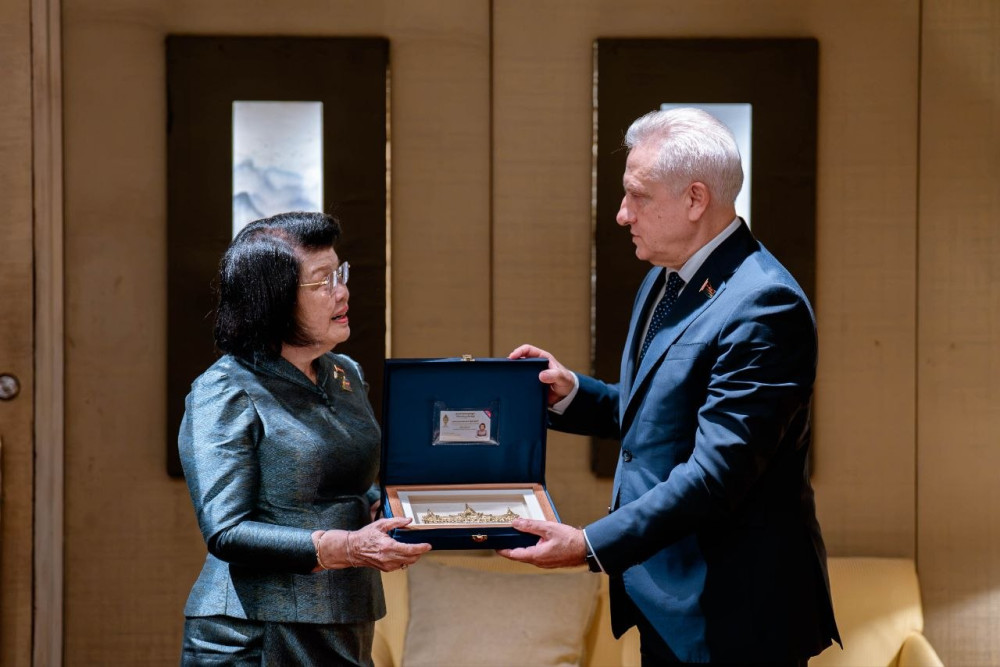
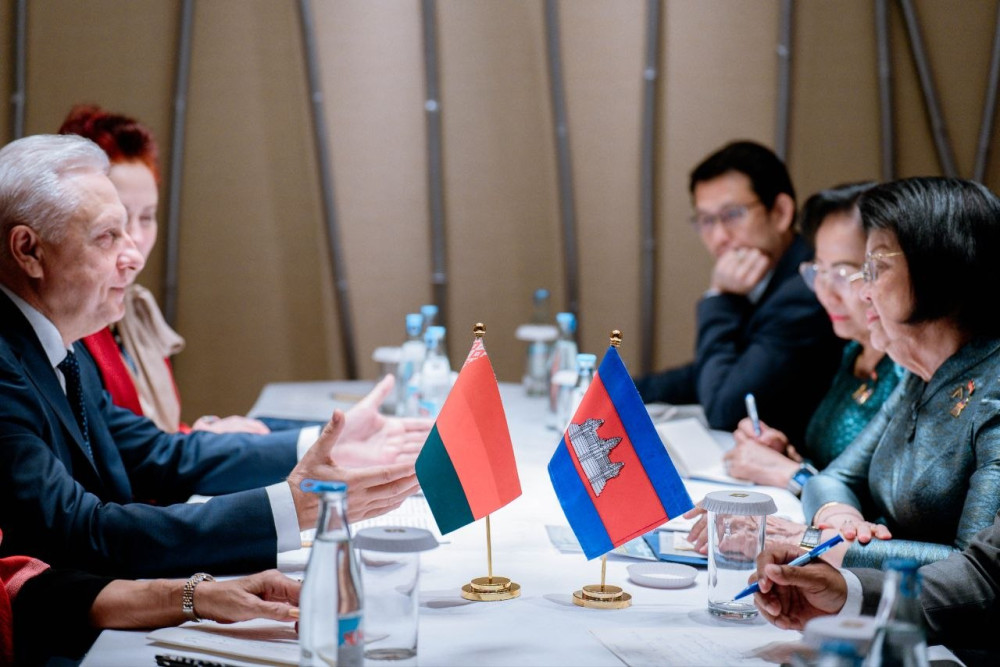
Rachkou is Chairman of the Standing Commission of the Council of the Republic of the National Assembly of Belarus. On November 19, he met with Cambodian National Assembly President Samdech Maha Rathsapheathika Thipadei Khuon Sudary on the sidelines of the 47th General Assembly of the ASEAN Inter-Parliamentary Assembly (AIPA) in the Philippines.
The parties discussed opportunities to expand bilateral cooperation, particularly by strengthening inter-parliamentary ties, developing people-to-people contacts, tourism, trade and investment.
During the meeting, Khuon Sudary also briefed the Belarusian delegation “on the actual situation faced by the Cambodian people as a result of Thailand’s aggression”.
She stressed that “due to Thailand’s violations of the ceasefire and international law, more than 20,000 Cambodians are unable to return to their homes, as Thai troops continue to illegally occupy sovereign Cambodian territory by force”.
The statement refers to the border conflict between Cambodia and Thailand, which escalated into major fighting twice, in July and December 2025. The major clashes on July 24 began near two other temples — Ta Moan Thom and Ta Krabey. Each side claimed that the other had fired first. Fighting resumed in December.
On December 27, 2025, the parties agreed to keep their troops in the positions they had held at the time the ceasefire took effect. At the same time, they stipulated that the deployment of troops did not prejudge the course of the state border and pledged to ensure the swift, safe and unhindered return of displaced residents to their homes. Bangkok cites the first condition to explain why its troops remain in place. Phnom Penh points to the other two. According to Cambodia’s Interior Ministry, as of November 18, 2026, around 20,000 people had still not returned. The ministry cited the presence of Thai troops, security threats, and the destruction of homes and infrastructure among the reasons.
What Is the Dispute About?
The border was defined in the early 20th century, when Cambodia was a French protectorate and Thailand was known as Siam. The best-known dispute concerns the ancient Khmer temple of Preah Vihear. The 1904 treaty established the border in this area along the watershed, while a map drawn up later placed the temple on the Cambodian side. In 1962, the International Court of Justice recognised Cambodia’s sovereignty over the temple. In 2013, it clarified that the ruling covered the entire promontory on which the temple stands.