
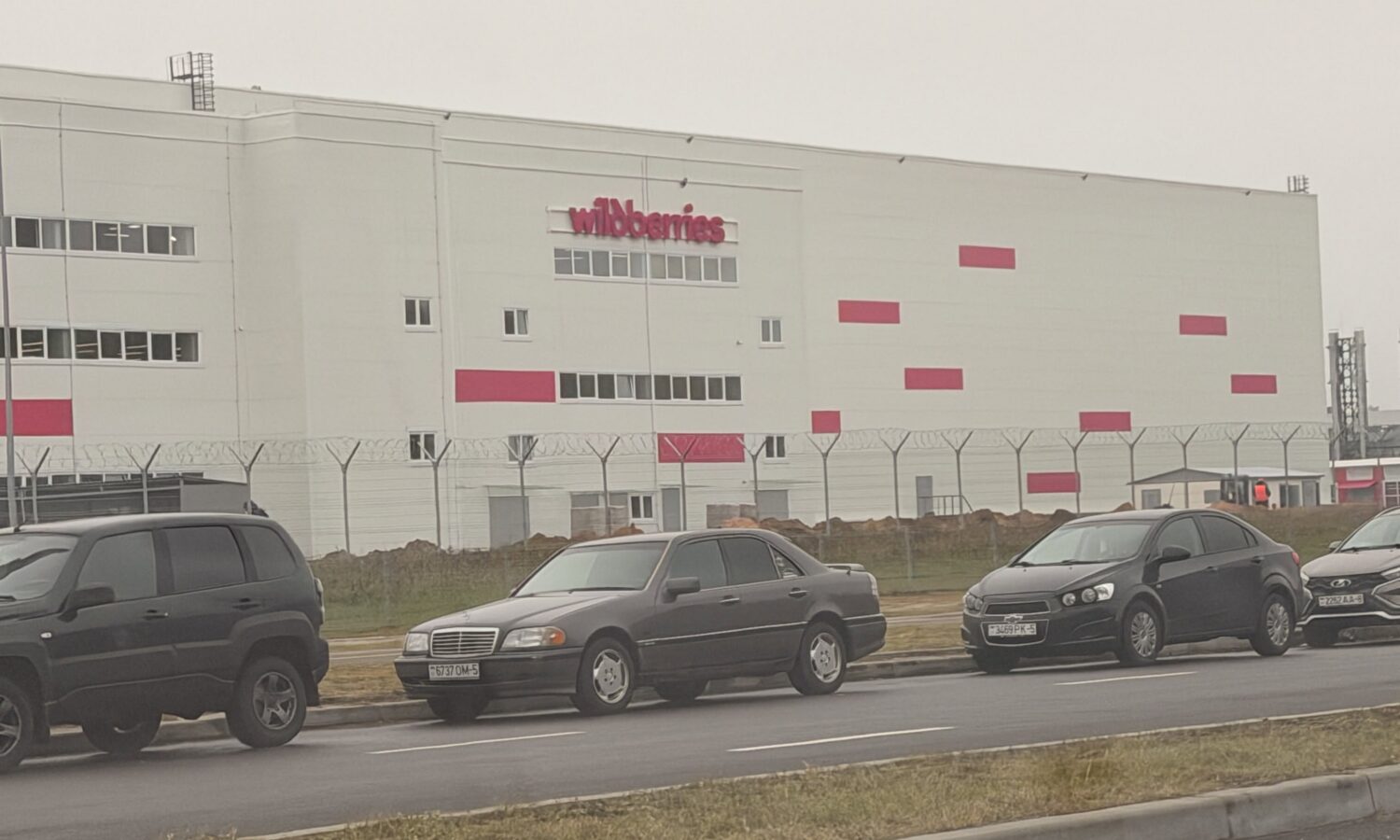

Minus 3,707 BYN In One Day: Wildberries Warehouse Worker At Great Stone Describes Fine System
Reform.news Editorial Team · 13 November 2026, 15:45
https://reform.news/en/minus-3-707-byn-in-one-day-wildberries-warehouse-worker-at-great-stone-describes-fine-system/Minsk resident Tatsiana Maslova, who has been working part-time at the Wildberries warehouse in the Great Stone industrial park for the past three months, posted screenshots of fines from the work app on her Threads account and described how the job works — the same job that has Belarusians queuing up at night. According to her, to earn at least 300 rubles, a picker has to find and collect 1,500 items from the shelves for customer orders without losing a single one. If an item goes missing, the employer deducts its full value without investigating. On November 4, for example, 3,707.85 Belarusian rubles were deducted from Tatsiana’s pay for one missing item.
At the same time, she says, the person fined may not have been the one who lost the item. It could have been any employee at one of the subsequent stages. With so many new workers currently at the warehouse, this is far from unusual.
Here is how the system works.
The first stage is receiving: items are accepted and counted. The second is putaway: workers carry items to the mezzanine — multi-level shelving — and place them in a designated bin after scanning both the item and the bin. When an item is ordered, a third worker receives the bin location on a handheld terminal, goes there and retrieves it. This is the picking stage. The order then moves on to sorting.
A fine is imposed when an item is not where the system says it should be. Its value is deducted from the pay of one of the employees who handled it. According to Tatsiana, workers at any stage can be charged. It is unclear what criteria the system uses to decide whose pay to deduct the amount from.
“You get a deduction and are told to look for the missing item yourself in the five-story mezzanine with 42 rows,” she writes.
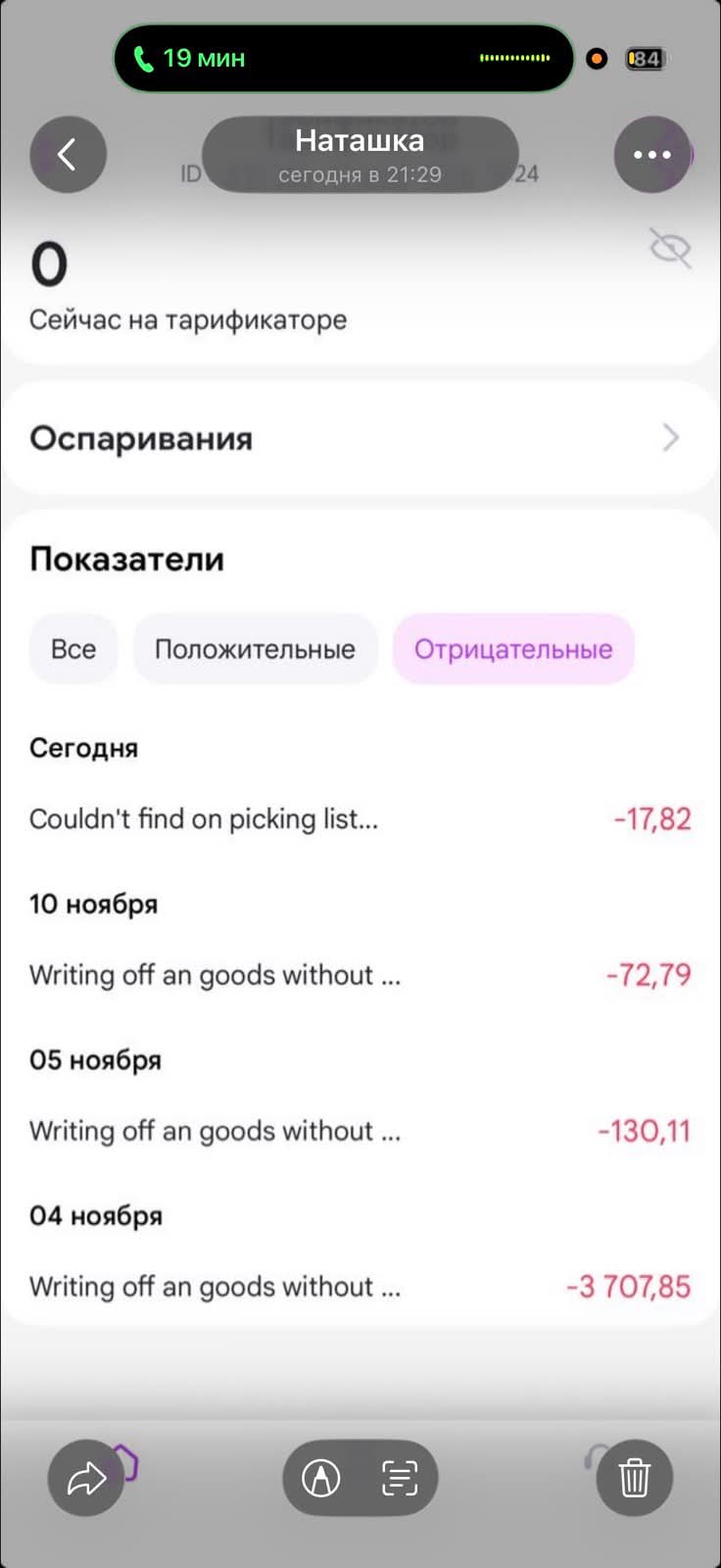
Tatsiana attached several screenshots from employee accounts to her post. One shows deductions for the first half of November in Belarusian rubles. On November 4, 3,707.85 rubles were deducted from her pay; on November 5, another 130.11 rubles; and on November 10, 72.79 rubles. All three entries are marked as deductions for the cost of goods. Another 17.82 rubles were deducted recently for an item that could not be found during picking. The total comes to 3,928.57 rubles.
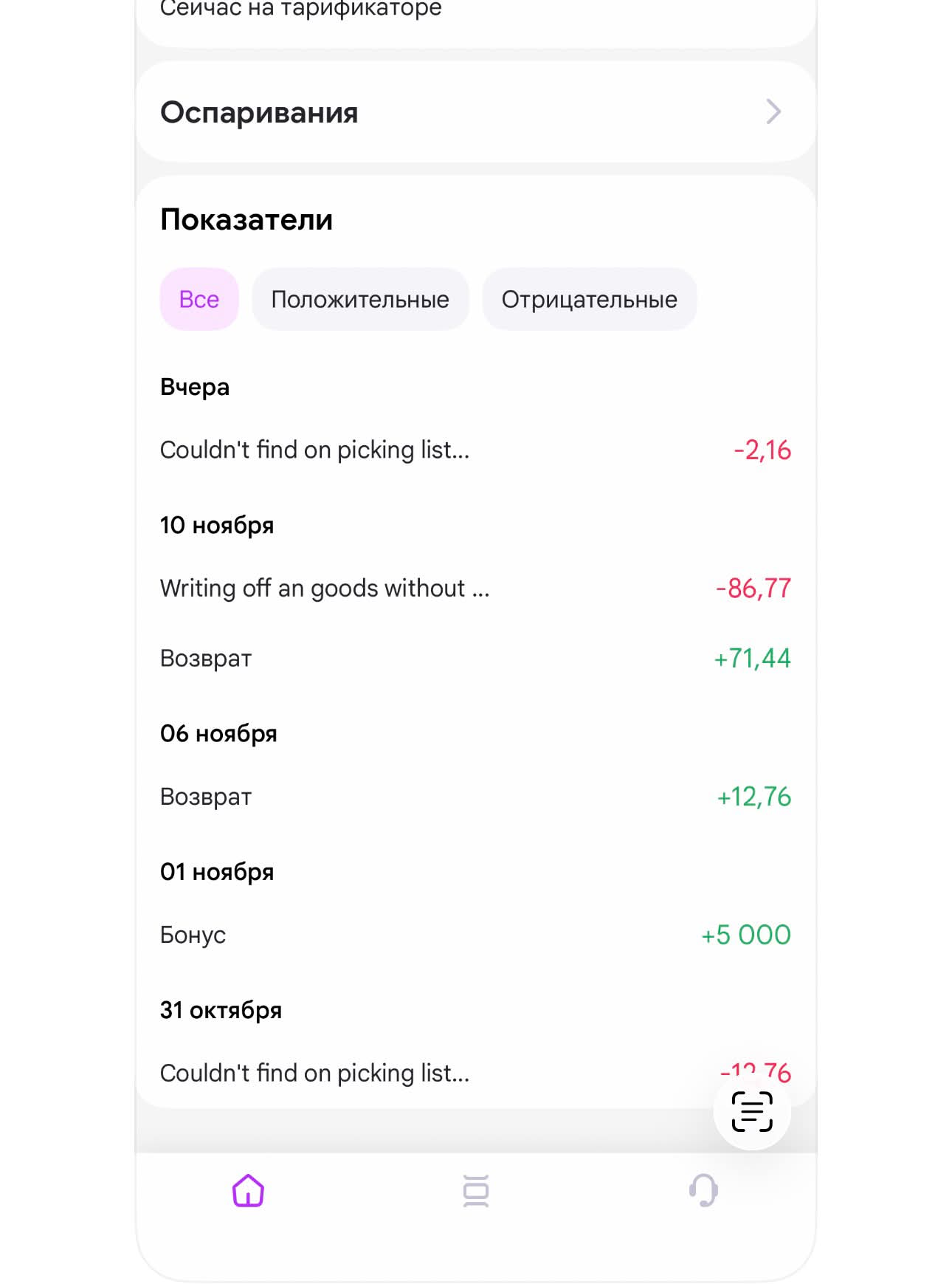
Another screenshot shows that some of the money is refunded, but the amounts are smaller and are listed in Russian rubles, the author explained in the comments. The 5,000-ruble bonus is also in Russian rubles (approximately 182 Belarusian rubles).
Tatsiana considers it unfair that one worker is held responsible for a missing item even though dozens of people may handle goods stored in the same bin. An item could have been moved, dropped or put in the wrong place. With the influx of new workers, she writes, goods are “thrown around haphazardly,” bins are overcrowded and items are left lying in the aisles.
Moreover, deductions are not fixed but are based on the item’s value, which bears no relation to the worker’s earnings. Picking 300 items pays around 60 rubles, or approximately 20 kopecks per item, so a single missing item can wipe out an entire shift’s earnings. The 3,707.85 rubles deducted from her pay amount to the earnings from 12 to 15 12-hour putaway shifts, based on the rates quoted by Tatsiana.
Proving that a deduction is unjustified is practically impossible. An inventory check is the only possible way to resolve the issue, and even that offers no guarantee. The app does have a section for disputing deductions, however, and another screenshot shows that some of the money was refunded.
In the comments, another new warehouse worker said that a recruiter had assured her over the phone that there were no fines. It was only after she started working at the warehouse that she learned they had been introduced a month earlier.
Tatsiana’s account confirms this: during the first month, “everything was great” — she earned 250–300 rubles for a 12-hour putaway shift. Now, however, the job “brings me nothing but deductions.” She does not plan to quit for now, “as long as I don’t end up too far in the red,” because at the warehouse she can “switch off mentally” — her main profession is accounting. But she advises anyone prepared to queue for three days to complete the hiring process to consider whether the job is worth it.
As a reminder, working at the Wildberries warehouse in the Great Stone industrial park has attracted intense interest among Minsk residents: people queue up overnight and travel there several days in a row. Some spend two or three days trying to get inside, while those who sign up at midnight receive queue numbers around 80. Pay is piece-rate, ranging from 1,500 to 6,000 rubles depending on productivity.