
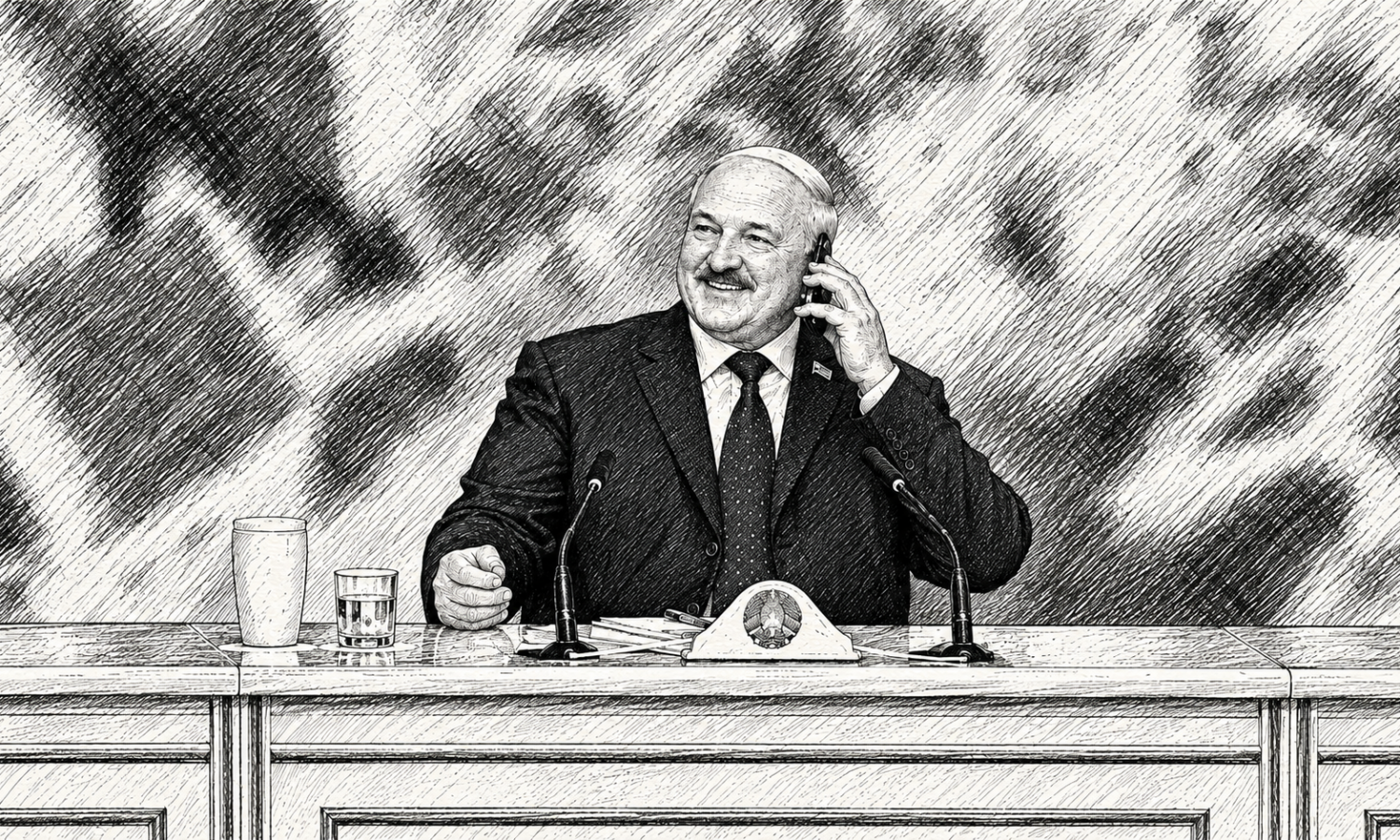

Lukashenka’s “Multi-Vector Policy”: Cash Without Political Commitments
Reform.news Editorial Team · 30 September 2026, 19:57
https://reform.news/en/lukashenka-s-multi-vector-policy-cash-without-political-commitments/Aliaksandr Lukashenka has once again had to justify his “multi-vector policy” to Russia. He has to do so regularly, and for good reason. But in this case, concerns among some Russian elites appear excessive: the current talks with the United States are not about “fleeing to the West” at all. The matter is quite different. And Lukashenka’s “nitrogen proposal” to Trump contains an important “twist” that offers insight into the essence of the Belarusian politician’s “multi-vector policy.”
An Unreliable Ally
Yesterday, Lukashenka once again assured Alexey Russkikh, governor of the Ulyanovsk Region, that his multi-vector policy does not distance Minsk from Moscow. Similar statements have been made repeatedly before. In 2025, the Belarusian politician “justified” his “multi-vector policy” to Vasily Anokhin, governor of the Smolensk Region. And in February this year, he tried to convince Sergey Glazyev, the State Secretary of the Union State, that he was not solving his problems at Russia’s expense in talks with the United States.
The reason for these repeated justifications is fairly simple: not everyone in the Russian establishment trusts its Belarusian ally. The reasons for this mistrust are also clear. Over the past decades, Lukashenka has too often turned like a weather vane towards whichever direction the winds seemed more favourable to him. Many Russian political figures, who have also been in power for years, remember his evasions and manoeuvres all too well. They therefore fear a repeat of the past.
This is also reflected in Lukashenka’s words, spoken to Russkikh yesterday: “I follow the media very closely, because today the war is being waged, among other places, and above all, in the media. And I’ll tell you frankly that sometimes I read with surprise what some people there — whether bloggers or whoever — write about Belarus. About the multi-vector policy and so on. I have said many times already that the multi-vector policy does not distance us from the Russian Federation in any way.”
The issue here is not so much bloggers as the wariness of some Russian elites. It is precisely them whom the Belarusian politician is trying to persuade, periodically assuring them of his loyalty. His past “achievements” compel him to do so again and again.
Now talks with the United States are at stake. But this is precisely where Russian fears seem greatly exaggerated. In this case, Lukashenka’s “multi-vector policy” has several other motives, unrelated to “fleeing to the West.”
Ideas for Trump
A little over a year and a half ago, Donald Trump’s star rose again on the political horizon in the United States. The trend towards democratisation around the world subsequently faded. What became apparent instead was a powerful “business component” substantially influencing Washington’s current foreign policy.
Doing business without political commitments is extremely convenient for Lukashenka. It was probably this that gave rise to ideas about selling Trump potash, the Nezhin Mining and Processing Plant, and a nitrogen plant that he plans to build jointly with Gazprom. Such deals could prove profitable, and Trump is highly unlikely to attach political conditions to them. But there would be an opportunity to make money from them.
The calculation is probably based on the assumption that someone from Trump’s inner circle would take part in these still-hypothetical deals. That would mean the agreements would remain in force even if US policy changed: private property is sacred. In this case, Lukashenka wants to reach an agreement not with Washington or the United States as a state. He wants to make a deal personally with Trump.
Release political prisoners as part of the arrangement? That is no problem for Lukashenka: he still has nine million people ready to take their places.
The West has been and remains alien to Lukashenka. What is there to negotiate, and with whom, given the regular rotation of political elites there? Any agreements could be reconsidered or even cancelled during the next political cycle. But there are politicians, and there are businesspeople with whom one can and should do business. Trump is viewed precisely as a businessman.
This has nothing to do with “fleeing to the West.”
The “Twist” in Nitrogen
One detail is noteworthy. Lukashenka said that he and Putin had agreed that Gazprom would join a project to build a nitrogen plant in Belarus. “We need to make an offer to the Americans. They want fertilisers — nitrogen ones too — so let’s build it together,” the politician said.
How can this be a “break with Russia” if the plant is being built jointly with Gazprom? But bringing Trump into the project to balance things out — why not? Let the two giants balance each other. And, again, it is important to understand that the scheme envisages not some abstract “Americans”, but Trump and his circle.
This is where Lukashenka’s “ideal model” becomes apparent: a major American business interest, rather than some political agreements, serves as a counterweight to Gazprom and Russia. Whatever happens in the future, the money invested by Trump or his clan will prove more valuable to them.
It is not certain that Trump will accept Lukashenka’s offer, but it demonstrates the very essence of Lukashenka’s “multi-vector policy”: cash without political commitments. In such waters, one can feel safe and still catch fish.
And you say Lukashenka should be pulled away from Russia. Who would then balance Trump? But the same principle works in the opposite direction, too.
****
The opinions and assessments expressed by the author may not reflect those of the Reform.news editorial team.